Abington Superior Roofing has handled roofing in Aston and across the nearby townships for more than 20 years, and the part of the job owners here tend to underestimate is the paperwork that outlives the shingles. A new roof can look finished from the curb while the township record still shows it as open. In Aston, that record matters most on the day the house changes hands.
We approach every Aston re-roof as permit work from the first estimate, because the township treats it that way. Before we price anything, we check the rule for the house’s own township, and here the answer is plain: roofing needs a building permit. That permit is the owner’s responsibility, so our part is to build the schedule around it and make sure the work is ready for a final inspection.
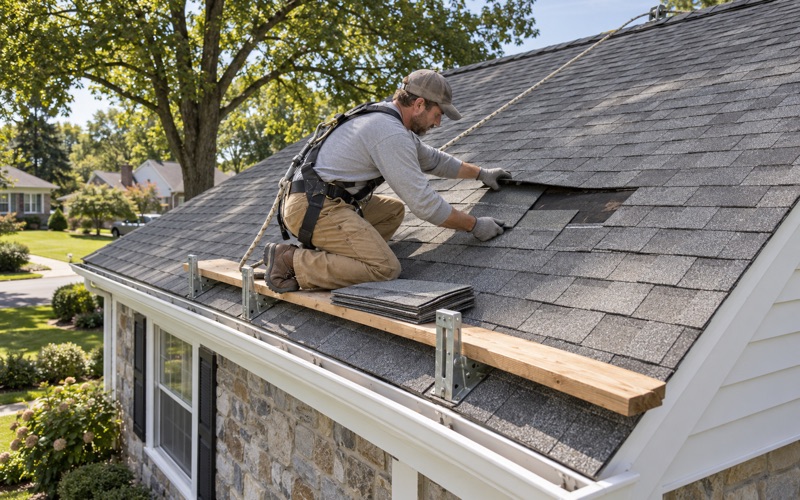
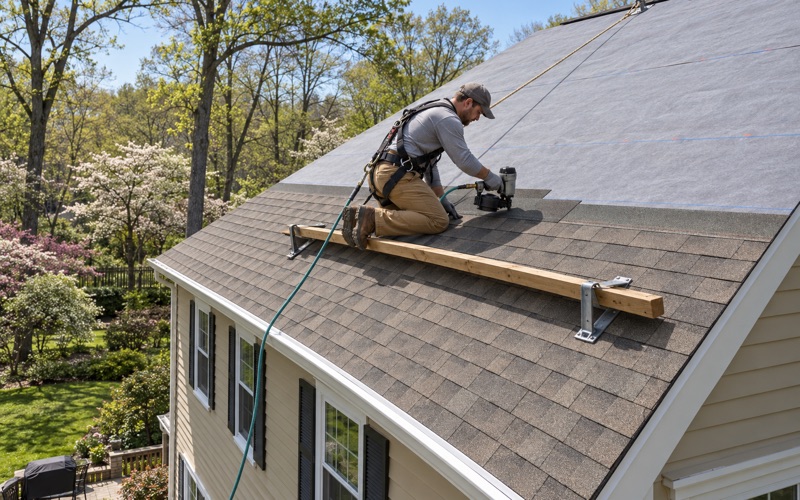
Our written scopes list tear-off, decking, underlayment, flashing, ventilation and gutters as separate lines, which lets you compare our estimate with anyone else’s item by item. If the honest answer is that your roof can be repaired rather than replaced, you hear that first. Either way, the aim is a roof that is sound and a permit that is closed.
Aston’s Resale Certificate and the Open-Permit Search
What the certificate packet checks
Aston Township lays out its resale certificate process in a packet from the Code Department at 3264 Concord Road. The application carries a $100 fee and has to be submitted at least two weeks before settlement. Single-family homes, townhouses, condominiums, group homes and multiple-family properties all appear on the form.
The inspection process has three parts. It starts with a property history search for open permits, open complaints and zoning conformance. It adds a public curbing and sidewalk inspection and a notarized affidavit confirming that smoke alarms, carbon monoxide alarms and visible house numbers are present. Notice what the list leaves out: the packet names no roof inspection item at all.
Where an open roofing permit fits
That gap is the point owners miss. Aston does not send anyone onto the roof at resale, but it does search the permit history, and a re-roof is permit work in this township. A roofing permit that was pulled and never closed with a final inspection is exactly the kind of open item that search is built to turn up.
We have no count of how often that happens, and we would not pretend otherwise. The practical point is simpler. If a roof was replaced under a permit, the cleanest record is one that shows the permit closed, so the roof never becomes a question for the seller, the buyer or the township a few weeks before closing.
Giving the application room before settlement
Because the form has to be filed at least two weeks before settlement, an open permit discovered late leaves little time to book an inspection and correct anything the inspector flags. Owners who expect to sell within the next year or so are better off checking the status of past roof work now, while no closing date is pressing on the calendar.
When we look at a roof for a homeowner planning a sale, we ask about earlier roof work and whether it was permitted. The township’s records are the owner’s to request, and the Building Code Department holds them. Knowing the answer early shapes whether we recommend a repair, a replacement, or simply getting an older permit inspected and closed.
Looking for roofing closer to Yeadon? See Roofing Services in Yeadon.
Why a Re-Roof Here Is Permit Work
Even just a single layer
Aston’s Building Code Department lists roofing among its building permits with a pointed note: Even just a single layer. Re-roof permit rules are set township by township in Pennsylvania, so we confirm the rule for each house before pricing, and in Aston there is no single-layer shortcut to lean on.
The township is just as direct about who carries the permit. All permits are the responsibility of the property owner, and each one must be posted before work starts. We set our start date around that posting, and we do not begin tearing off an Aston roof until the permit is in hand and visible.
Gutters and siding at the roof edge
The same permit list puts siding and gutters on a line of their own, separate from roofing. That matters on an Aston job, because we size and pitch gutters and downspouts with the roof rather than treating them as an add-on. When new gutters are part of the scope, we raise the permit question for them too, so the roof edge does not become a second open item.
Emergency repairs and the short clock
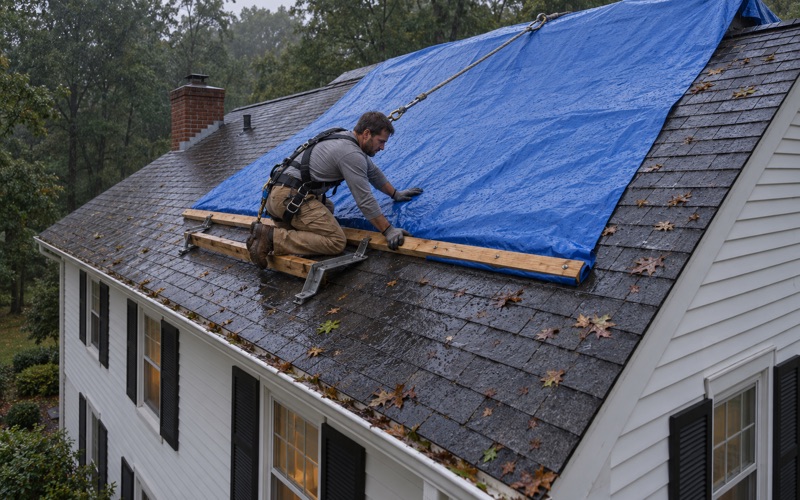
Storm damage does not wait for a permit office. Aston allows emergency repairs to go ahead as long as an application reaches the Building Code Official within 3 business days of the repair. When we tarp or patch a roof after a storm, we photograph the damage and write it up for the owner’s own insurance claim, and we point out that the follow-up application is due quickly.
An emergency patch that is later followed by a full re-roof should not leave two loose ends on the record. We talk through with the owner how the emergency work and the replacement relate, so that each piece of permitted work reaches its inspection rather than one of them being forgotten.
Closing Out the Permit With a Final Inspection
What finished means on an Aston roof
On most re-roofs, the crew packs up, the dumpster leaves, and the job feels done. In Aston, the permit is not done until a final inspection closes it. Inspections for the township are handled by Catania Engineers Associates and need 48 hours’ notice, so the final belongs on the schedule rather than being remembered after the crew has moved on.
We build that step into the job plan from the first estimate. The permit and its inspection remain the owner’s responsibility under township rules, but we make sure the roof is ready to be inspected, give the owner a completion date to book against, and stay reachable if the inspector has a question about what was installed.
A scope an inspector can follow
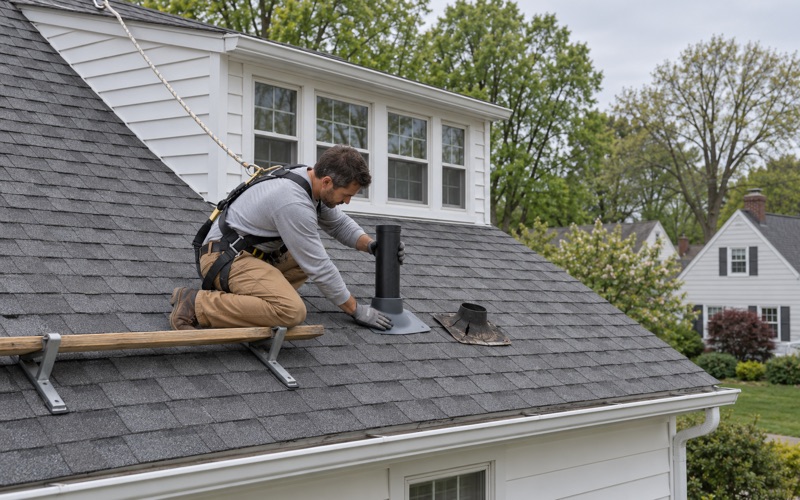
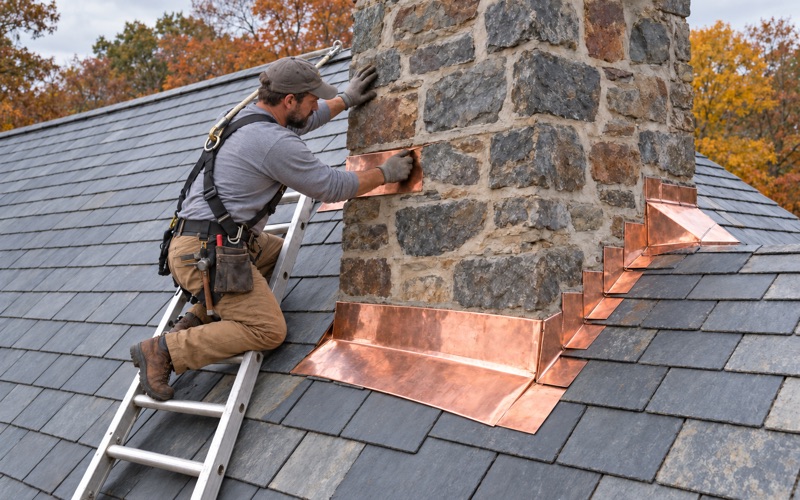
A clean final inspection is easier when the work is clearly documented. Our written scope separates tear-off, decking, underlayment, flashing and ventilation, so the owner can show exactly what the job covered. Step, counter and chimney flashing are replaced with the roof rather than reused under new material, which keeps old metal from becoming the weak point in an otherwise new system.
Damaged decking found after tear-off is photographed and shown to the owner before it is replaced, at a per-sheet price already set in the contract. Those photos join the scope and the permit as part of the job record, and that record is worth keeping with the house for the day a buyer asks about the roof.
The dumpster and the driveway
Tear-off debris needs somewhere to go. Aston publishes a separate Dumpster, POD and Storage Container permit with a fee of $50.00, asking for the dumpster company, the type of materials, the drop-off and pick-up dates and the contractor’s certificate of insurance. The form does not say whether a container on a private driveway needs it, so we ask the township rather than guess.
At the end of every work day we clean the driveway, yard and gutters, including a magnet sweep for roofing nails. A site left tidy each evening is also a site that is ready for an inspector on the last day of the job.
Buyers, Sellers and Re-Roofing Before You List
What a buyer signs for when a permit is left open
The Aston resale packet asks the buyer to accept responsibility for correcting any outstanding violations the seller does not correct, including obtaining the necessary permits and inspections. The buyer also acknowledges that failing to correct those violations within 12 months can bring charges and fines. An open permit, in other words, can pass to the next owner along with the keys.
In an AS IS sale, the packet goes further and states that the buyer assumes all responsibility for completing items. A buyer looking at an Aston house with a recent roof has good reason to ask whether that roof’s permit was closed, and a seller has good reason to have the answer ready.
Re-roofing before you list an Aston house
Sellers sometimes replace a worn roof right before listing. That can be a sound decision, but it works best when the timeline leaves room for the permit, the work and the final inspection before the resale certificate application goes in. Rushing the roof and leaving its permit open trades one buyer question for another.
For a seller, a well-documented repair may be all the roof needs, and we say so when it is true. When replacement is the right call, our contracts follow Pennsylvania’s home improvement law, including the three-business-day cancellation notice and deposits kept within the legal limit, so the paperwork reads cleanly when a buyer’s agent asks for it.
The houses behind these decisions
Aston grew quickly after the war. Its population went from 5,576 to 10,595 between 1950 and 1960, and the 1950s produced 1,604 of the township’s 6,341 housing units, more than any other decade. Only 299 homes predate 1940.
A house of that era has very likely been re-roofed at least once, though how many layers or what kind of deck sits under any given roof is not on record. Across the township, including the Village Green-Green Ridge area, 5,615 of 6,153 occupied homes are owner-occupied, which means most of these permit decisions land on the people who live under the roof.
- 20+ Years in Roofing
- Free Written Estimates
- Line-by-Line Scopes