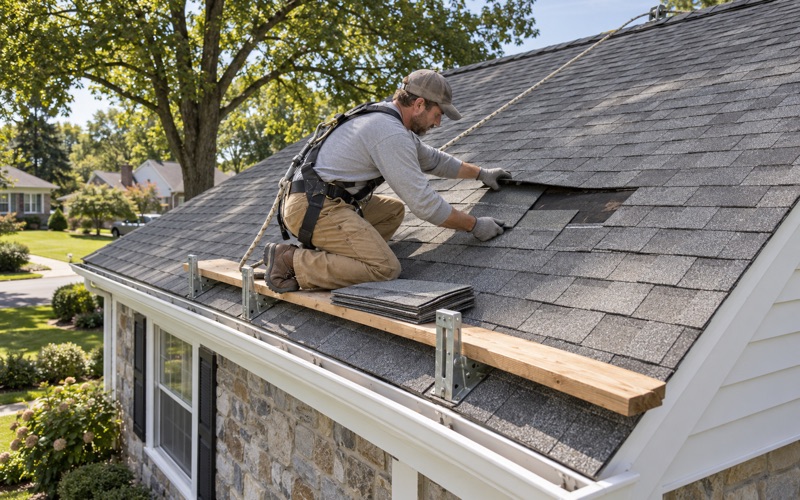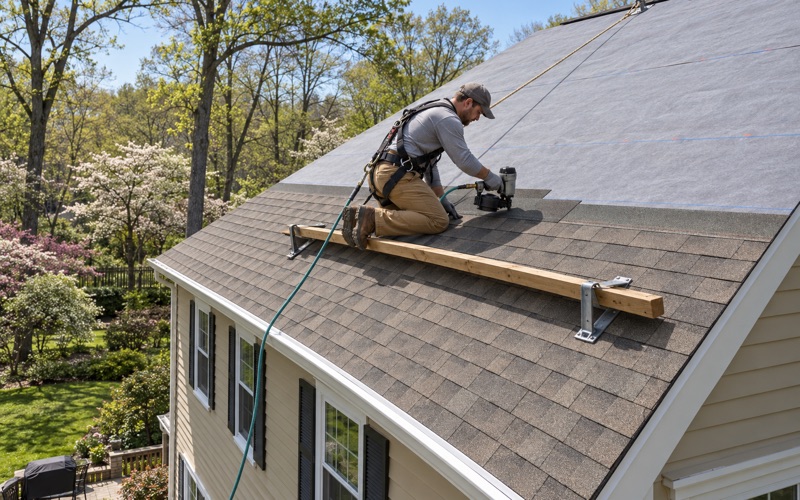
Abington Superior Roofing has spent more than 20 years on residential roofs, and roofing in Bellmawr comes with one local twist worth knowing up front: the borough issues a certificate of occupancy every time a home changes ownership. When a settlement date or a new lease is already on the calendar, we plan the roof and gutter work around that certificate instead of leaving it for the final week.
Every leak call we take starts with a look in the attic as well as on the roof. Water rarely enters where the ceiling stain suggests, so we follow it to the point where it actually gets in before we put a number on anything. You also get a plain answer on whether the roof can be repaired before anyone mentions replacing it.
Rules for re-roof permits differ from one municipality to the next, so we confirm the rule for your specific house before the job is priced. Our written scopes break tear-off, decking, underlayment, flashing, ventilation and gutters into separate lines. That way a seller, a buyer or a landlord can line up two estimates and compare them item by item.
Bellmawr’s Certificate of Occupancy at Every Sale
Who needs one and for how long
The borough’s construction and code enforcement office states that its residential certificate “is for every time a home changes ownership.” That includes a buyer who purchases a house to rehab and resell it, because the property is still changing hands. The fee is $100, and a certificate stays valid for 30 days after it issues.
That 30-day window shapes roof timing more than most sellers expect. A certificate issued too early can lapse before a delayed settlement, and a roof job that runs past the inspection date can leave loose gutters or debris behind. We ask for the closing date at the first estimate so our work wraps up well ahead of the borough’s visit.
Booking the inspection and the form itself
Certificate inspections are held Monday through Thursday in an afternoon slot, booked through the borough office. Sellers usually arrange that appointment themselves or through their agent, and we stay out of the scheduling. What we can control is having every exterior item tied to the roof finished, fastened and cleaned up before the inspector arrives.
The application has separate boxes for a single-family resale and for a change of ownership only. Whichever box applies, the same rule is printed on the form in capital letters: any and all permits or payments due in the borough’s system must be closed out before the certificate is issued. That single line is where roof work and the sale most often collide.
Looking for roofing closer to Hilltown? See Hilltown Roofing.
Gutters, Spouts and Splash Blocks on the Resale Checklist
Item 10: gutters and spouts
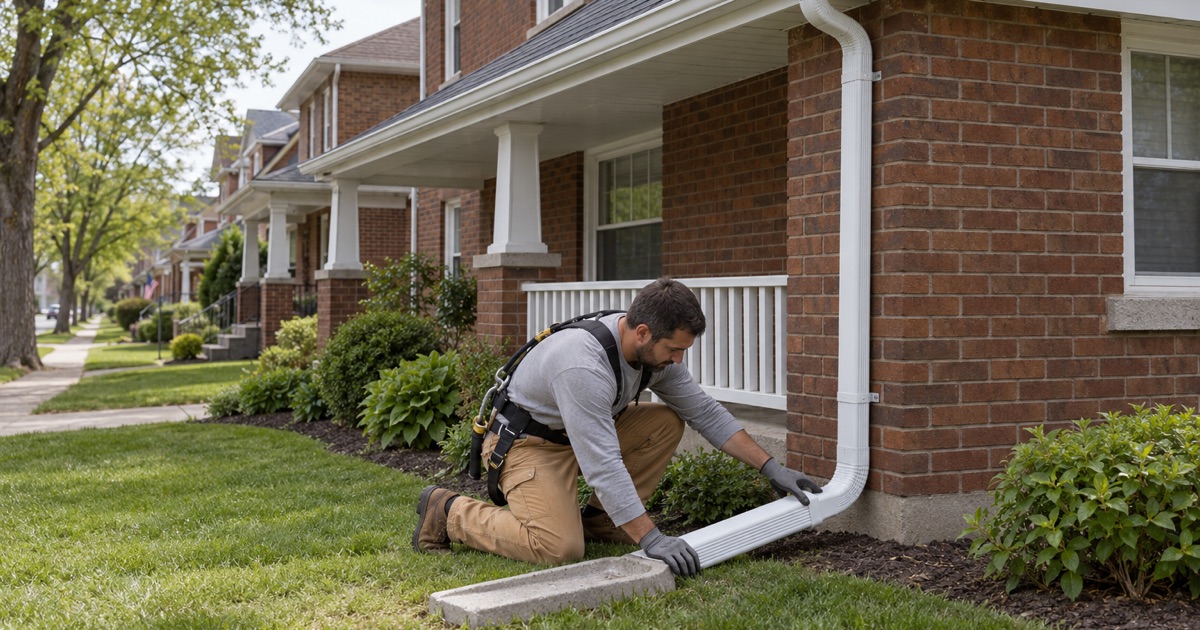
The borough’s Home CO Inspection Checklist lists fourteen exterior items, and the one closest to a roofer’s work is item 10, which covers gutters and spouts. It asks that gutters and spouts be securely attached to the dwelling and free and clear of debris. It also asks that gutters run on all fascia areas, shedding water away from the house.
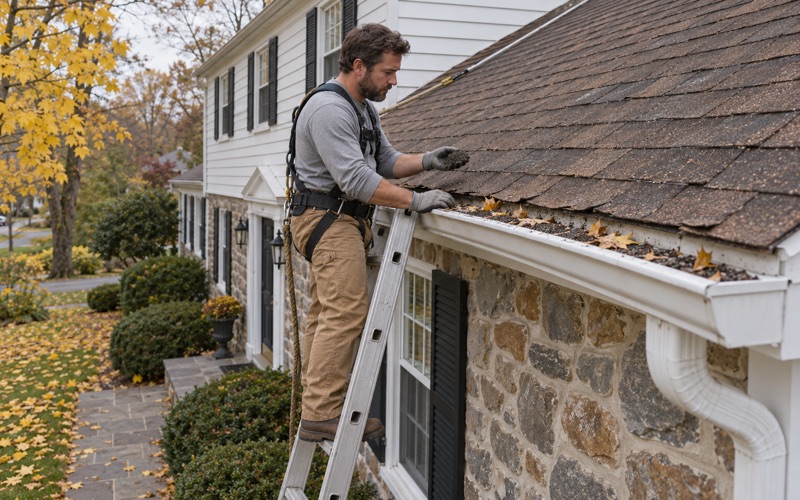
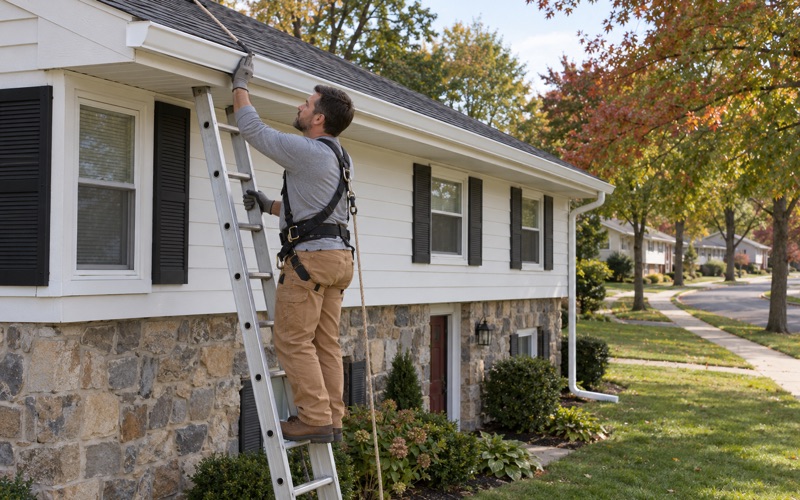
In practice, a loose hanger, a clogged run or a missing section along a fascia board is a line the inspector can mark. We rehang sagging gutters, clear packed debris and close gaps where a run stops short of a corner. Because we size and pitch gutters together with the roof, a new run carries water to its leader instead of pooling along the middle.
Items 9 and 11: splash blocks and grading
Item 11, “Splash Blocks,” calls for a diverter at the end of each leader to carry water away from the dwelling. Item 9 asks that perimeter grading send all water flow away from the foundation walls. Neither line is roofing, but both decide whether the water our roof sheds ends up where the checklist wants it.
When we hang new downspouts, we end each leader where a splash block or diverter can sit flat and point away from the wall. Regrading a yard is outside our scope, but if we notice soil sloping toward the foundation beside a leader, we tell the owner while there is still time to fix it before the inspection.
Why the checklist has no shingle line
Read the whole sheet and you will not find a roof-covering item among the exterior or interior lines. The borough’s resale inspection does not rate shingles, so the age of the roof covering is not one of its items. Interior item 20, “Mold,” does ask for special attention to areas of potential leakage such as kitchens, baths, windows, basements and walls.
For a seller, that cuts both ways. A tired roof is not a borough checklist line, yet a buyer’s own home inspector will still look at it, and an old leak stain near a bathroom or window draws attention under the mold item. Tracing that leak from the attic and fixing it at the source settles both conversations at once.
Attached Houses, Roof Permits and a Clean Settlement
Detached and attached houses follow different rules
New Jersey treats repair or replacement of the roof covering on a detached one- or two-family house as ordinary maintenance, with no permit needed. An attached house sits outside that rule, so re-roofing one is permit work. Bellmawr has 859 one-unit attached houses, roughly a sixth of the borough’s housing units.
Of those attached units, 620 are rented and 214 are owner-occupied. Most attached-roof decisions here are therefore made by landlords, who deal with the borough’s rental certificate on top of the permit question. On every attached house, we confirm the permit path before pricing, so the permit appears in the schedule and the contract rather than as a surprise later.
Open permits stay with the property
The checklist’s other requirements cite work completed without permits, adding that permits are attached to the property, not the owner. Open permits must be closed by final inspections and a Certificate of Approval. Put that next to the application’s closing rule, and an unfinished roof permit on an attached house can hold up a sale.
If an earlier owner re-roofed an attached house without a permit, or pulled one and never called for the final, the current seller carries that history into the resale inspection. When we re-roof an attached house with a closing ahead, the final inspection goes into the timeline from the first estimate, so the permit is closed well before the certificate is requested.
Working beside the neighbor’s roof
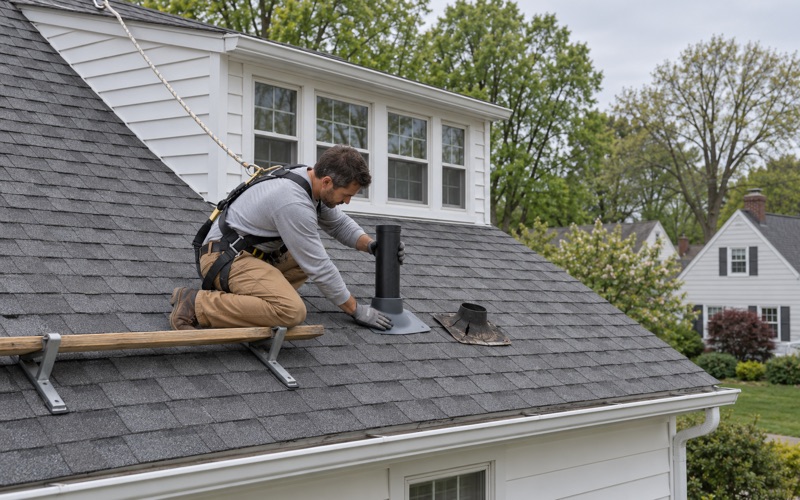
An attached roof shares a wall, and often a continuous roof plane, with the house next door. We plan the tie-in where new material meets the neighbor’s roof so water cannot slip in along the party line. The flashing at that seam, along with step and counter flashing at walls and chimneys, is replaced with the roof rather than reused under new shingles.
When the old covering comes off and the decking underneath is soft or broken, we photograph it and show the owner before replacing any sheets. The per-sheet price is already set in the contract, so a seller working against a settlement date is not negotiating an open-ended charge halfway through the job.
Rental Certificates and Tenant Turnover
The annual rental inspection
Bellmawr requires every residential rental property to hold a Rental Certificate of Occupancy and to be inspected annually. Registration runs through GovPilot at $100 per registration, annual bills go out at the beginning of April, and late payment brings a $50 late fee. The borough warns that failure to schedule annual inspections will result in a court summons, even if the invoice has been paid.
Scheduling that inspection is the duty of the landlord, not the tenant. The borough’s rental page itself names no roof or exterior item, so we do not promise what that inspector looks at. What we offer is simple: a landlord can have gutters refastened, leaks traced and flashing repaired on a timeline that leaves room before the appointment.
A new tenant means a new inspection
An inspection is required for every new tenant, even if the inspector was there previously. The certificate application lists a change of tenants as needing an inspection, the $100 fee and tenant information. For a landlord with several units, each turnover is a fresh appointment with the borough.
Turnover is also the easiest moment to work on a roof. With the unit empty, our crew can reach the attic from inside, check ceilings for stains and repair a leak at its source without disturbing anyone. Each day ends with the driveway, yard and gutters cleaned and a magnet sweep for roofing nails, so the next tenant moves into a tidy property.
Records a landlord can keep
Many landlords want a dated record of work done between tenants. Our itemized scope, along with the photos we take of damaged decking, gives them a file to keep with the property. When a storm is the cause, we photograph and write up the damage for the owner’s own claim, and we will meet the insurance adjuster on site when asked, without negotiating the claim.
Whether a Bellmawr house is headed for settlement or a new lease, the approach is the same. We finish the roof and gutter work early, close out any permit the job needed, and leave the property ready for the borough’s visit instead of scrambling the week before.
- 20+ Years in Roofing
- Free Written Estimates
- Line-by-Line Scopes