Abington Superior Roofing handles chimney flashing repair in Abington, PA, serving surrounding cities including Lower Moreland, Upper Southampton, East Goshen, Warwick Township and Plymouth Township. After more than 20 years of tracing leaks on local houses, we can say that chimneys are among the most frequent sources of roof leaks we find, especially on older homes with tall masonry chimneys.
A chimney passes through the roof, and the joint between masonry and roofing has to stay watertight through decades of sun, rain, freezing and thawing. That joint is sealed by layers of metal flashing, and when any layer fails, water runs down the chimney into the attic, the walls or the fireplace.
We rebuild failed chimney flashing correctly, with step flashing, counter flashing set into the mortar, and an apron and cricket where needed. We also check the chimney itself, so you know whether the problem is the flashing or the masonry above it.
How Chimney Flashing Works
Step Flashing Along the Sides
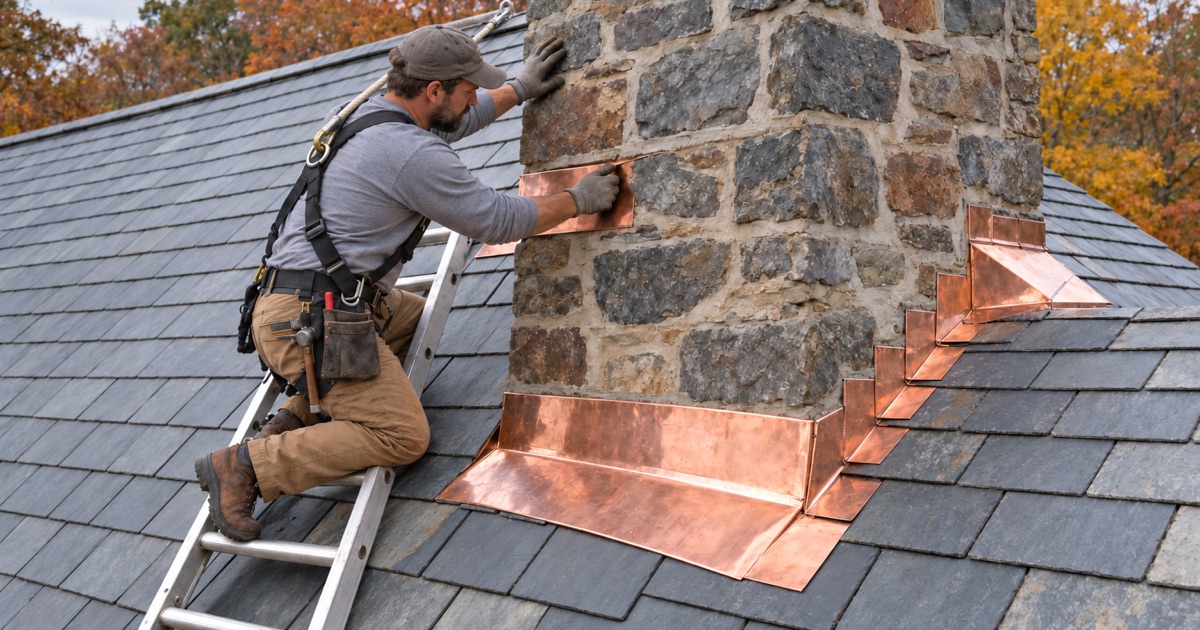
Along each side of the chimney, step flashing pieces are woven into the shingle courses, each bent up against the brick. Every piece overlaps the one below, so water running down the roof is carried past the chimney rather than into the joint.
When step flashing has been replaced with a single long strip, or omitted entirely and covered with cement, water eventually gets behind it. Proper step flashing is the foundation of a dry chimney.
Counter Flashing Set Into the Mortar
Step flashing alone is open at the top where it meets the brick. Counter flashing covers that gap: metal set into a groove cut into the mortar joints, called a reglet, and bent down over the step flashing.
That overlap lets the roof and the chimney move independently while water still runs over the joint. Counter flashing that is only glued to the brick face, without a reglet, pulls away and leaks within a few years.
The Apron and Back Pan
On the downhill side, an apron flashing laps over the shingles and up the front of the chimney. On the uphill side, a back pan or cricket carries water around the chimney instead of letting it pool against the brick.
The uphill side takes the most water and the most debris, and it is where many chimney leaks begin. We pay particular attention to that side on every repair.
Chimney Flashing Problems We Repair
Flashing Covered in Roofing Cement
Many chimneys we inspect have flashing buried under layers of roofing cement from past quick fixes. Cement cracks as it ages and traps water behind it, often making the original problem worse.
We remove the old cement and failed flashing and install new metal correctly. Once proper flashing is in place, it needs no cement to stay watertight.
Rusted or Loose Metal
Old steel flashing rusts through, and aluminum flashing can corrode where it touches mortar. Wind and ice also loosen counter flashing that was never properly set into the joints.
We replace failing metal with new flashing suited to the house, including copper on slate roofs and older homes. Copper outlasts most other flashing metals and matches the copper details these roofs often have.
Missing Crickets Behind Wide Chimneys
Chimneys wider than a typical flue stack act like a dam across the roof. Water, leaves and snow pile up behind them and sit against the flashing for days.
We build crickets behind wide chimneys, framed and covered to match the roof, so water is split and carried around both sides. A cricket often ends leaks that years of flashing patches never fixed.
Leaks at Chimneys on Slate Roofs
Slate roofs usually have copper or lead chimney flashing that outlasts many other roofs, but the soldered seams and counter flashing eventually fail. Repairs need care, because walking on slate breaks it.
We work from roof ladders and staging, remove only the slates needed to reach the flashing, and reinstall them with copper nails and slate hooks. The finished repair matches the original roof.
Flashing or Masonry: Finding the Real Source
Chimney Crowns, Caps and Brick
Not every leak near a chimney is a flashing problem. Cracked concrete crowns, missing chimney caps, porous brick and eroded mortar all let water into the chimney above the roof line.
That water travels down inside the masonry and shows up in the same places as a flashing leak. We inspect the crown, cap and brickwork and tell you honestly whether they are part of the problem.
Working With a Mason When Needed
When the chimney needs repointing, a new crown or rebuilding above the roof, that work belongs to a mason. Flashing set into crumbling mortar will not last, so the masonry should be sound first.
We point out the masonry work needed and coordinate timing so the flashing goes in after the brickwork is repaired. Doing it in the right order means paying for it only once.
Chimney Flashing and a New Roof
Replaced With the Roof, Never Reused
When we replace a roof, step, counter and chimney flashing are replaced too, rather than reused under new shingles. Reusing old flashing saves a small amount on installation day and creates the most likely leak on a brand-new roof. The written scope lists chimney flashing as its own line, so you can see it is included and compare it directly with other estimates.
Chimneys No Longer in Use
Some houses have chimneys that no longer serve a furnace or fireplace. An unused chimney still needs proper flashing and a cap, or it keeps letting water in.
In some cases, removing the chimney below the roof line and decking over the opening is the cleaner option. We explain the choices so you can decide what suits the house.
- 20+ Years in Roofing
- Free Written Estimates
- Line-by-Line Scopes