Abington Superior Roofing brings more than 20 years of experience to roofing in Cinnaminson, and much of that work begins after a storm rather than before one. When high water and strong wind arrive together, the roof deserves an inspection of its own, separate from the basement, the yard and the street. We give it that, with an attic check, photographs and a written account of what we find.
The question we help answer is practical: what did the wind do to the roof, apart from what the water did to the house? Those are two different problems with two different sets of paperwork, and treating them as one slows everything down. We look from the attic side as well as the shingle side, so a leak is traced to where it actually gets in before any price is written.
We also tell you plainly whether a damaged roof can be repaired before replacement comes up at all. Every estimate breaks the job into separate lines for tear-off, decking, underlayment, flashing, ventilation and gutters, so you can set it beside another contractor’s quote and compare it item by item.
Cinnaminson’s River Edge and the Burlington Gauge
Cinnaminson Township sits on the Delaware River in Burlington County, opposite Philadelphia, and its riverfront has its own flood thresholds. The National Weather Service tracks the river at its Burlington gauge, and the stage readings there describe what happens on specific Cinnaminson streets as the water rises.
Reading the Gauge Stages
The gauge reports the river’s stage in feet. The weather service sets minor flooding at 9.3 feet, moderate flooding at 10.3 feet and major flooding at 11.3 feet. At the major stage it describes widespread roadway flooding near the river and its tidal tributaries, with vulnerable homes and businesses at risk of damage.
The record crest on that gauge is 11.99 feet, reached on January 10, 2024, a preliminary figure. It edged past the 11.94 feet recorded during Ida on September 1, 2021 and again on April 17, 2011, and the 11.69 feet that Sandy brought on October 30, 2012. A crest near the top of that list tells you a storm was serious, and the roof above a flooded street went through the same storm.
Kern Street, Zeisner Avenue and River Road
At 9.7 feet on the Burlington gauge, the weather service says flooding begins around Kern Street, Zeisner Avenue and River Road in Cinnaminson. That reading sits only slightly above the minor stage, so these streets see water early in a high-river event.
For homeowners on those streets, a storm means attention goes first to the road, the cars and the lower floor. That is the right order for safety. Once the water drops, though, the roof remains a separate question, and it is easy to leave unanswered while everything else is being cleaned up.
The Pompeston Creek and East Riverton
The same 9.7 foot reading marks where flooding begins along the Pompeston Creek in Cinnaminson and Riverton. A tidal creek carries the river’s rise inland, so the flood edge in the township is not limited to the riverbank itself.
East Riverton, a riverfront section of the township, is where much of the reporting on the January 2024 storm focused. The township had rebuilt much of East Riverton Road and put stormwater underground before that storm, according to the mayor’s comments in news coverage.
Looking for roofing closer to Delran? See Roofing in Delran.
January 9 and 10, 2024: Record Tide and High Wind Together
The storm that set the record crest was not only a water event. On the evening of January 9, 2024, the weather service office in Mount Holly compiled its highest wind reports, and the stations on either side of Cinnaminson both recorded strong gusts.
Gusts Measured at Moorestown and Pennsauken
A station in Moorestown recorded a 53 mph gust that evening, and a station in Pennsauken recorded 54 mph. The list carries no Cinnaminson entry, so we do not quote a gust figure for the township itself. What the readings do show is a township sitting between two measured gusts above 50 mph.
Rain came with the wind. A Cinnaminson weather station logged a little over two inches by early the next morning, on top of the river rise. Wind and heavy rain together are the conditions under which a lifted shingle or a loose piece of flashing turns into a ceiling stain.
What the Reporting Found
News coverage counted more than 50 homes affected, mainly around Alden and Stewart avenues and River Drive in Delran and the East Riverton section of Cinnaminson. There were three water rescues in the township, and residents described flooded basements, one for the first time in decades.
None of that reporting described roof damage in Cinnaminson, and we do not claim any. What it shows is that attention after the storm went where it belonged, to water inside homes. Roofs rarely get a careful look during that kind of cleanup, and that gap is what we check.
Why the Roof Gets Its Own Look
A flood and a windstorm leave different evidence. Floodwater marks walls, floors and mechanical equipment at the lower level. Wind works at the edges of the roof: the eaves, the rakes, the ridge and the flashing where the roof meets chimneys and walls.
Because the two arrive together on the riverfront, roof damage can hide behind the larger cleanup for weeks. A tab that lifted and resealed crooked, or a length of drip edge pulled loose, may not leak until the next hard rain, by which point the cause is harder to tie to one storm.
Two Policies After One Storm
On a riverfront street, one storm can leave a homeowner dealing with two kinds of damage that are handled in two different ways. Knowing which is which before you call anyone saves time and avoids a roof problem being filed in the wrong place.
Flood Water and Flood Insurance
The New Jersey Department of Banking and Insurance notes that homeowners and renters policies typically exclude water damage caused by flood. Flood insurance is a separate policy, written through the National Flood Insurance Program or a private carrier.
The department also points out that NFIP coverage is not effective until 30 days after purchase. That waiting period makes flood insurance a decision for a calm month, not for the week a nor’easter shows up in the forecast. Whether a given home should carry it depends on the property and the policy, and that is a conversation for your agent.
Wind Damage to the Roof
Wind damage to a roof is a different matter from flood water, and it is generally a question for the homeowners policy, since the flood exclusion is about rising water rather than wind. Whether a particular loss is paid depends entirely on the wording of your own policy and the insurer’s review.
In practice, the roof needs its own record. If the only photos taken after the storm are of the basement, nothing shows the condition of the shingles, the flashing or the ridge before later weather adds to it. A dated set of roof photos closes that gap.
What We Do, and Where We Stop
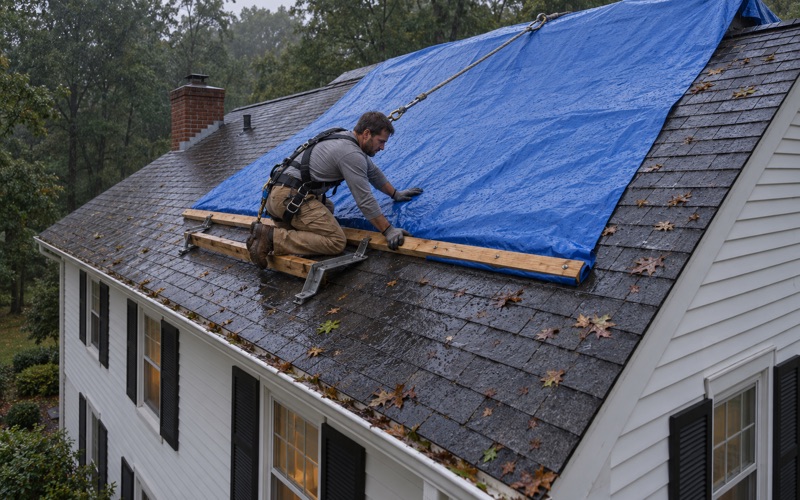
We photograph storm damage on the roof and write it up for the owner’s own claim. When you ask, a member of our crew will meet the insurance adjuster on site, walk the roof together and point out what we documented.
The claim itself stays yours. Negotiating a settlement is not something we take on, because in New Jersey that is the role of the policyholder or a public adjuster licensed under state law, and the coverage decision belongs to the insurer.
Checking and Documenting a Riverfront Roof After a Nor’easter
Our post-storm visit to a Cinnaminson roof follows the same order every time, and it starts indoors. About half of the township’s homes were built between 1950 and 1969, and roughly three quarters are detached houses, so most roofs we see sit over an attic we can reach.
Starting in the Attic
We look at the underside of the decking first, with a light, for fresh staining, damp insulation and daylight around penetrations. Water traced from the inside tells us where it actually entered, which is often a few feet from where the ceiling stain showed up.
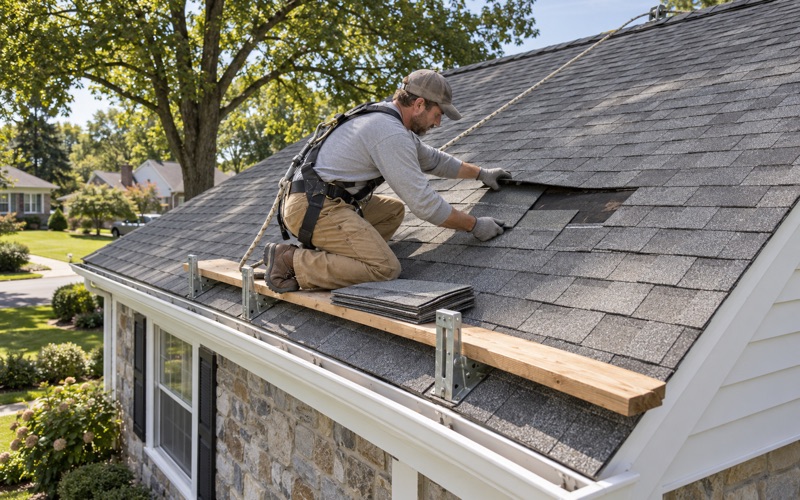
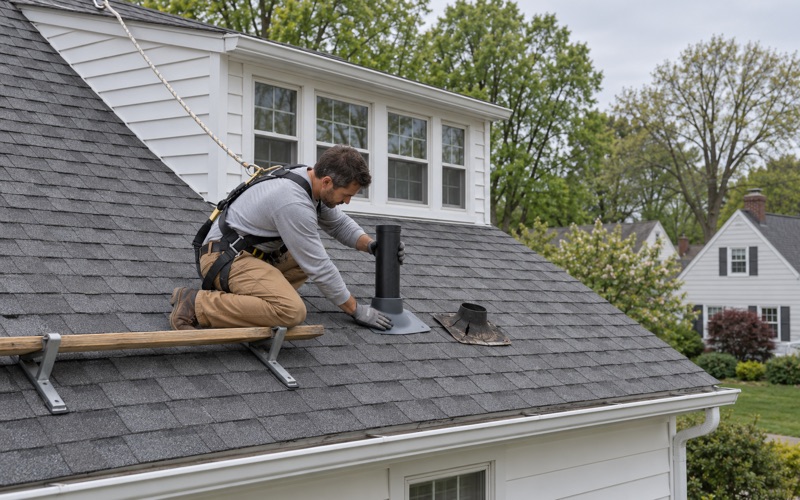
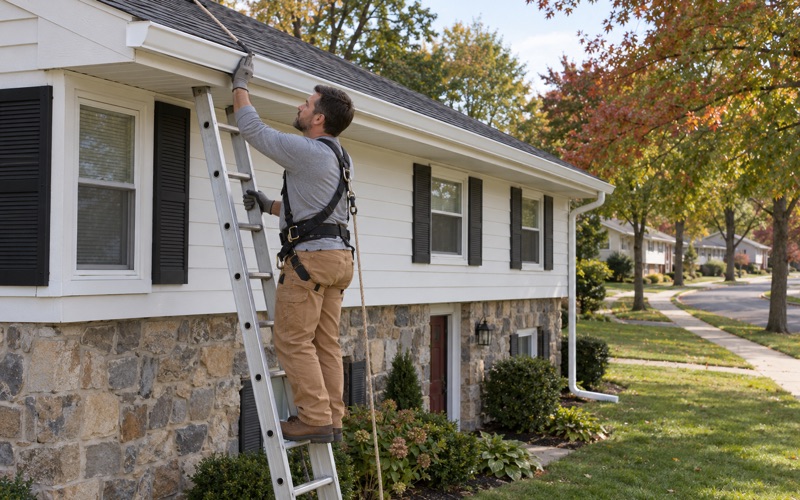
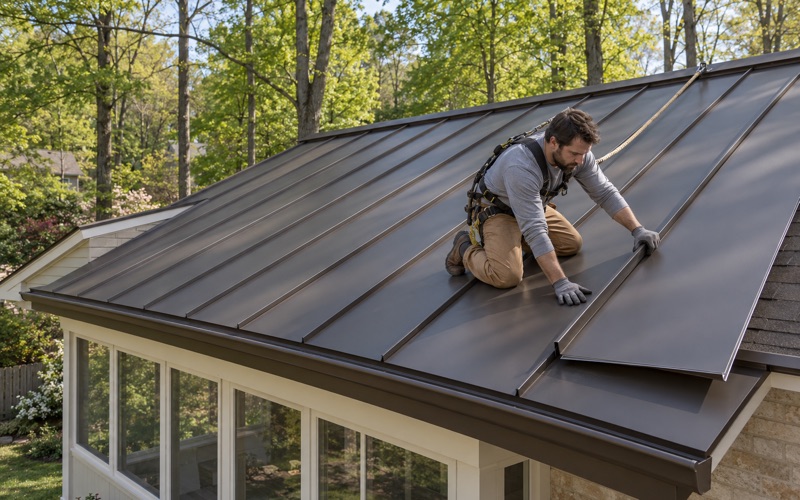
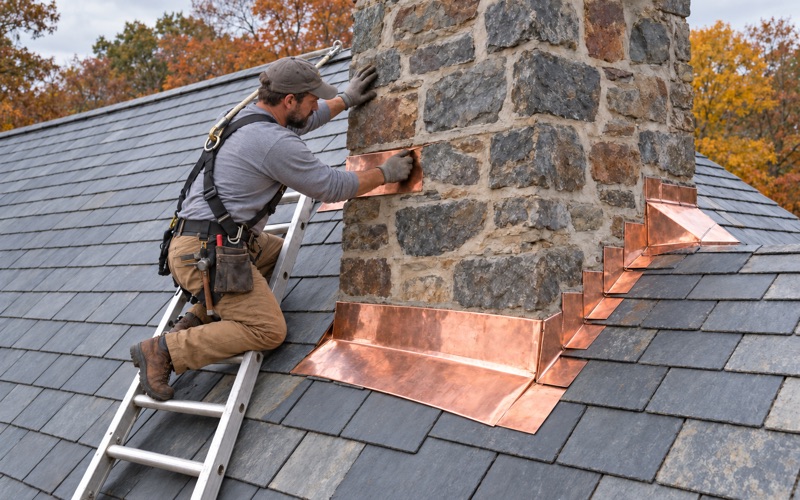
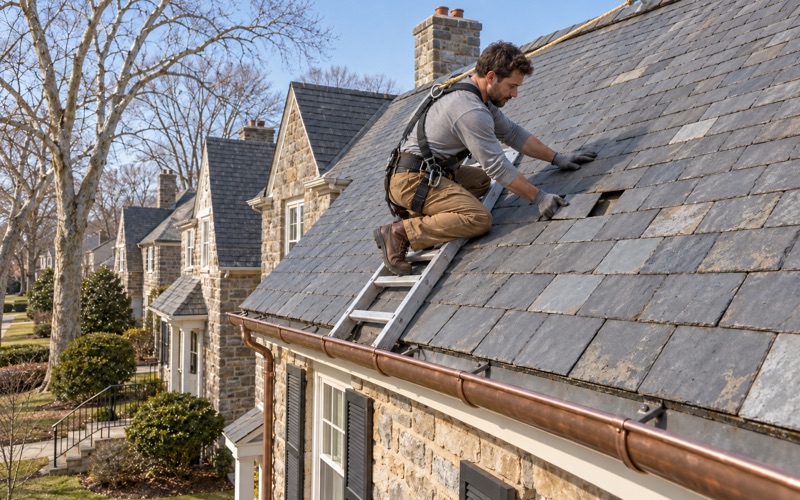
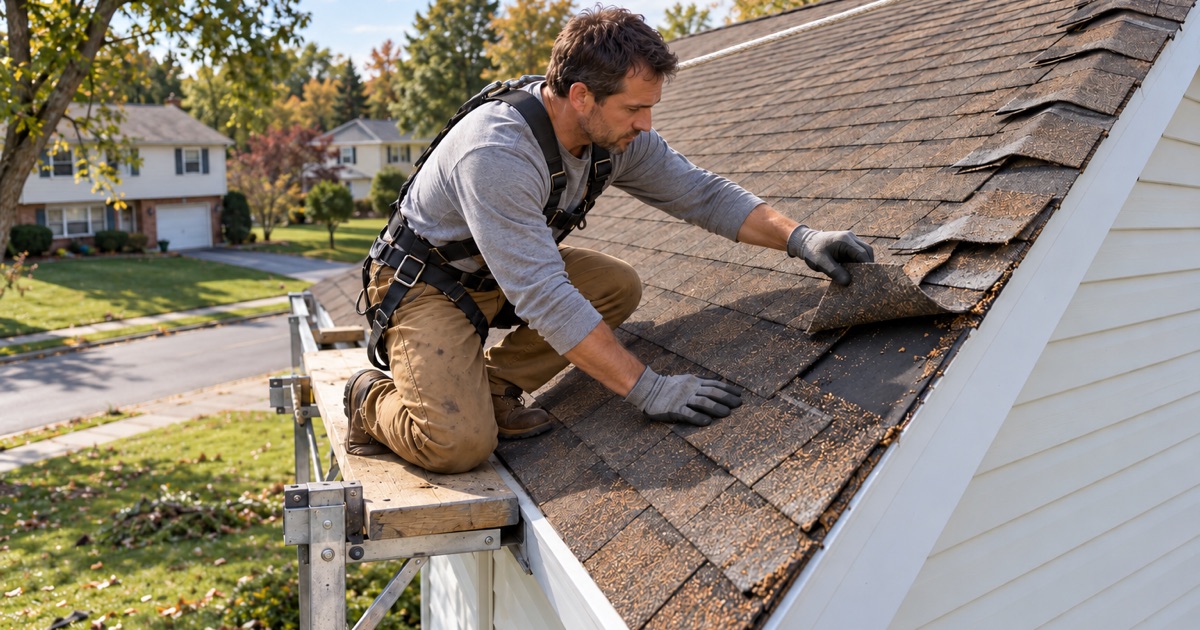
Then we go up. On the roof we work the edges where wind does its damage: eaves and rakes, the ridge, and the step, counter and chimney flashing. Pipe boots and vents are checked as well, since a storm that lifts shingles also loosens what is sealed around them.
Photographs and a Written Report
Every problem we find is photographed in place, and each photo is tied to a location on the roof in a written report. You end up with a document you can hand to your insurer, keep with your records or use to compare estimates.
If the storm left the roof sound, the report says that too. A clean report is still useful, because it shows the roof was checked after the crest and gives you a baseline if something turns up after the next storm.
Repair First, Then an Itemized Scope
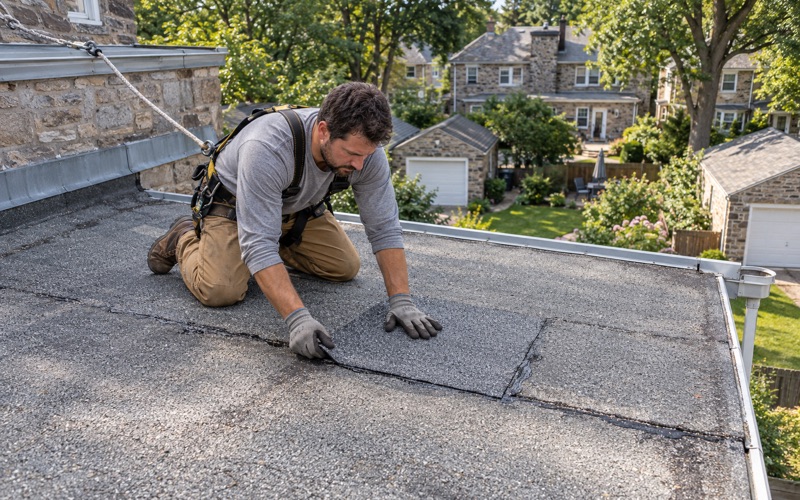
If the damage can be fixed, we say so before replacement is mentioned. Many wind problems come down to replacing a run of shingles, resealing tabs or resetting flashing, and we price that work on its own.
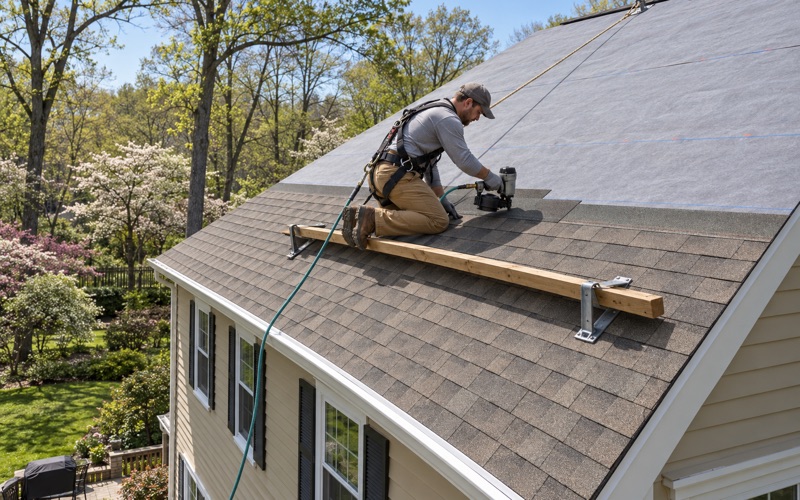
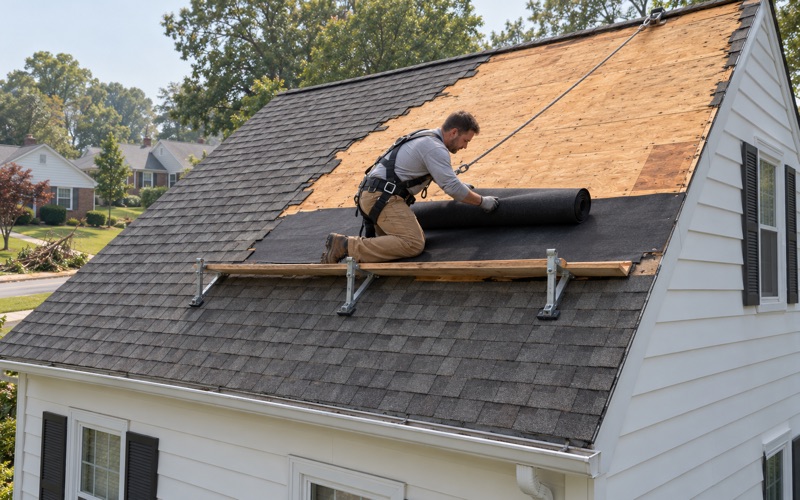
When replacement is the honest answer, the scope is written line by line. Any damaged decking found once the old roof is off is photographed and shown to you before it is replaced, at a per-sheet price set in the contract, and step, counter and chimney flashing is replaced with the new roof rather than reused under it.
Gutters and the End of the Day
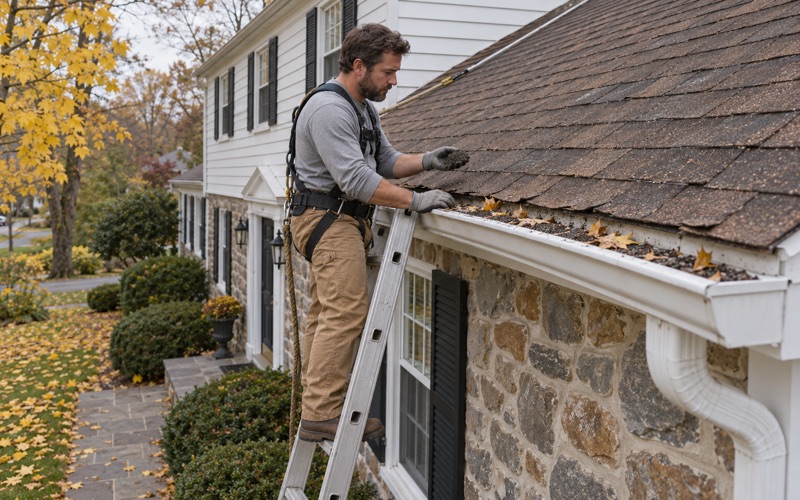
Gutters and downspouts are sized and pitched together with the roof, so rain coming off a new roof is carried away from the house rather than dumped beside the foundation. On a property that has already dealt with water once, that detail matters.
At the end of each work day the driveway, yard and gutters are cleaned, including a magnet sweep for roofing nails. Your property is left ready for the evening, not for the next morning’s crew.
- 20+ Years in Roofing
- Free Written Estimates
- Line-by-Line Scopes