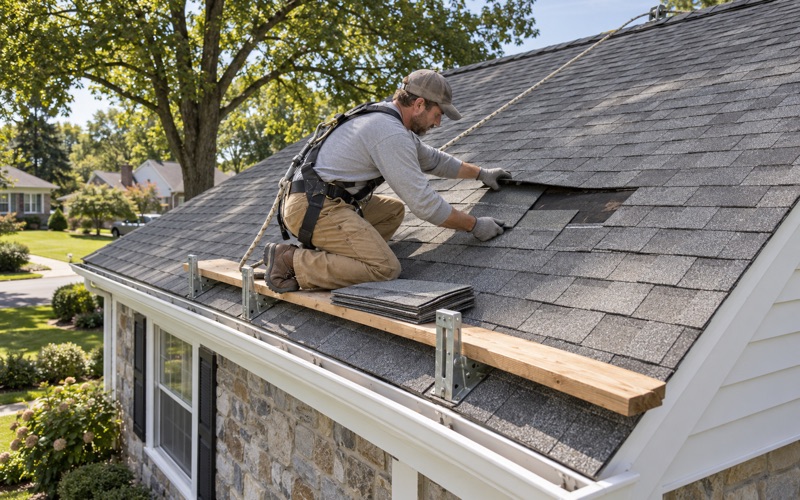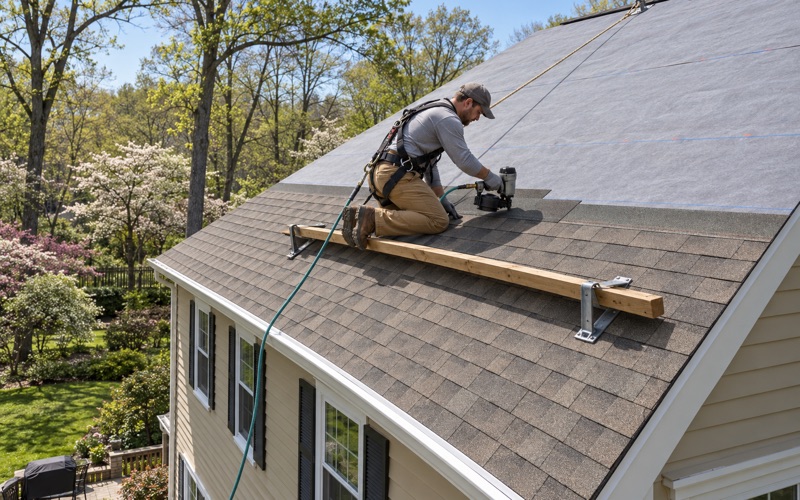
Abington Superior Roofing handles roofing in Collingswood with more than 20 years in the trade behind every estimate, for houses and for the apartment buildings that make up a large share of the borough. The question we hear most is the same from a homeowner and a property manager alike: can this roof be fixed, or does it need to come off? We give a straight answer on repair before replacement is ever on the table.
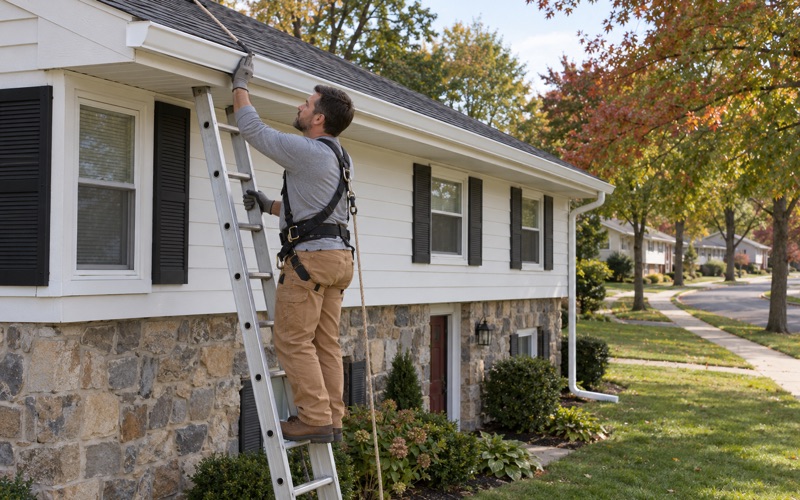
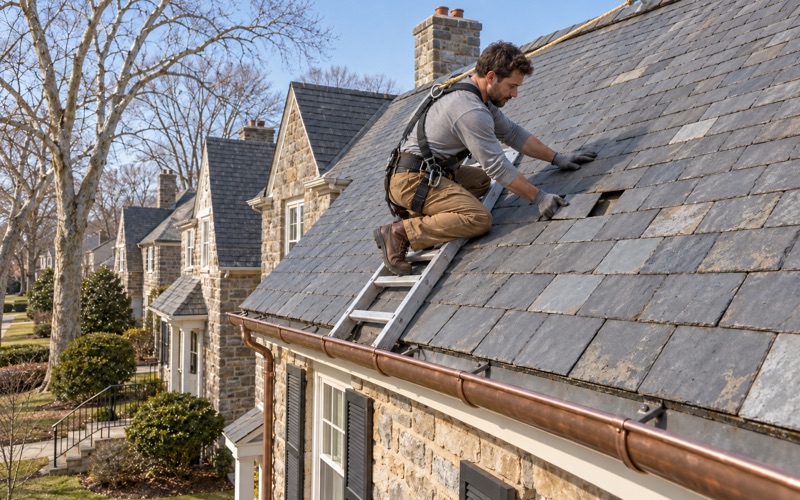
Every leak call starts with two inspections rather than one. We look at the roof surface, and we look in the attic or the top-floor ceiling space, because water on a ceiling rarely sits directly below the opening that let it in. Tracing the path first means the price covers the actual entry point, not the stain.
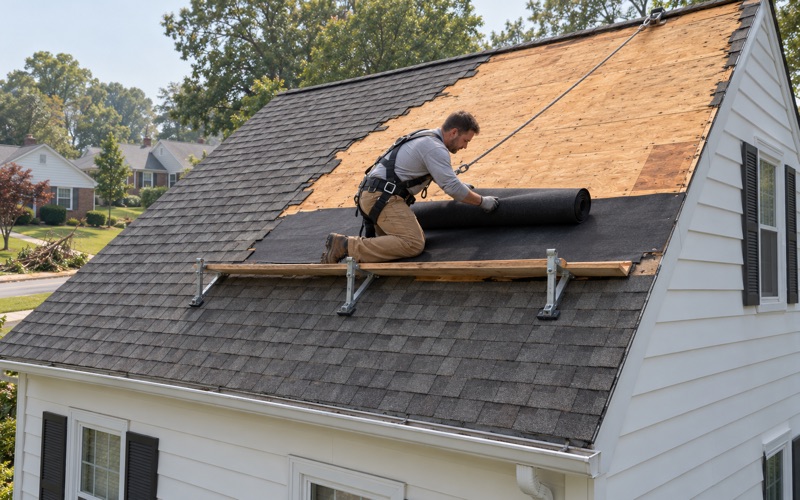
Our written scopes break the job into tear-off, decking, underlayment, flashing, ventilation and gutters as separate lines. An owner holding two estimates can set them side by side and see exactly where they differ. That matters most on a larger building, where one vague line can hide a large share of the cost.
Collingswood’s Apartment Buildings and the 1,030-Unit Parkview
Collingswood is often pictured as a town of porches and older houses, and many of its homes fit that picture. The census tells a fuller story. Of the borough’s 6,901 housing units, 2,202 sit in buildings of three or more units, and 1,076 of those are in buildings of 50 units or more, according to the 2024 American Community Survey five-year estimates.
One Complex Holds Most of the Large-Building Units
Parkview at Collingswood, long known as Heights of Collingswood, is a 1,030-unit complex at White Horse Pike and West Collings Avenue. Morgan Properties bought it for $79 million late in 2017, and the real estate trade press described it as one of the largest rental communities in southern New Jersey.
Rental listings describe four buildings of nine floors at 700 West Browning Road, an address the Census geocoder places inside Collingswood borough. A high-rise complex of that size carries roofs, drains and rooftop equipment that look nothing like the roof over a single-family house, and it calls for a different kind of inspection.
Newer Buildings on Haddon Avenue and at the LumberYard
Towne Center at Haddon, at 225 Haddon Avenue, added 251 units when it was built in 2017. Collings at the LumberYard brought 34 apartment homes, seven of them townhomes, as a first phase, followed by a five-story building with 70 apartments.
Newer roofs are not maintenance-free roofs. The early years of a low-slope roof are when flashing details, drains and sealant joints show whether they were built well. Catching a small failure then is far cheaper than chasing water through finished apartments below.
Why the Numbers Matter to an Owner
With 2,038 renter households living in buildings of three or more units, a roof problem here often reaches tenants before it reaches the owner. A leak over a top-floor apartment is a tenant complaint, a damaged ceiling and, as the next section explains, a matter of state code.
Looking for roofing closer to West Norriton? See West Norriton Roofing.
What New Jersey’s Multiple Dwelling Code Says About Roofs
Buildings with three or more units of dwelling space are generally multiple dwellings under New Jersey’s Hotel and Multiple Dwelling Law. Their upkeep falls under the Regulations for Maintenance of Hotels and Multiple Dwellings, chapter 5:10 of the New Jersey Administrative Code, which the state Bureau of Housing Inspection or a local enforcing agency administers. For an owner of a Collingswood apartment building, a roof leak is a code item as well as a repair.
Keeping Water Out of the Structure
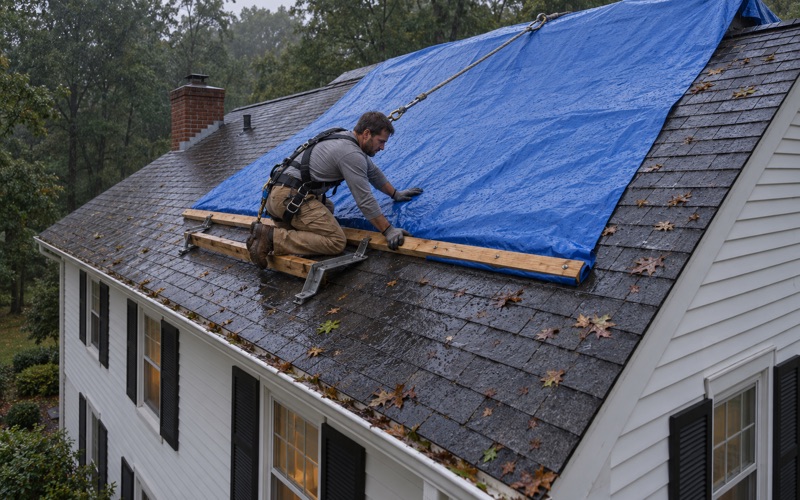
Section 5:10-7.4 says that exterior walls, roofs, windows, skylights and other parts of the structure “shall be maintained as to keep water from entering the structure.” That is a performance standard rather than a material standard. The rule does not ask whether the roof is shingle, membrane or metal, only whether it keeps water out.
That standard shapes how we inspect a multiple dwelling. We check the field of the roof, every penetration, the parapet and wall flashings, and the ceilings of top-floor units where access allows. The code judges the result inside the building, not the look of the roof from the street.
Loose Shingles and Worn Material: the Repair-or-Replace Rule
Section 5:10-7.3(c) lists loose shingles among the exterior conditions an owner must eliminate, alongside broken glass and crumbling stone or brick. A neighboring rule requires exterior surfaces to be free of loose material that may fall on persons. On a tall building, a lifted shingle or a loose piece of metal edge is exactly that kind of hazard.
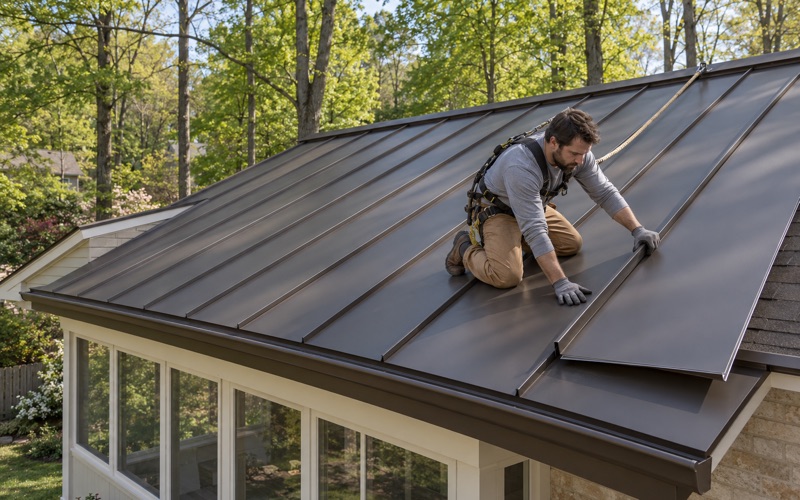
The same section 5:10-7.4 adds that “damaged or badly worn material shall be repaired or replaced,” and that places showing rot, leakage, deterioration or corrosion must be treated or restored. Repair comes first in that sentence, and it comes first in our estimates too. We price the repair when the rest of the roof has life left, and we say plainly when it does not.
Who Inspects, and How Often
The state’s cyclical inspections of multiple dwellings no longer run on one flat schedule. A 2019 amendment to the Hotel and Multiple Dwelling Law tied the interval to a building’s violation history, so a well-kept building can go longer between visits than one with open problems. We never guess at a building’s next inspection date. Our job is a roof that holds up whenever the inspector arrives.
Leaders and Drainpipes on a Multiple Dwelling
Leaders and drainpipes get their own rule in the multiple dwelling code. Section 5:10-7.5 requires them to be securely fastened to the building, maintained in good condition, free of leaks, kept clean and free of obstructions. They must also direct storm water into draining systems and away from the foundation walls.
Fastened, Clean and Free of Leaks
On a large building, a leader that has pulled loose from the wall does more than look untidy. Water that misses the pipe runs down masonry, soaks mortar joints and finds its way into stairwells and basement units. We reset loose brackets, replace split sections and clear clogged elbows as part of a roof visit rather than leaving them for a separate trade.
A clogged leader below a low-slope roof is worse still, because the roof drain feeding it backs up and water ponds on the membrane. Standing water adds weight, finds pinholes and speeds wear on seams. We check the drain and the leader together for that reason.
Directing Water Away from the Foundation
The last requirement for leaders is the easiest to overlook: the water has to end up away from the foundation walls. A downspout that empties against the base of a building can undo a sound roof by sending the same rain into the basement it was meant to keep dry.
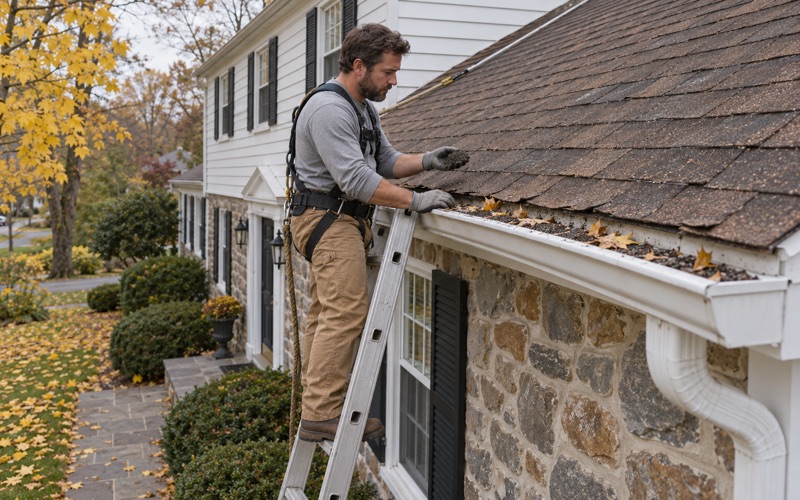
When we size and pitch gutters and downspouts, we plan the discharge point along with the run, tying into the building’s draining system where one exists. Gutters belong to the roof scope on every job we write, never an afterthought added once the roofing is down.
Sizing for the Roof Above
A downspout’s capacity has to match the roof area feeding it. On apartment buildings with long eaves, or with several roof planes draining to one corner, an undersized leader overflows in a hard rain even when it is perfectly clean. We measure the drainage area before recommending sizes, and the gutter and leader work appears as its own line on the estimate.
Low-Slope Roofs on Mid-Rise and High-Rise Buildings
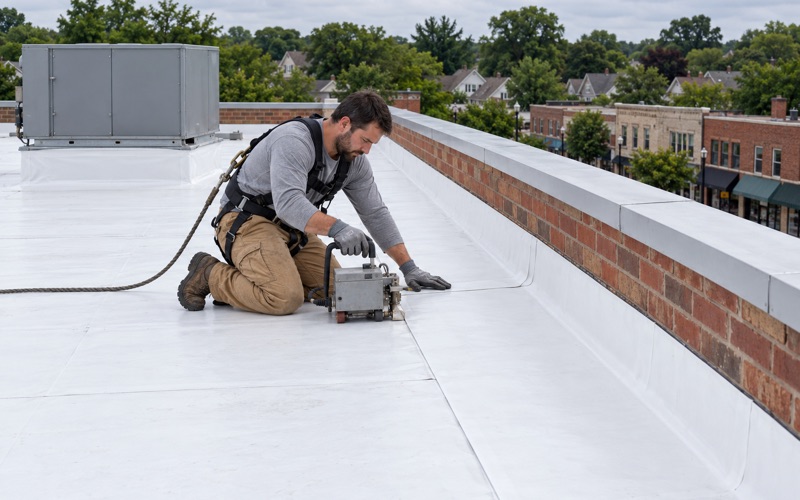
A nine-story tower or a five-story apartment building usually carries a low-slope roof rather than shingles. That typically means a membrane such as EPDM rubber, TPO or PVC single-ply, or torch-down modified bitumen. Which system a given building has is something we confirm on the roof, never something we assume from the street.
Membrane Seams, Drains and Rooftop Equipment
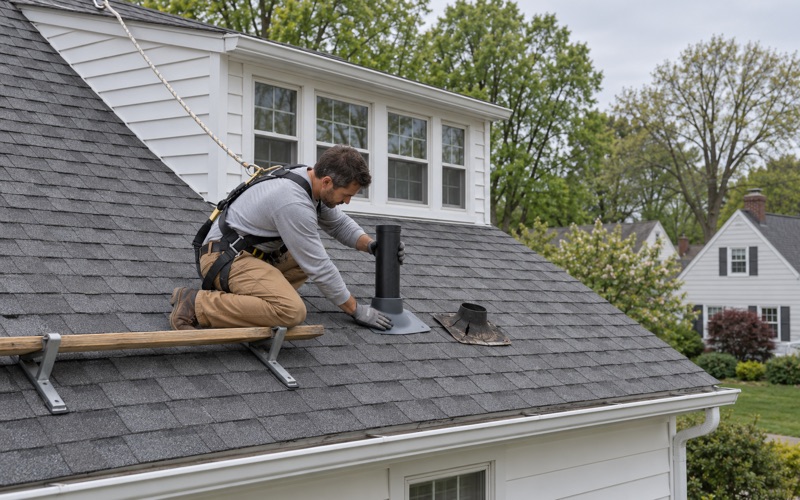
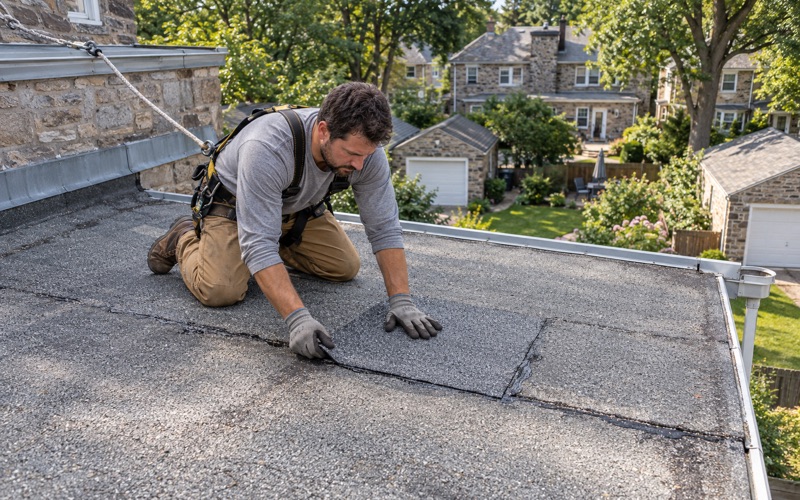
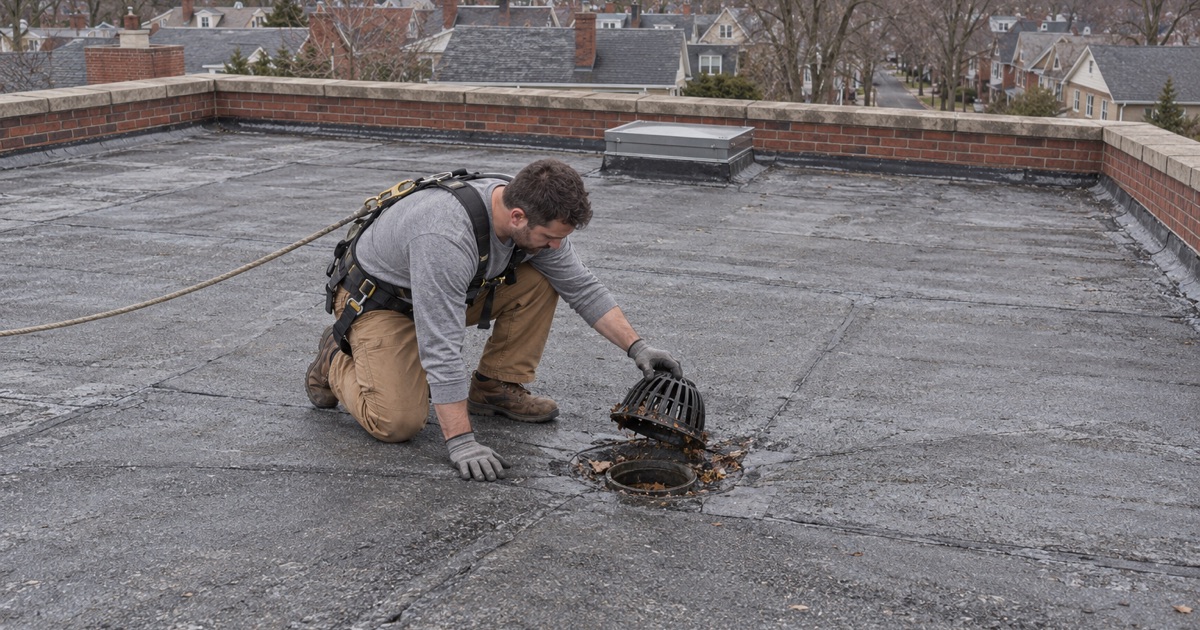
On a membrane roof, leaks most often start at seams, around drains, and where the membrane meets rooftop units, vent stacks and roof hatches. Each of those is a place where two materials meet and move differently through the seasons.
Our inspection walks those details one by one, and our scope names each repair by location. A manager reading the estimate can see which seam, which drain and which curb we intend to fix, rather than a single line for general leak repair.
Parapet and Wall Flashing
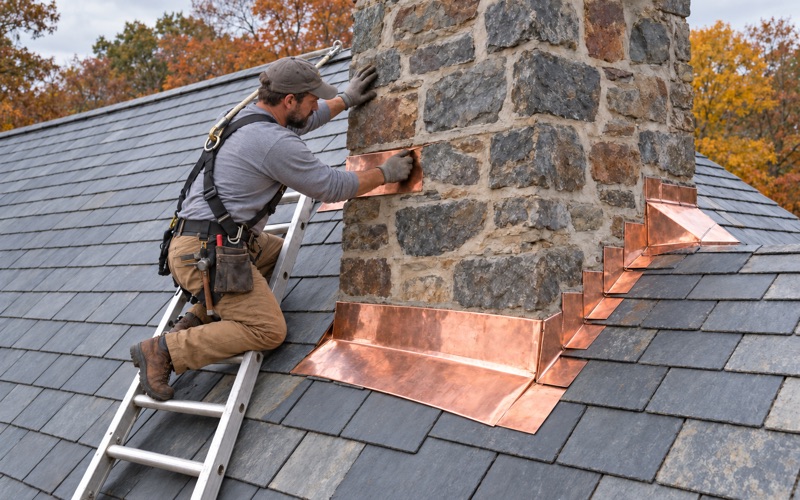
Where a flat roof meets a parapet or a taller wall, the flashing carries most of the load. We replace wall, step and counter flashing with the roof instead of reusing it under new material, because old metal under a new membrane is where the next leak usually begins.
On masonry buildings we pay particular attention to the counter flashing set into the wall. If the mortar joint or reglet holding it has opened, water gets behind the flashing no matter how good the membrane is.
Working Around Tenants
A roof job on an occupied building is also a logistics job. We plan staging, material hoisting and the loudest tear-off hours with the manager ahead of time, so residents hear about the work before they hear it overhead.
At the end of each work day we clean the grounds, the walkways and the gutters, including a magnet sweep for roofing nails around entrances and parking areas. Where many residents walk past the work every day, a stray nail is not a small matter.
- 20+ Years in Roofing
- Free Written Estimates
- Line-by-Line Scopes