Abington Superior Roofing takes on roofing in Delran with more than 20 years in the trade, and the job we weigh most carefully here is not a worn shingle field but a roof that took a blow from above. A falling limb or a whole trunk changes what a repair involves, from the framing up through the decking and the covering.
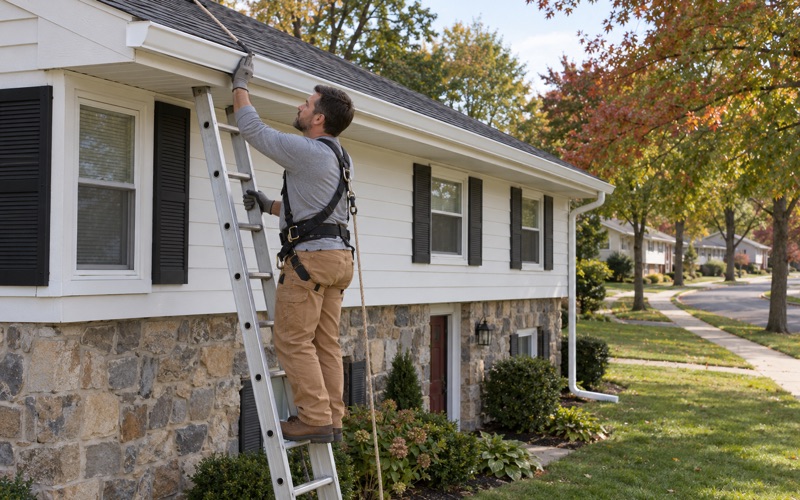
When a homeowner calls about a leak or a strike, we go into the attic as well as onto the roof. Water and impact damage both show up under the deck before they show up on top, and tracing the problem from inside is how we keep the price tied to what actually broke rather than to a guess made from the driveway.
You also get a plain answer before anything else is discussed. If the roof can be repaired, we say so and price the repair. Replacement comes up only when the framing, the decking or the age of the covering makes a patch the wrong use of your money.
The April 1, 2023 Tornado at Haines Mill Road
Delran is named on the National Weather Service’s own damage survey for the evening of April 1, 2023. The Mount Holly office rated the storm an EF-1 and listed it as the Cinnaminson, Delran and Moorestown tornado. It touched down in Cinnaminson at 6:59 p.m. It ran about six miles and lifted in Moorestown four minutes later.
Where the path was widest
The survey says plainly that the tornado crossed Haines Mill Road in Delran, where it grew to its greatest width. That width was about 600 yards, roughly a third of a mile of ground under the circulation at once. Haines Mill Road runs through Millside Heights, where one house listed on the road was built in 1963.
The survey’s estimated peak wind of 100 mph is a figure for the whole path, not a reading taken on any Delran street. We are careful with that distinction, because a homeowner deciding what to inspect needs to know what the storm actually did here, not the worst number it reached somewhere along six miles.
What the survey recorded along the path
Along the track, the survey describes trees snapped and uprooted, numerous trees down, and softwood trees broken at the trunk. Outside Delran, the survey also notes minor damage to roof shingles on a home on Augusta Drive in Moorestown. The Delran crossing reads as a tree event far more than a shingle event.
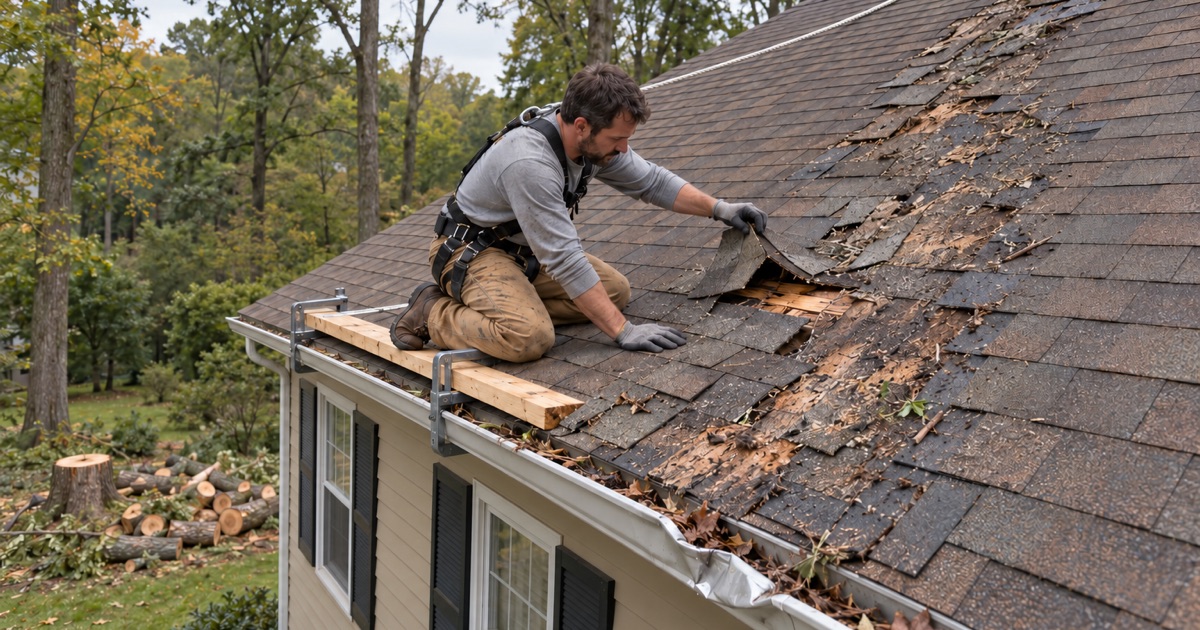
Delran Township’s own notice after the storm described crews removing two large tree trunks that had driven themselves into a senior resident’s roof. That single report captures the real hazard on this stretch of the path. When a tornado is breaking trunks rather than lifting tabs, the roof is threatened by weight and impact, not by wind getting under the edges.
Why the age of the framing matters here
Delran grew fast. The population went from 5,327 at the 1960 count to 14,811 by 1980, and close to half of today’s housing units date from 1960 to 1979. A rafter on one of those houses has carried its load for decades, and a falling trunk tests it in a way no ordinary winter does.
That history is why we do not treat a tree strike as a shingle repair. The framing on a house of that age may be perfectly sound, but it has to be looked at directly once something heavy has landed on it, and the only way to do that honestly is from the attic.
Looking for roofing closer to Upper Gwynedd? See Roofing Services in Upper Gwynedd.
When a Tree Comes Through the Roof
A trunk that punctures a roof leaves three separate problems stacked on top of one another: broken or cracked framing, shattered decking and an open hole in the covering. Each one needs its own fix, and fixing the top layer while ignoring the two underneath is how a tree-strike repair starts leaking again a season later.
Rafters first
We start with the rafters and any ceiling joists under the impact. A cracked or split rafter cannot be judged from the roof surface, so we look from the attic for fractures, crushed bearing points and nails pulled loose from the ridge board. We also check the members on either side, since a heavy trunk often spreads its load beyond the one it hit.
Where a rafter is damaged, the usual repair is to sister a new full-length member alongside it or to replace it outright, then restore the connections at the ridge and the wall plate. The roof surface is not closed up until the framing under it is straight and carrying its share of the load again.
The decking around the impact
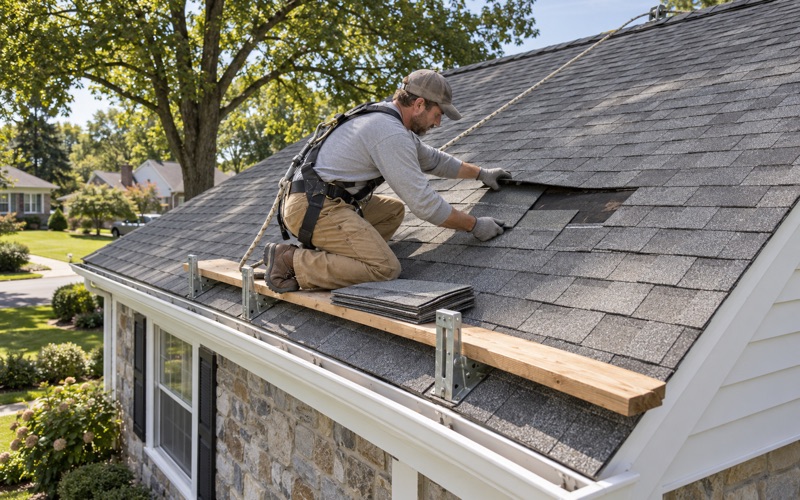
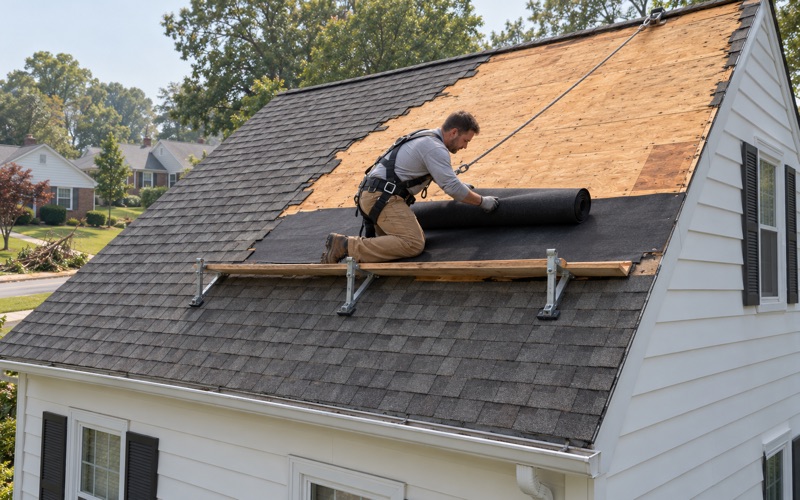
Once the framing is sound, we cut back the broken decking to clean edges that land on rafters. A tree strike rarely damages only the sheet it went through; panels around the hole are often cracked, delaminated or pushed off their nails. Every damaged sheet we find is photographed and shown to you before it is replaced, at the per-sheet price written into the contract.
Replacement panels have to meet the shingle maker’s floor for a roof deck. CertainTeed’s Landmark instructions, for example, require at least 3/8-inch plywood, 7/16-inch non-veneer panel or nominal one-inch boards. We match the new decking to the thickness and plane of the old so the patched area does not show as a dip or a ridge once the covering goes back on.
Closing the hole properly
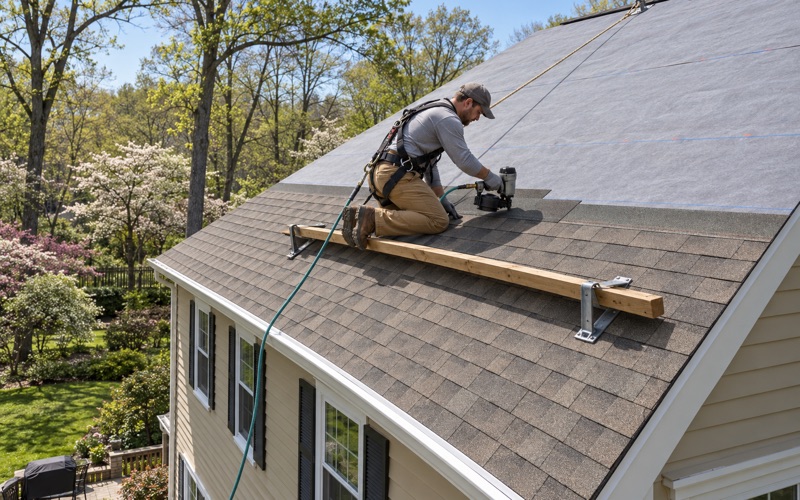
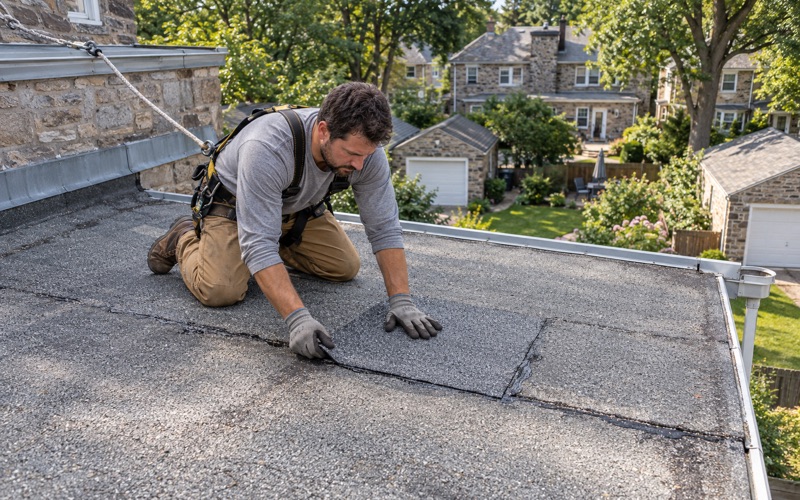
With framing and deck repaired, the opening is dried in with underlayment that laps correctly into the surrounding roof, and the covering is woven back in rather than laid over the top as a patch. Matching an architectural shingle in color and profile takes some care, and we tell you in advance how close the match is likely to be.
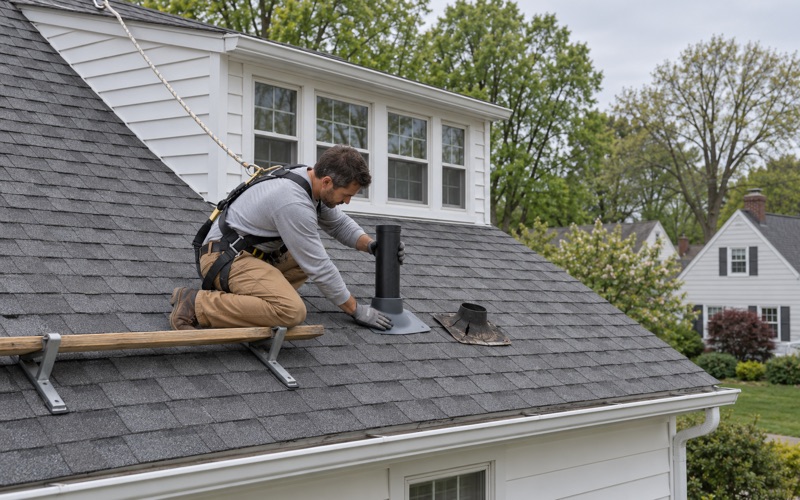
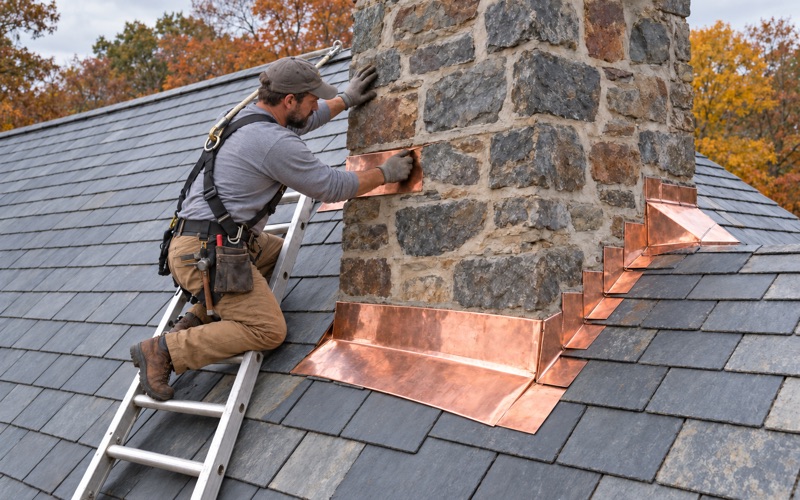
Any step flashing, counterflashing or pipe boot inside the repaired area is replaced, not bent back into shape and reused. A trunk that lands near a chimney or a wall line usually distorts the metal there, and old flashing pressed back under new shingles is a common source of the second leak after a storm repair.
Temporary Cover and the Claim After a Tree Strike
The hours after a tree comes through a roof are about stopping water, keeping the record intact and not making a decision you will regret later. A careful temporary cover protects the house without destroying the evidence your insurer will want to see, and the paperwork you keep from that first night matters more than most owners expect.
Getting the tree off and the roof covered
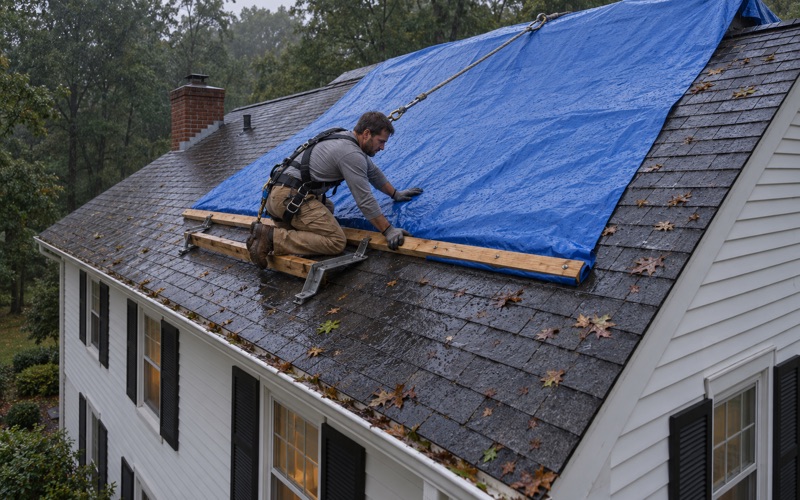
The tree has to come off before the roof can be dealt with, and removing it is tree-service work. Once the trunk is clear, we tarp the opening so the tarp is fastened beyond the damaged area into sound decking, with the upper edge tucked under a course of shingles so water sheds over it instead of running underneath.
A tarp is a stopgap, not a repair. It buys time for an adjuster’s visit and for the framing work, but sun and wind wear it down quickly. We set the temporary cover with that timeline in mind and come back to check it if the permanent repair is waiting on a claim decision.
Photographs and a written record
Before anything is cut away, we photograph the strike from the roof and from the attic: the hole, the broken rafters, the cracked panels and any water staining on the ceiling below. Those photos go into a written description of the damage that you can hand straight to your insurer as part of your own claim.
Our scope lists tear-off, decking, underlayment, flashing, ventilation and gutters as separate lines rather than one lump figure. That makes it easier for you and the adjuster to see what the tree damaged and what it did not, and to compare our numbers against any other estimate line by line.
Meeting the adjuster
If you ask, someone from our crew will meet your insurance adjuster on site and walk through what we found, including the framing damage that cannot be seen from the ground. We explain the repair and answer questions about the work. Having the person who opened the attic in the same conversation saves a second visit and a round of guesswork.
We do not negotiate your claim or act on your behalf with the insurer. The claim is between you and your carrier. What we provide is an accurate account of the damage and the repair it needs, so the decision is made on what is actually there.
Checking a Delran Roof After a Severe Storm Warning
Delran sits in the National Weather Service forecast zone for Northwestern Burlington, served by the Mount Holly office, and a severe thunderstorm or tornado warning for the area is the moment to think about the trees around the house rather than the shingles alone. A quick look after the storm passes can catch a problem before the next rain finds it.
What to look for from the ground
After a storm, walk the yard and look up. Broken limbs hanging in the canopy, a trunk leaning toward the house or fresh splits in a large tree are all worth noting, because a damaged tree can come down days later in an ordinary wind. On the roof itself, look for branches resting on the surface, dents in the gutters and a sagging line along the ridge or eaves.
Inside, check the ceilings in the top floor rooms and, if you can do it safely, the attic. A new water stain, light showing through the deck or a cracked board overhead after a storm tells you something hit hard enough to matter, even when the roof looks fine from the street.
When to call us
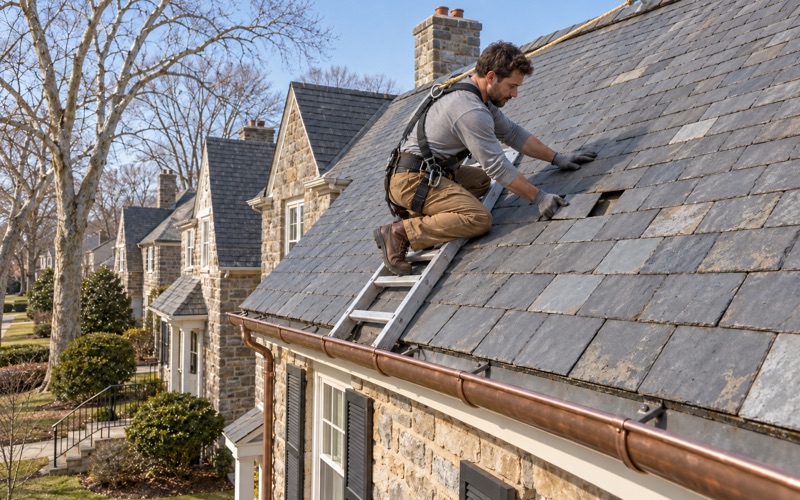
Call us when a limb or trunk has landed on the roof, when you see a stain or daylight in the attic, or when the roofline looks different than it did before the storm. We inspect from the attic and the roof, tell you whether a repair will do and write up what we find with photographs.
If something heavy is still resting on the roof, keep people out of the rooms under it and stay off the roof yourself. A damaged rafter can fail under added weight, and a wet, debris-covered roof after a storm is not a safe place to stand.
Gutters and cleanup after the repair
A tree strike that crosses the eaves usually bends or tears the gutter along that edge as well. We size and pitch the replacement section with the roof repair so water still reaches the downspouts, rather than leaving a gutter that holds water against new fascia.
At the end of each work day, we clean the driveway, the yard and the gutters, and we run a magnet across the grass and drive for roofing nails. After a storm has already scattered debris across the property, the last thing a household needs is a stray nail in a tire or a bare foot.
- 20+ Years in Roofing
- Free Written Estimates
- Line-by-Line Scopes