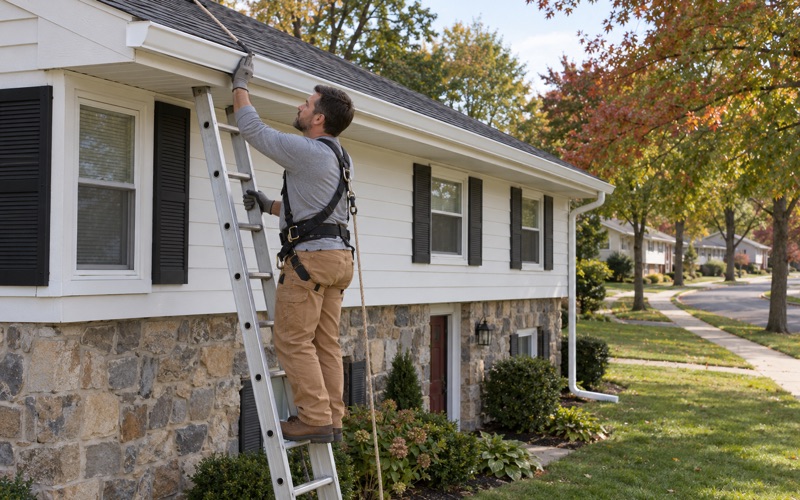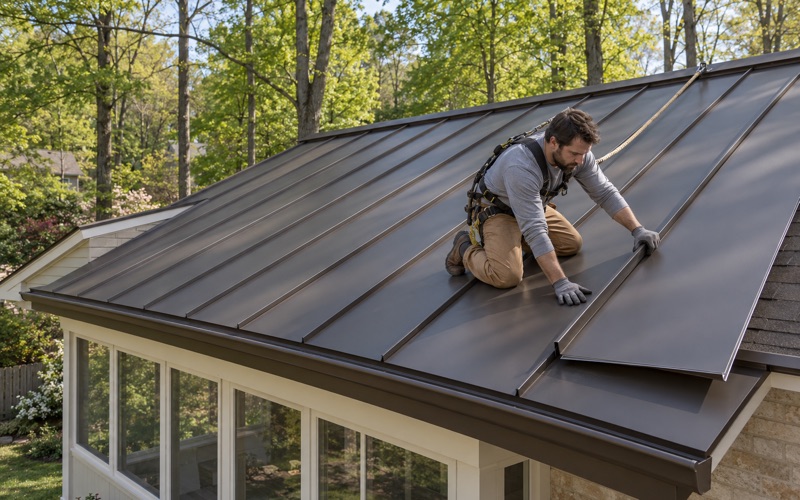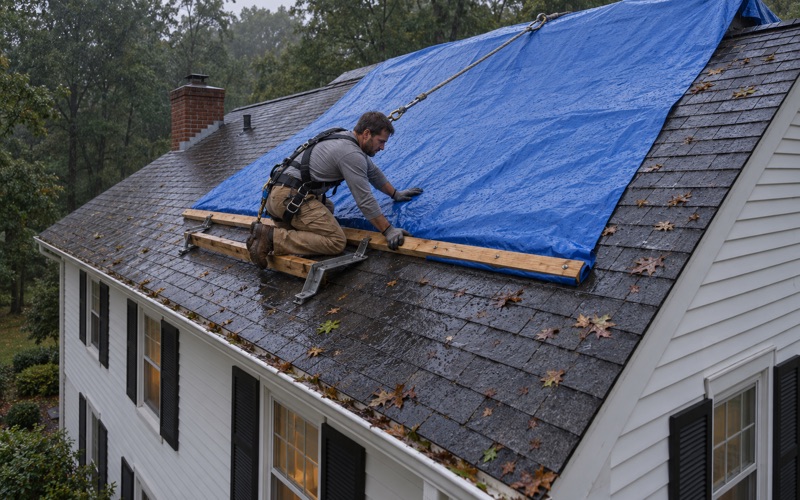
Abington Superior Roofing brings more than 20 years of hands-on work to roofing in East Norriton, and most calls we take here begin the same way: a stain on a ceiling, a few shingles in the yard, or an owner wondering whether a tired roof has another season left. We answer that last question honestly before anything else. If a repair will hold, you hear that from us before replacement is ever on the table.
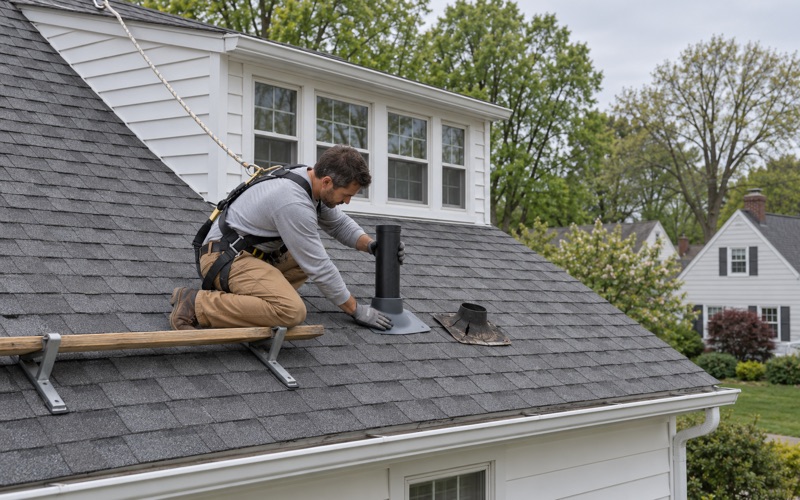
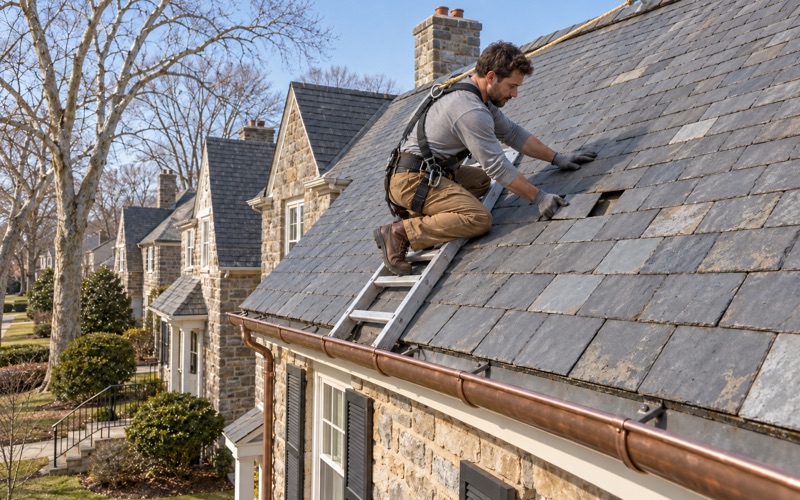
When water shows up indoors, we go into the attic as well as onto the roof. Following the stain back along the rafters and sheathing shows where the water really gets in, which is often a flashing joint or a pipe boot several feet uphill from the drip. Only after we have found the entry point do we put a price on fixing it.
Every estimate we write splits the job into separate lines for tear-off, decking, underlayment, flashing, ventilation and gutters. That lets you set our number beside another contractor’s and compare them item by item, rather than guessing what a single lump sum covers. The sections below explain what is particular about roofs in this township and how a job here gets planned.
Roofing Near the Einstein Montgomery Campus on Germantown Pike
A Hospital Built Where a Golf Course Used to Be
East Norriton’s newest large roofs sit on an institutional campus, not a subdivision. Jefferson Einstein Montgomery opened on September 29, 2012, as a 146-bed, $350 million hospital on 87 acres of Germantown Pike frontage that had been a golf course, and a 75,000-square-foot medical arts building was later added on the same grounds.
Those are commercial buildings looked after by their own owners, and we mention them as a landmark rather than as anything we have worked on. What the campus marks for a homeowner is the contrast around it. The pike carries the township’s newest big construction, while the houses on the streets behind it are decades older and their roofs have had far longer to age.
Living Beside the Norristown Farm Park
The hospital looks out over Norristown Farm Park, 690 acres of state-owned land around Norristown State Hospital that stretch across East Norriton, West Norriton and Norristown. Established in 1995, the park is administered by the Pennsylvania Department of Conservation and Natural Resources together with Montgomery County, and about 80 percent of it is still farmed, with Stony Creek running through the fields.
Its historic farm buildings, including the Dairy Barn and the Milk House visitor center, belong to the Commonwealth, and we have no part in their upkeep. For a house on the township side of the park, the open ground matters in a plainer way. A roof with nothing but fields upwind gets none of the shelter that trees and neighboring buildings give elsewhere, so we look hard at nailing patterns and ridge caps when we inspect one.
Looking for roofing closer to Lansdale? See Roofing in Lansdale.
1950s and 1960s Houses Between the Hospital and the Farm Park
Much of East Norriton’s housing predates the hospital by half a century. Census estimates count 1,270 homes built during the 1950s and another 1,118 from the 1960s, a combined 2,388 units, and 3,764 of the township’s 6,542 housing units are single-family detached houses. Those two decades alone account for more than a third of the township’s housing.
Re-Roofing a Midcentury House
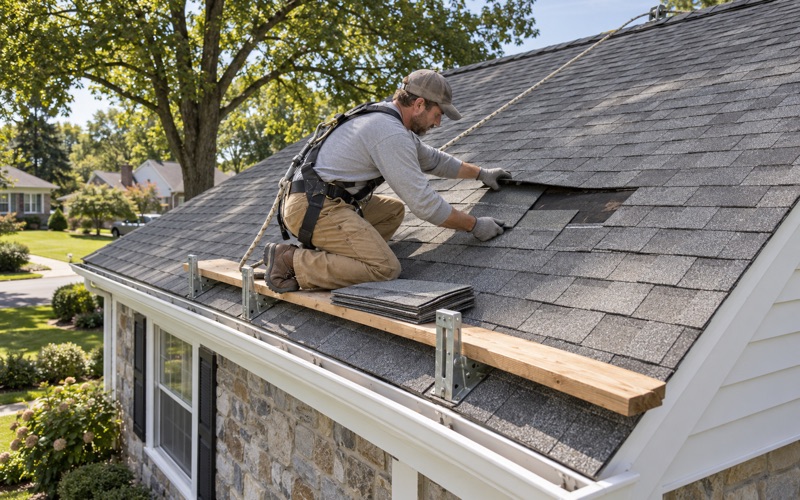
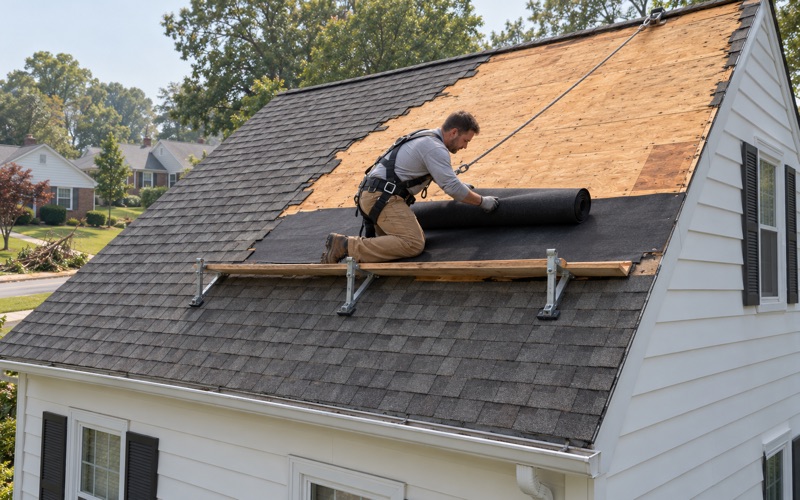
A house from that era has often been re-roofed at least once already. The International Residential Code’s reroofing section, R908, caps a roof at two layers, so when we find two layers on the deck, both come off before anything new goes down, and the tear-off appears on the estimate as its own line rather than hidden inside a total.
Decking under a roof that old can hide soft or delaminated sheets that nobody sees until the shingles are gone. When we find damage, we photograph it and show it to you before a single sheet is replaced. The price per sheet is already written into the contract, so a surprise on the deck never turns into a surprise on the bill.
Chimneys, Flashing and Attic Ventilation
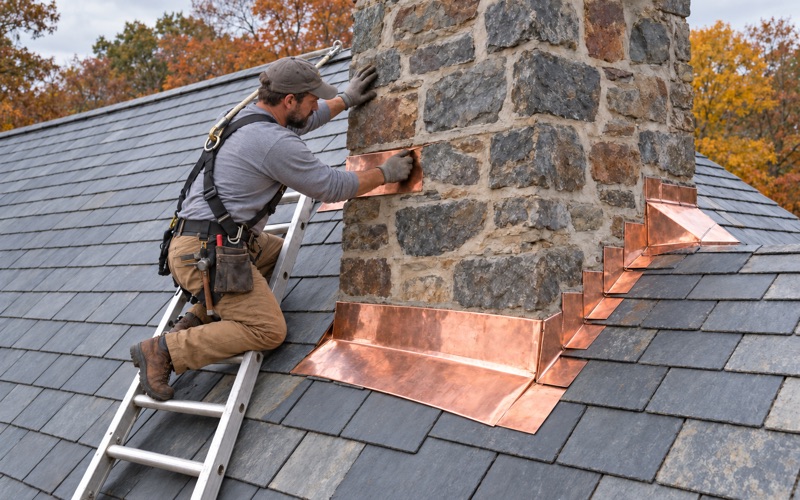
Brick chimneys are common on houses of this age, and the metal around them is where a large share of leaks begin. We replace step flashing, counter flashing and chimney flashing with the roof instead of bending old metal back under new shingles. Behind a wide chimney we build a cricket, a small peaked saddle that sends water around the brick instead of letting it pool against it.
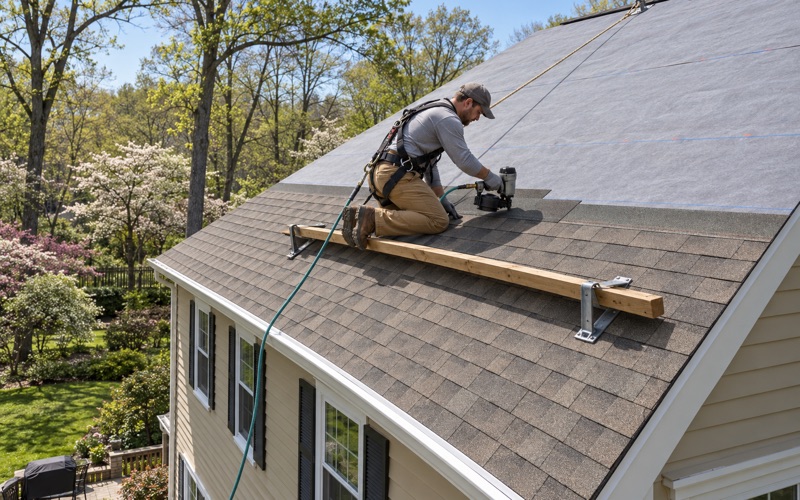
Ventilation in older attics was frequently an afterthought. Pairing a ridge vent with soffit intake, sized by net free area, keeps the attic closer to outdoor temperature in winter, which helps limit ice dams along the eaves. At those eaves we also lay a self-adhering ice and water barrier meeting ASTM D1970 under the shingles, along with drip edge at the eaves and rakes.
Twins, Townhouses and Shared Walls
The same estimates count 858 attached units in the township, a mix of twins and townhouses. On an attached house, one owner’s roof meets the neighbor’s at the party wall, and that seam is where a careless job leaks first. The tie-in has to be planned before the first shingle comes off, not improvised at the end of the day.
We look at the condition of the neighboring roof, work out how the new flashing and underlayment will lap onto the shared line, and talk through timing so the family next door is not surprised by a crew on the ridge. Handled that way, the joint between two roofs stays watertight instead of becoming the next service call for either household.
Flat and Low-Slope Roofs on Offices, Medical Buildings and Apartments
Office Campuses Along Germantown Pike
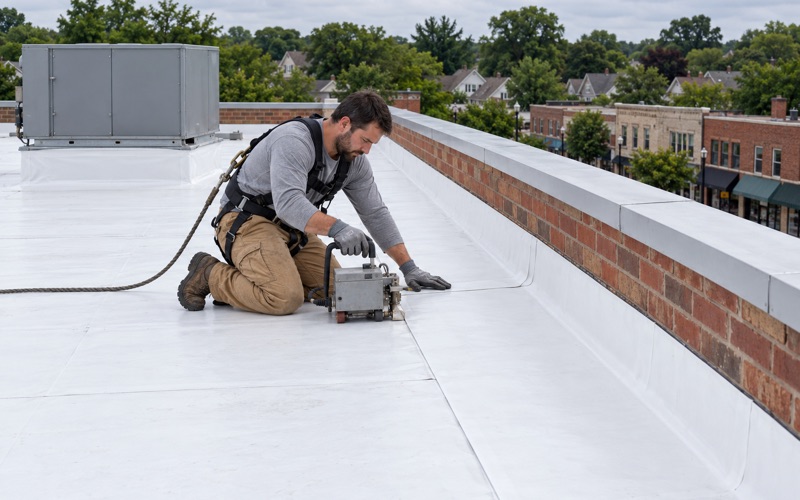
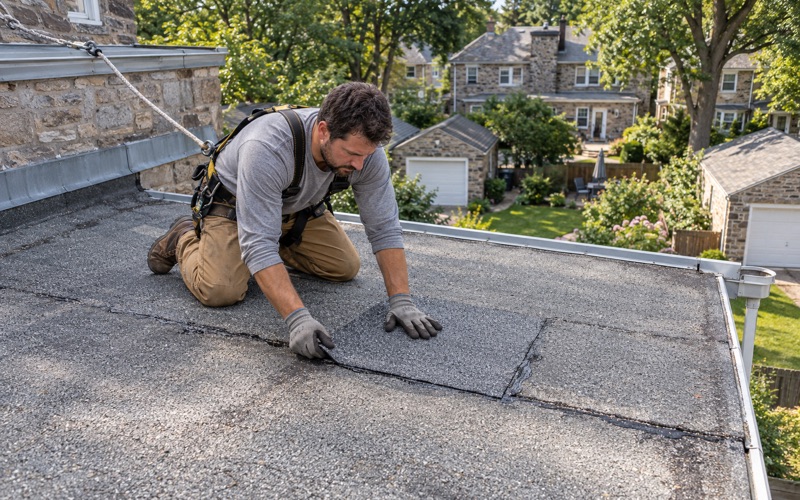
Not every roof in East Norriton is pitched. Bentwood Executive Campus at 301 East Germantown Pike combines a 100,000-square-foot office building, a 130-suite hotel, a 261-unit multifamily complex and a daycare, and Norriton Business Campus sits on Campus Lane. Buildings of that type usually carry flat or low-slope roofs covered by membranes rather than shingles.
For the owner of a smaller office, a medical suite or a mixed-use building near the pike, our approach does not change from a house. We walk the roof and the space under it before pricing, find where water is actually entering, and say plainly whether a patch, a section replacement or a full new membrane is the honest answer for the budget and the building.
Apartment Buildings and Larger Residential Roofs
Census estimates place 951 housing units in buildings with 50 or more apartments, most of them rented, and roughly 650 more in buildings of 10 to 49 units. Those roofs are usually bigger and flatter than a typical house, and a leak there can reach several apartments before anyone traces it back to the roof.
Large residential roofs bring their own logistics: tenants living below, parking lots beside the building, and drains or scuppers that must stay clear while the old roof is coming off. We plan staging and debris removal around those conditions and coordinate the work schedule with the property manager, so residents can still get in and out safely.
Choosing Between EPDM, TPO and Modified Bitumen
The common low-slope options are EPDM rubber, TPO and PVC single-ply membranes, and SBS or APP modified bitumen. EPDM is forgiving on simple decks, single-ply sheets with light surfaces reflect summer heat, and modified bitumen builds up a thick, tough layer that tolerates foot traffic around rooftop equipment.
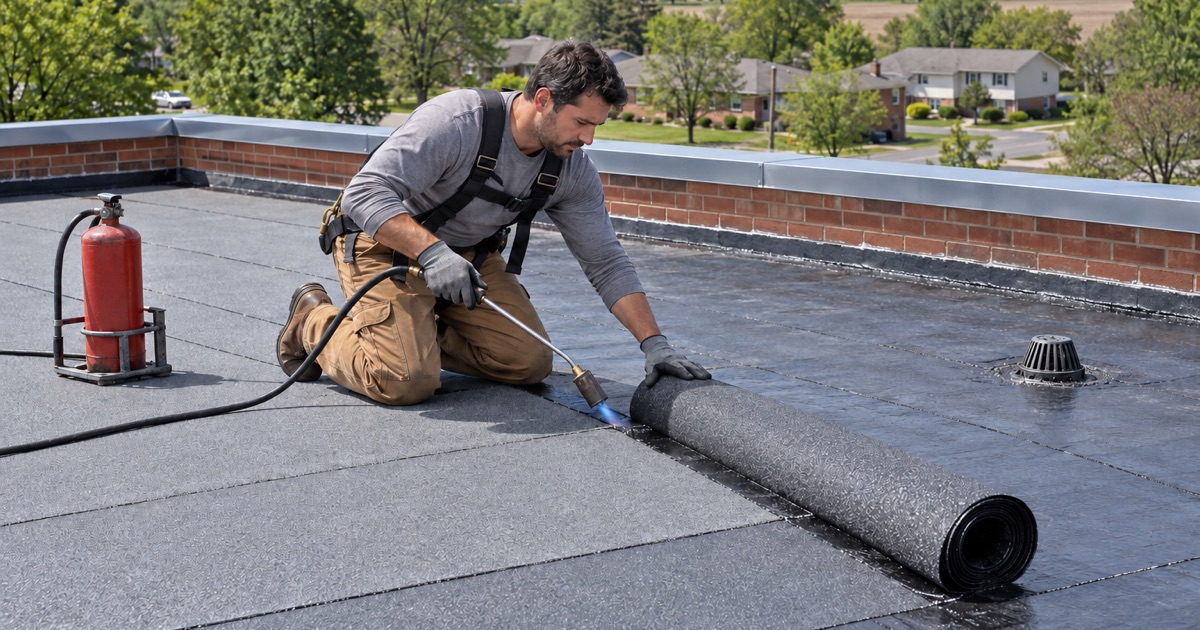
Modified bitumen can be torch-applied, self-adhered or cold-applied, and in East Norriton that choice carries a paperwork difference as well as a technical one, because the township treats open-flame roofing as its own permit. We lay out the options side by side, with what each costs and how long each should last, before you commit to one.
Permits, Hot Work and Planning a Roof Replacement in East Norriton
The Township’s Re-Roof Permit
Pennsylvania leaves re-roof permit rules to each township, so we check the rule for the house’s own township before we price the job. East Norriton treats a residential re-roof as permit work: its fee schedule, effective January 5, 2026, lists roofing, siding or stucco at $3.50 per square with a $150 minimum, plus a $75 permit application fee.
The township’s building permit application has a line for the number of roofing squares, asks for the contractor’s Pennsylvania registration number, and notes that documents such as truss drawings may be requested. Applications go to East Norriton Township Code Enforcement on Stanbridge Street, where the codes in effect include the 2018 International Residential Code. We build the permit into the schedule and the estimate from the first visit.
Hot-Work Permits for Torch-Applied Roofing
The same fee schedule lists a separate $100 fire code permit for hot work, and its scope names the application of roof coverings with an open-flame device. That covers torch-down modified bitumen, a method often used on porch roofs, rear additions and other low-slope sections of houses as well as on commercial buildings.
When a torch-applied system is the right call, we account for that permit in both the schedule and the price. When a self-adhered or cold-applied sheet will do the same job, we explain the tradeoff, so you can decide whether an open flame is worth it beside wood trim on an occupied house.
Contracts, Storm Claims and Each Work Day
Our contracts follow Pennsylvania’s Home Improvement Consumer Protection Act. Each one carries the three-business-day cancellation notice, and deposits stay within the legal limit of one-third of the price on contracts over $5,000. If a storm caused the damage, we photograph it and write it up for your own claim, and we will meet your adjuster on site when you ask, without negotiating the claim for you.
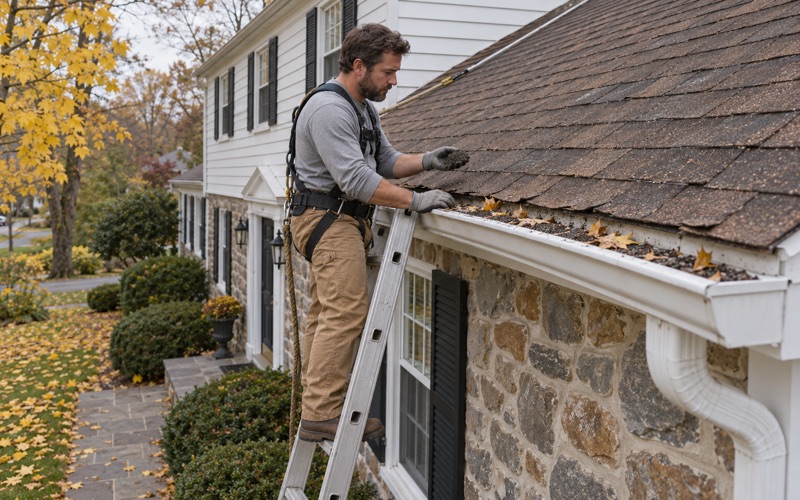
Gutters and downspouts are sized and pitched as part of the roof, not handled as an afterthought once the shingles are done. At the end of every work day, the driveway, yard and gutters are cleaned, and the lawn gets a magnet sweep for stray roofing nails, so the house is livable each evening until the last bundle is on.
- 20+ Years in Roofing
- Free Written Estimates
- Line-by-Line Scopes