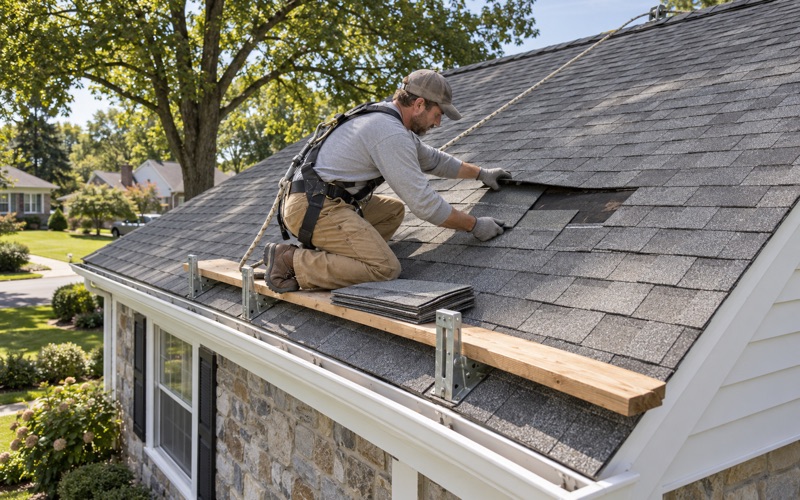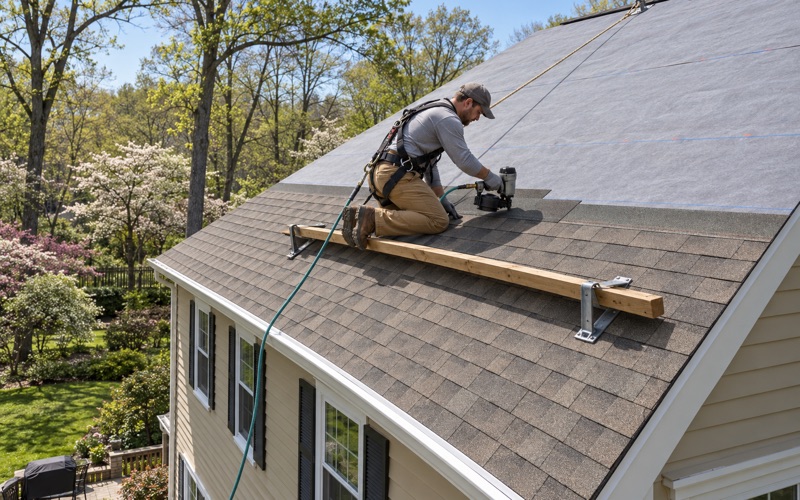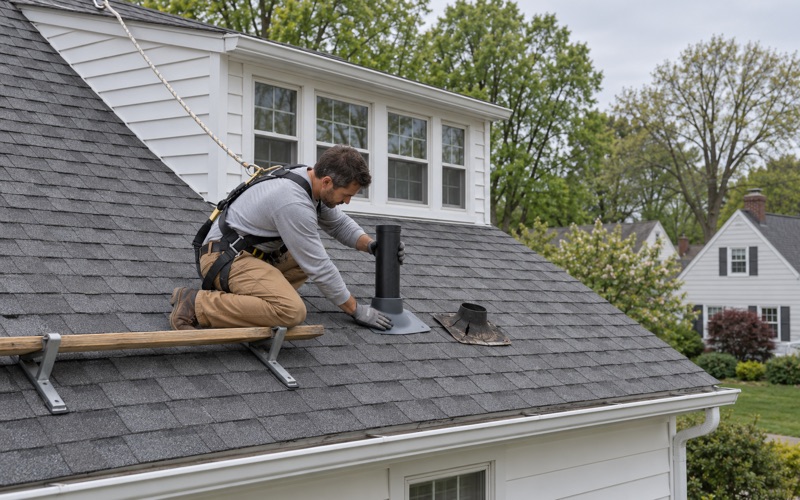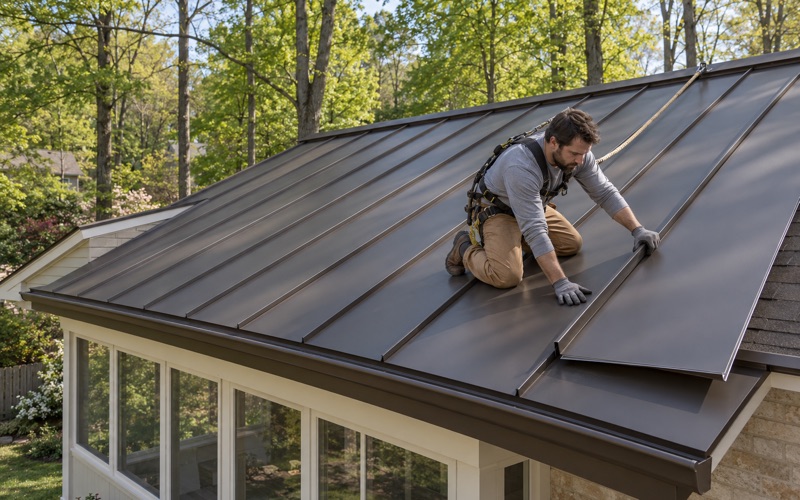
Abington Superior Roofing has spent more than 20 years on roofs across the region, and our roofing in East Whiteland starts the same way every time: with a clear answer before any money moves. Much of our work here leans toward office and flex buildings, where the roof is part of what a property sells on. The rest is the houses and townhouses that sit around them, and those owners get the same straight treatment.
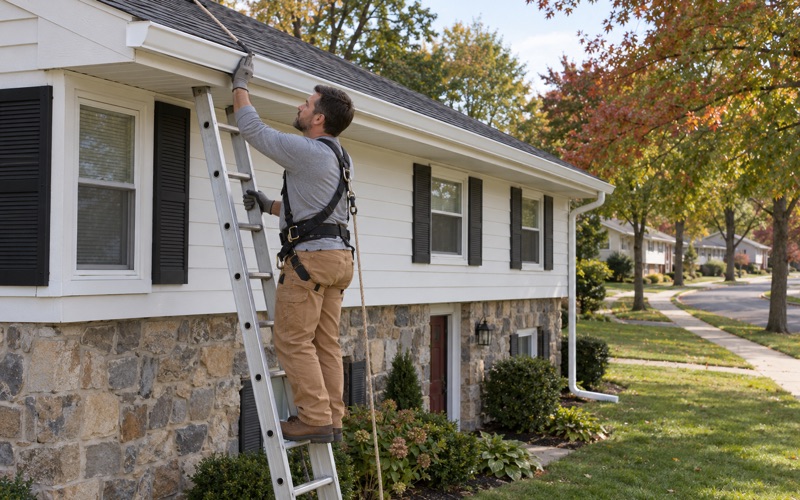
On a leak call we check the attic, or the space above a ceiling grid, as well as the roof itself. A stain on a ceiling tile rarely sits directly under the opening that let the water in, so we trace the path first. Once we know where the water actually enters, we tell you plainly whether a repair will hold before anyone mentions replacement.
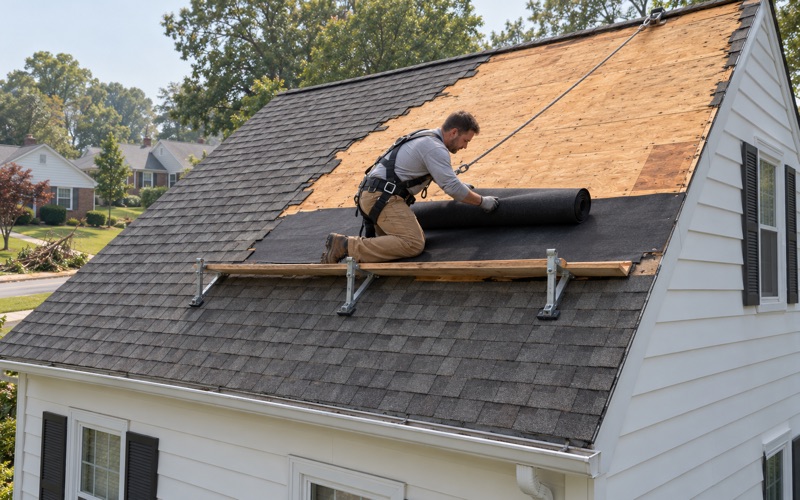
When we do put numbers on paper, the written scope breaks out tear-off, decking, underlayment, flashing, ventilation and gutters as separate lines. A facilities manager or a homeowner can set two bids side by side and see exactly where they differ. That same format also makes the paperwork that follows, from warranty records to township permits, much easier to assemble and hand on.
Office and R&D Roofs in the Great Valley Corporate Center
A campus built for offices and research
East Whiteland is home to the Great Valley Corporate Center, an office and research campus of about 700 acres and about 5 million square feet that carries a Malvern mailing address. Liberty Property Trust built it, and Patch reported during 2019 that the center had gone up about 45 years earlier. Regional and national offices fill it, and Penn State Great Valley is listed among its occupants.
For roofing, that history matters less than what it means on the ground. A campus put up and renovated over decades holds buildings of different ages, each with its own roof history and its own paperwork. We never assume one building’s roof tells us anything about the building next door, so each roof we look at here is judged on its own record and its own condition.
What one listed building tells us
One flex building in the park, 15-25 Great Valley Parkway, is marketed at 105,469 square feet with a 60-mil EPDM roof under warranty to 2039. The listing places it in the O/BP district of East Whiteland Township and describes it as recently renovated. The roof is printed on the sales sheet next to the clear height, which says a lot about how buyers and tenants weigh it.
That is one documented roof, not a pattern for the campus. We have not seen records for the other buildings, and we do not guess at their membranes, ages or warranty dates. When an owner or property manager calls us about a building along Great Valley Parkway or nearby, the first task is finding out what is actually on top of it and what papers come with it.
Office floors under a flat roof
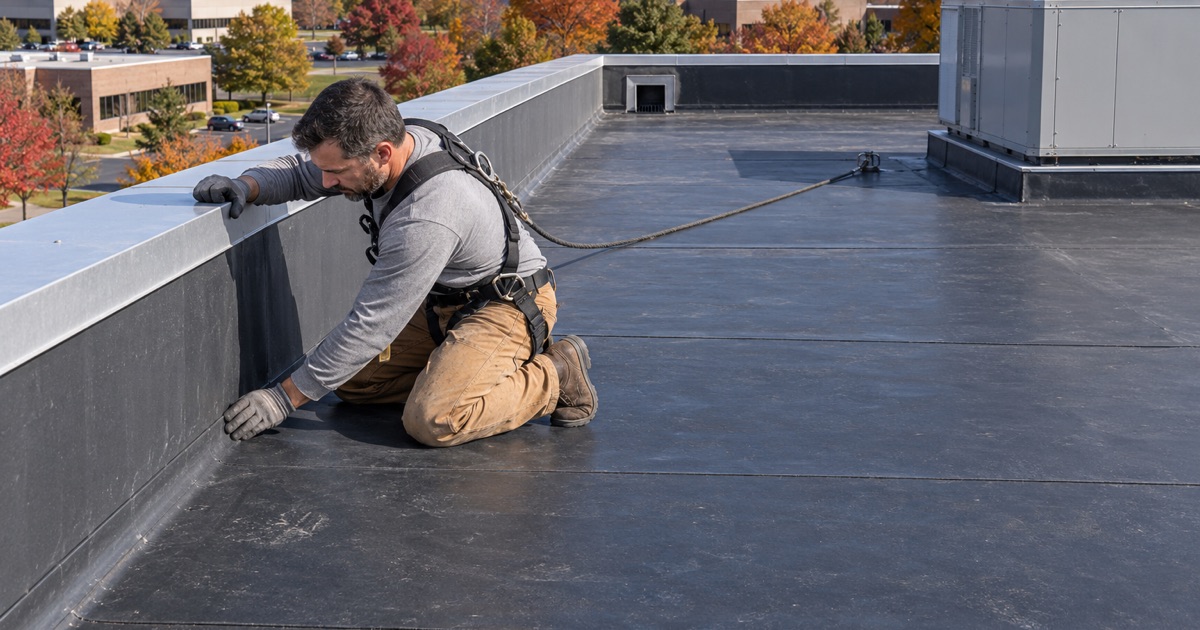
An office or lab floor reacts to a leak differently than open storage space does. Water that gets under a membrane can travel across insulation boards well before it drops onto a ceiling tile, a server closet or a conference table. That is why our inspection covers the space above the ceiling and the membrane above it during the same visit, rather than treating them as two separate calls.
Occupied space also shapes the schedule. Tear-off noise, adhesive odors near air intakes and crane lifts across a busy parking lot all need to be planned around the people working below. We work those details out with the building manager before any material arrives, so tenants know what to expect on each day of the job and nothing is improvised on the roof.
Looking for roofing closer to Worcester? See Roofing in Worcester.
EPDM and Other Low-Slope Membranes on Office and Flex Buildings
How a 60-mil EPDM roof ages
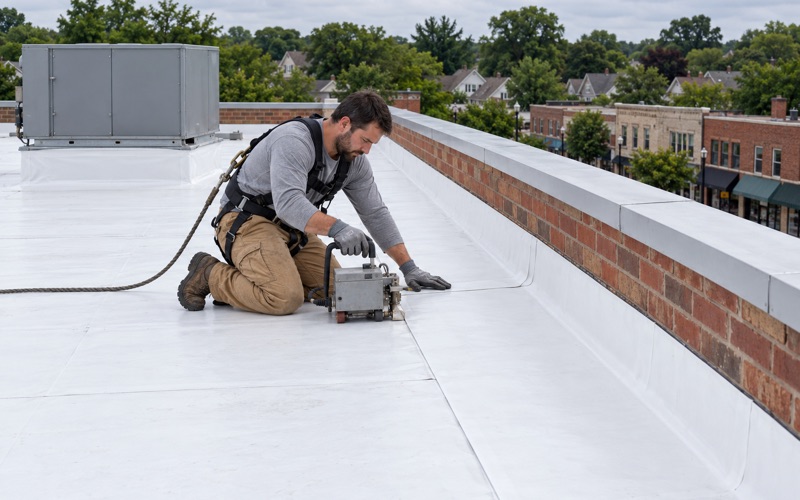
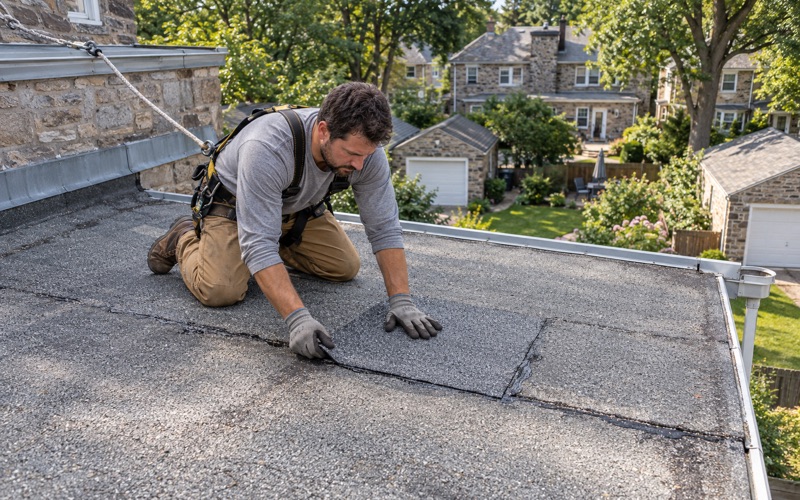
EPDM is a synthetic rubber membrane laid in wide sheets and joined at the seams with tape or adhesive. A 60-mil sheet is a common commercial thickness, and its weak points are rarely the open field of the roof. Trouble usually starts at the seams, the perimeter edge and the flashings around curbs, drains and penetrations, so those are the places we inspect first.
As the rubber ages, seam tape can lift, flashing can pull away from a curb, and ponding water can sit near a slow drain long enough to find a gap. Most of those problems are repairable when they are caught early and handled with compatible materials. We tell an owner which ones are, with photographs, before replacement comes into the conversation at all.
TPO, PVC and modified bitumen alongside it
Not every low-slope roof in the township will be EPDM. TPO and PVC single-ply membranes are heat-welded at the seams, while torch-down SBS and APP modified bitumen builds a roof up in layers. Each material has its own repair methods, and a patch that suits one membrane can fail quickly on another, which is why identification comes before any recommendation.
We also confirm how the existing system is attached, whether mechanically fastened, fully adhered or ballasted. That detail decides whether a repair can match what is already there or whether a section has to be rebuilt. It also shapes the price, because a fully adhered tear-off is a different day of labor than lifting ballast and loose-laid sheets.
Drains, scuppers and rooftop equipment
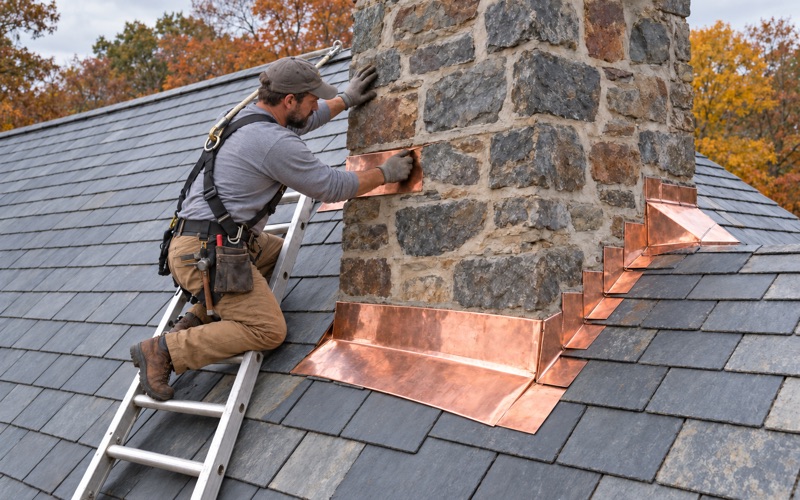
Office and research buildings tend to carry a lot of rooftop equipment: air handlers, exhaust fans, and the curbs, conduit and pipes that serve them. Every one of those penetrations is a flashing detail waiting to be checked. When we replace a roof, the flashings are replaced with it rather than reused under new membrane, because old flashing is where a new roof most often leaks first.
Drains, scuppers and the gutters and downspouts below them are sized and pitched with the roof, not left for later. A roof that sheds water well but dumps it against an entrance canopy or a walkway has only moved the problem down a level. We look at where the water ends up on the ground before calling the drainage finished.
Roof Warranties in a Commercial Lease or Sale
A warranty is a document with dates
On a building like 15-25 Great Valley Parkway, the roof warranty appears in the marketing alongside square footage and clear height. That makes the warranty a selling point, and it makes the terms behind it worth reading closely. A manufacturer warranty usually names the membrane, the installer, the coverage period and the conditions that can void it, and each of those matters to the next owner.
Unauthorized repairs are one of the common ways coverage is put at risk. Before we touch a roof that is still under warranty, we ask for the paperwork and work within its terms, which can mean contacting the warranty holder before a patch goes on. A quick repair that costs an owner the remaining years of coverage is not a bargain, however small the invoice looks.
Roof condition in a lease or a sale
When a building changes hands or a tenant signs a long lease, the roof is often one of the first systems the other side asks about. A written condition report with photographs, the membrane type and the remaining warranty term gives both parties something concrete to negotiate from, instead of a vague promise that the roof is fine.
We write those reports plainly, separating what needs work now from what can safely wait a few seasons. If damaged decking turns up once a section is opened, we photograph it and show the owner before anything is replaced, at a per-sheet price already set in the contract. Nobody learns about added decking costs for the first time on the final invoice.
Keeping the repair record intact
Every repair on a warrantied roof should leave a paper trail: the date, the location on the roof, the materials used and photographs before and after. That record is what an owner hands to a buyer, a lender or the manufacturer if a claim is ever made, and it is far harder to rebuild after the fact than to keep as the work happens.
We provide that record as part of the job rather than as an extra service. For property managers who handle several buildings, a consistent format from one repair to the next makes it simple to see which roofs are aging, which ones are still well inside their coverage, and which deserve a budget line for the coming year.
Permits, Registration and Planning Ahead in East Whiteland
Contractor registration for commercial work
East Whiteland Township requires contractor registration for all contractors working on a commercial site, not only the one pulling the permit. The all-trades fee is $75.00 per calendar year and is paid before permits are issued. A contractor pulling permits for home improvement work can instead provide its Pennsylvania Home Improvement Contractor registration, which keeps residential jobs on a simpler track.
That registration rule is about commercial work. A homeowner hiring for a house roof is dealing with home improvement rules, and our residential contracts follow Pennsylvania’s home improvement law, including the three-business-day cancellation notice and a deposit kept within the legal limit. Both sets of paperwork are settled before a crew is scheduled, so nothing holds up the start date.
What the fee schedule says about re-roofs
The township’s 2026 fee schedule prices a non-residential re-roof at 2% of cost with a $100 minimum, plus the state education fee. Re-roofs on one- and two-family homes are priced at 2% of cost with a $50 minimum. Questions about a specific property go to the East Whiteland Township Codes Department, which handles applications through an online permit portal.
The fee schedule tells us what a permit costs; it is not the whole rule on when one applies. Because each township in our service area sets its own approach to re-roofing, we confirm the requirement for the specific property with East Whiteland before the job is priced. If a permit applies, it goes into the schedule and the contract from the first estimate.
Redevelopment and the timing of a roof decision
During 2019, Patch reported a proposal to level nine existing buildings in the Great Valley Corporate Center and open about 50 acres for apartments, a hotel, office space, retail and parking garages. That was a proposal, and the article did not report township approvals. It is still a reminder that some owners in the park face a long-term question about their building.
For an owner weighing a roof against an uncertain horizon, the honest answer is often a well-documented repair rather than a full replacement. Where a building clearly has a long life ahead, a new membrane with a fresh warranty may be the better investment. We lay out both paths with costs side by side so the owner, not the roofer, makes the call.
Townhouses, storms and the homes nearby
East Whiteland is not only offices. About 31 percent of its housing was built during 2010 or later, and attached homes and townhouses make up a sizable share, many of them sharing walls and rooflines with a neighbor. We plan attached-home roofs with the neighboring roof and the shared wall in mind, so the joint between two owners stays watertight after only one side is redone.
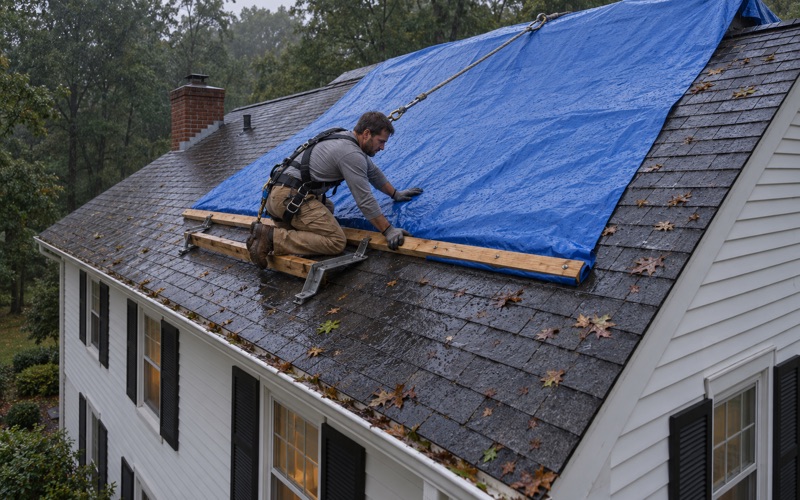
On the evening of March 16, 2026, the Storm Prediction Center logged two reports of trees falling into houses in the township. When a storm does damage like that, we photograph it and write it up for the owner’s own claim. We will meet the insurance adjuster on site when asked, without negotiating the claim, and then get the roof closed up properly.
- 20+ Years in Roofing
- Free Written Estimates
- Line-by-Line Scopes