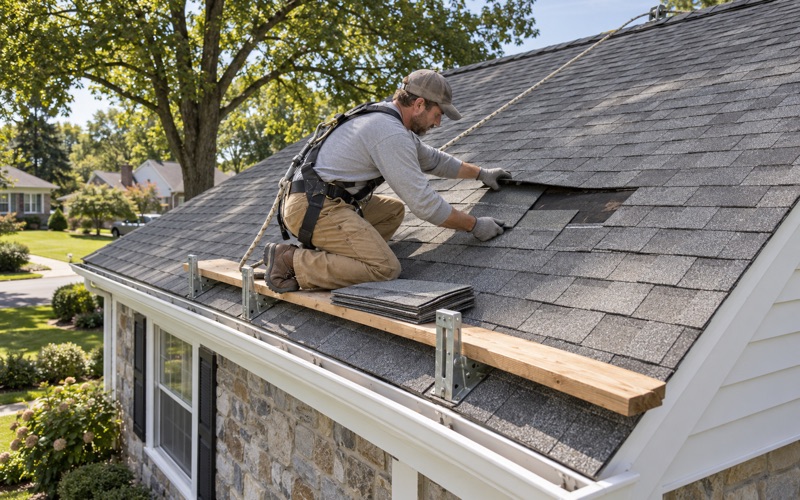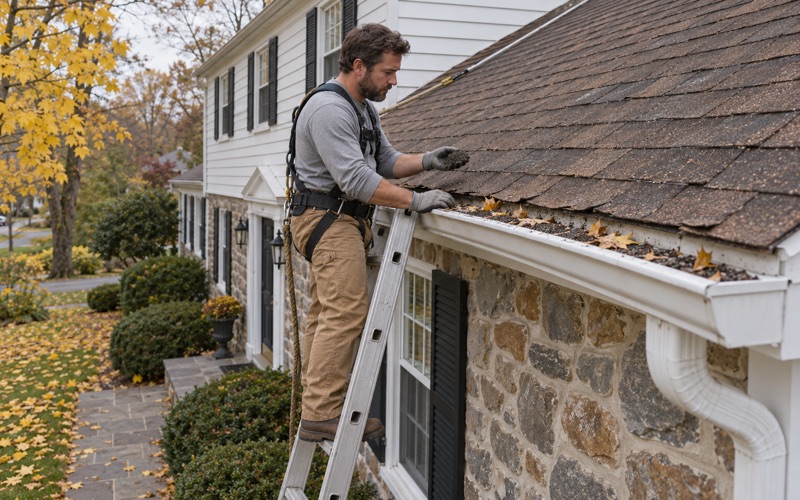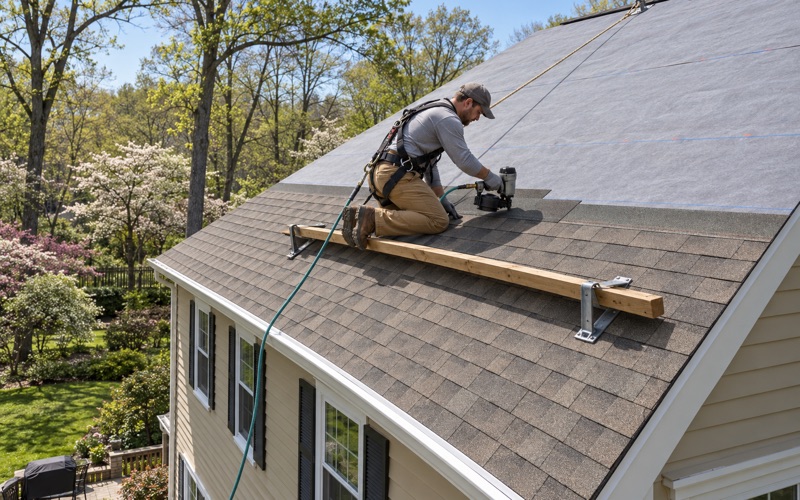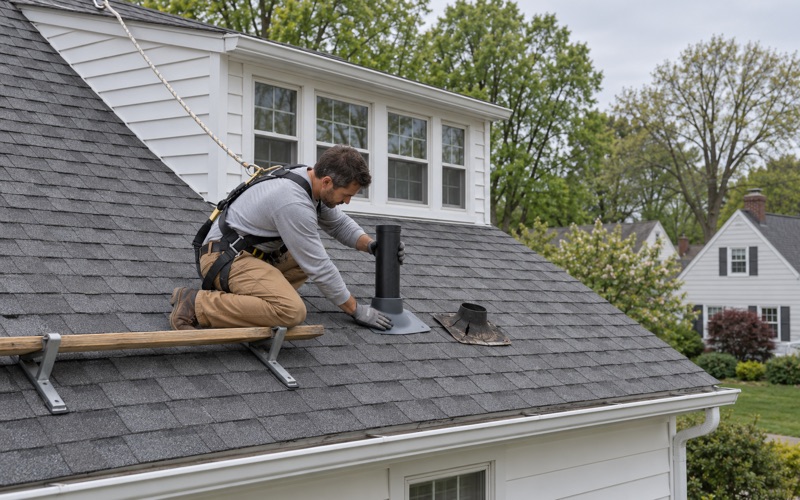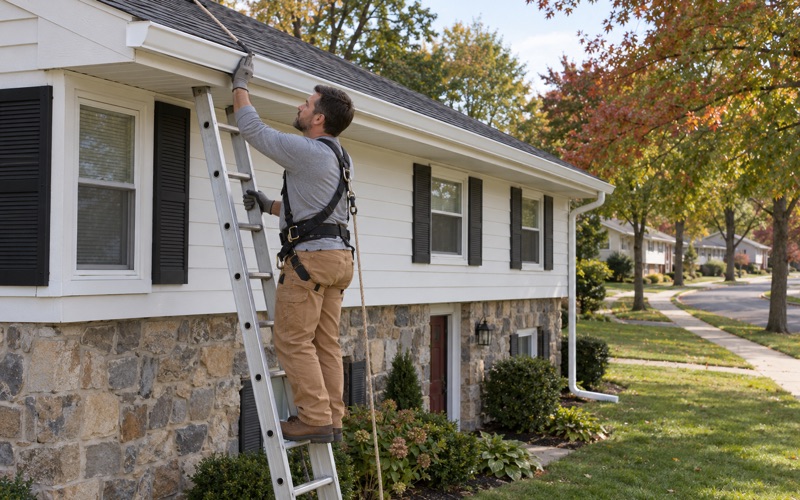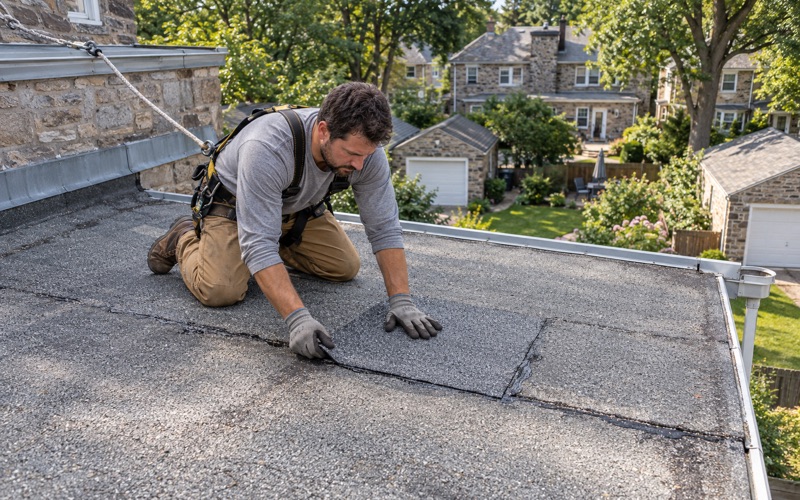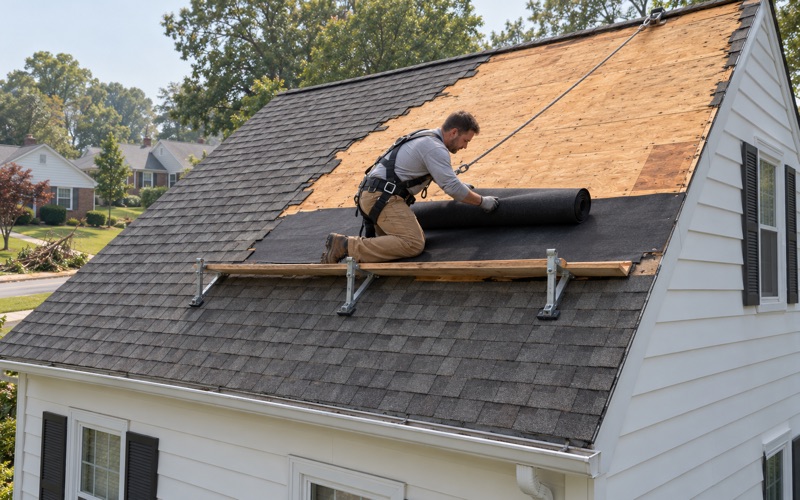
Abington Superior Roofing brings more than 20 years of roofing in Easttown and the western Main Line to houses where a roof is rarely a simple rectangle of shingles. The work here leans toward complex roofs: steep main blocks, gabled dormers, deep valleys and masonry chimneys that each need their own flashing detail. We price those details one by one, so an owner sees what the roof actually involves before any work begins.
Every job starts with a straight answer on whether the existing roof can be repaired. On a well-built older house, repair is often the right call, and we say so before replacement comes up at all. When water is getting in, we go into the attic as well as onto the roof, because a stain on a bedroom ceiling rarely sits directly under the spot where the water enters.
Our written scopes break tear-off, decking, underlayment, flashing, ventilation and gutters into separate lines. That lets an owner set our estimate beside anyone else’s and compare the two item by item, which matters most on a large roof where small differences per square add up quickly.
Roofing for Estate Houses in Devon and Berwyn
How Devon Became Estate Country
Easttown Township is made up mostly of parts of Devon and Berwyn, with a small area carrying a Paoli address. Devon grew as a Gilded Age estate district. By 1883, Coffin and Altemus of Philadelphia owned 617 acres around Devon, and by the 1890s lots had been sold and large estates had been built.
Berwyn, the township’s other main area, holds its own share of older houses. Sproxton there is a stone farmhouse that was enlarged in English stick style during the late 1870s and 1880s, a common pattern on older houses that gained wings, gables and new roof planes over the years. Each addition meets the older roof somewhere, and those joints are where we look first.
That history still shows on the roofline. The township counts 638 housing units built in 1939 or earlier, about 15.5 percent of its housing, and the owner-occupied median value is $852,800 according to the 2024 American Community Survey. Roofs on houses like these tend to be large, steep and broken up by dormers, gables and chimneys.
What a High-Value Roof Changes About the Work
On a house of this value, the roof is part of the architecture, not just weather protection. A replacement has to respect the original lines: the eave overhang, the rake trim, the way a dormer cheek meets the main slope. We note those details on the first visit and write them into the scope, so nobody is improvising on the day of the tear-off.
It also changes how we think about repair. A roof that has lasted for generations often has sound field material with one failing detail, usually a flashing or a valley. Fixing the detail that failed is cheaper and far less disruptive than replacing a whole roof that still has years left in it.
Older Houses and Newer Ones Side by Side
Not every house in the township is an estate. Large numbers were built from the 1950s through the 1980s, and detached single-family houses make up most of the housing stock. Those roofs are more often asphalt, and the work looks like a standard tear-off with architectural shingles such as GAF Timberline HDZ, Owens Corning Duration or CertainTeed Landmark.
Attached homes are part of the mix too. On a twin or townhouse roof, we plan around the neighbor’s roof and the shared wall, so the tie-in stays watertight on both sides and the adjoining owner is not left with an exposed edge at the end of the day.
Looking for roofing closer to Franconia? See Roofing in Franconia.
Dormers, Valleys and Stone Chimneys on Easttown’s Older Houses
Lessons From Waynesborough
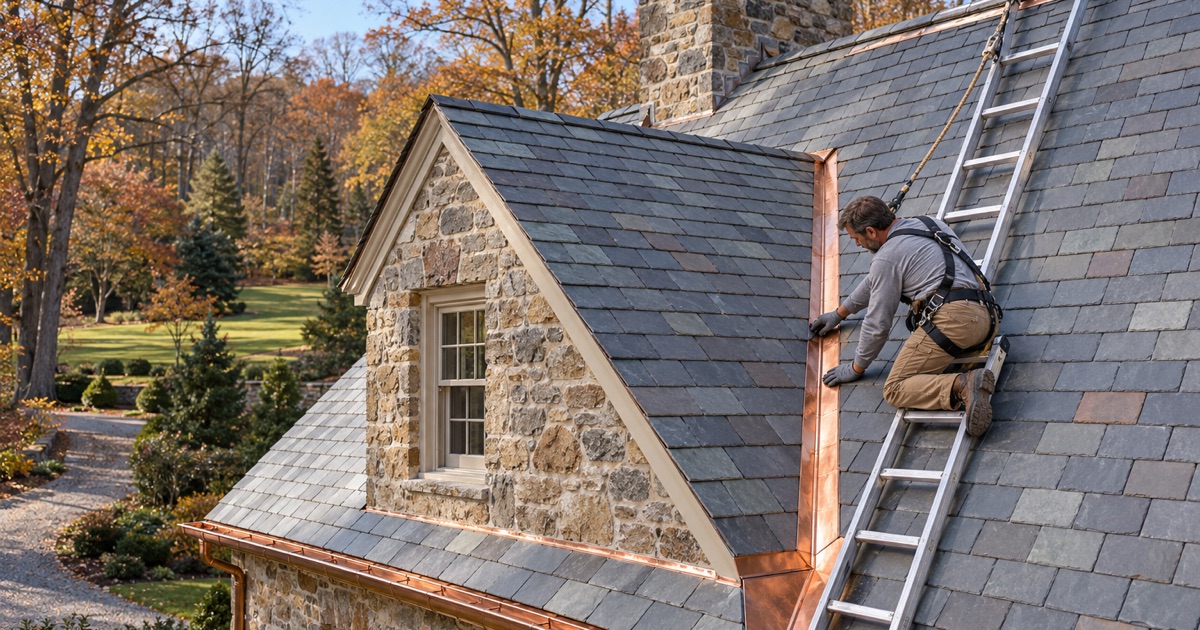
Waynesborough, one of the township’s National Register listings, shows what these roofs involve. The roughly U-shaped stone house has a main block two and a half stories tall under a gabled roof, two gabled dormers on the front and three on the rear, and two interior stone chimneys.
A restoration project there replaced and restored the roofs over the main block, the addition, the porch and the bakehouse, and repointed the chimney stonework at the roof line. That last item is the one owners most often overlook. Where stone meets roofing is where water usually finds its way inside.
Dormers and Valleys
Every dormer adds two valleys, two cheek walls and a front wall to flash. Five dormers on one house means ten valleys before the main roof’s own intersections are counted. We rebuild valleys over ASTM D1970 self-adhering ice and water barrier and set new step flashing where each cheek wall meets the slope.
Valleys carry more water than any other part of a roof, so they show wear first. When a leak sits near a dormer, we check the valley and the cheek flashing from the attic side before deciding whether the fix is local or the whole slope needs attention.
Chimney Flashing on Stone Masonry
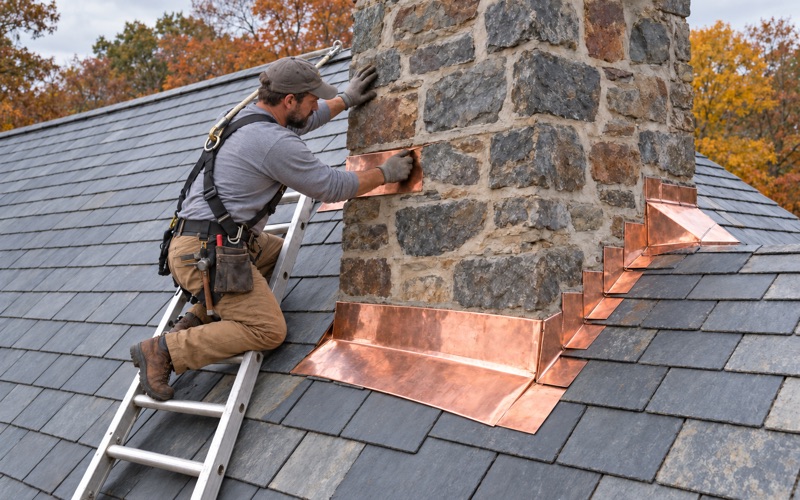
Stone chimneys are rougher and less regular than brick, which makes counter flashing harder to seat. We cut a reglet into a mortar joint where the stone allows it, set new counter flashing over new step flashing, and build a chimney cricket behind any wide chimney on the uphill side so water is diverted instead of pooling.
We replace step, counter and chimney flashing with the roof rather than bending old metal back into place under new material. Reused flashing is the most common reason a new roof starts leaking at the chimney within a few seasons, and on a stone chimney it is the hardest leak to trace later.
Matching Slate, Cedar and Copper Details on a Main Line Roof
Slate Repair Before Slate Replacement
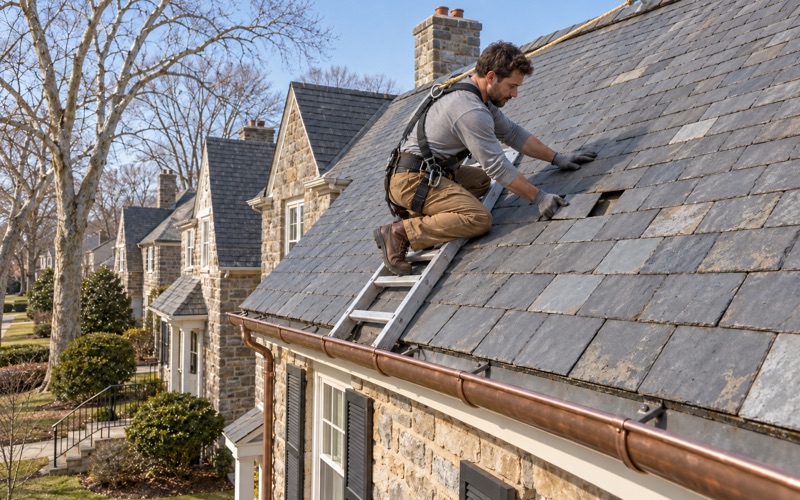
Houses of this age and style can carry slate, cedar shakes or copper details, and we confirm the material on each house rather than assuming it. Where slate is present and sound, we repair it slate by slate, using copper nails and slate hooks, before anyone suggests a tear-off.
A slate roof with a few broken or slipped pieces is not a failed roof. Replacing individual slates, rebuilding a valley or reflashing a chimney usually costs a fraction of a new roof, and it keeps the original material that gives an older house its character.
Cedar and Copper Details
Cedar and copper need materials matched to what is already there. On cedar, we match exposure and thickness so a repair reads as part of the original field. On copper valleys, flashing and half-round copper gutters, we stay with copper rather than mixing metals, which can corrode where they touch.
Gutters and downspouts are sized and pitched along with the roof. On a large roof with long runs and steep slopes, an undersized gutter overflows at the valleys first, which looks like a roof leak from inside and often gets blamed on one.
When a Different Material Makes Sense
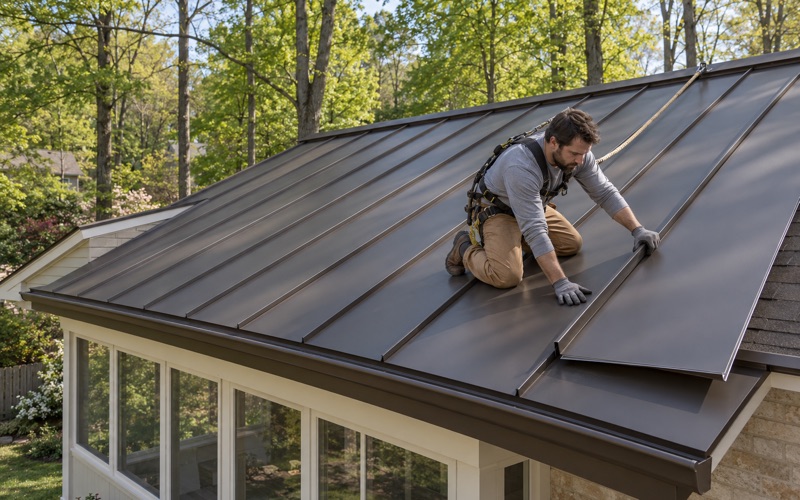
Some owners want to replace a tired asphalt roof on an older house with something closer to its period, or simply something longer lasting. Standing seam metal suits porch roofs and low-slope additions; architectural shingles with a Class A fire rating and ASTM D7158 Class H wind resistance suit the main slopes. We lay out what each choice means for weight, flashing and cost.
If the house has solar panels, the removal and reinstall go into the schedule from the start. The panels are never a surprise on the first morning, and the roof under them gets the same underlayment and flashing as the rest.
Easttown’s Re-Roof Permit, Large Lots and the Tear-Off Schedule
Planning Around the Township Permit
Each township in our service area sets its own re-roof rule, so we check the one for the house before pricing. Easttown lists roof replacement or repair as building-permit work, and its FAQ says re-roofing permits carry an application fee. Applications go in person or through the township’s Permit Portal, and we fold that step into the schedule before a start date is set.
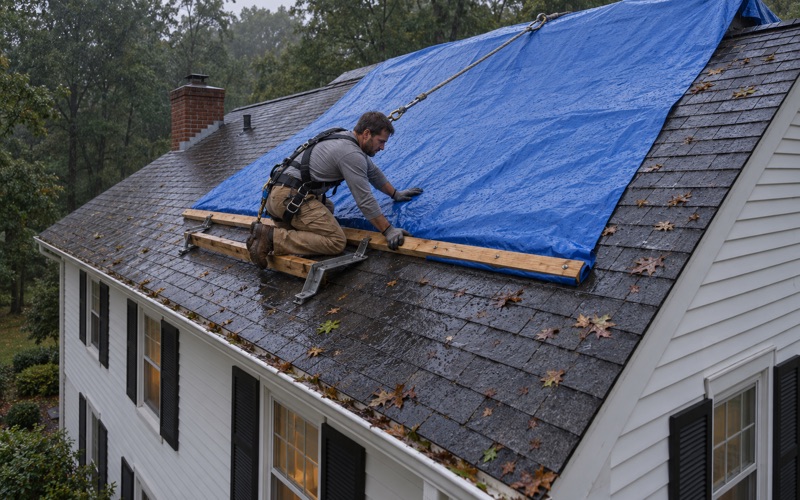
The same FAQ says a permit expires unless work begins within 180 days, so we time the application to the actual start. An emergency repair may go ahead first if the application follows within three business days, which matters when a storm opens up a roof overnight.
The Historical Commission’s Role
Easttown has a five-member Historical Commission, created by ordinance during 2007, that identifies significant sites and advises owners on rehabilitation and preservation. Its role is advisory. For an owner who wants guidance on keeping a roof true to an older building, it can be a useful conversation before materials are chosen.
Other National Register listings in the township include Roughwood and the Waterloo Mills Historic District, listed during 1995 with 11 contributing buildings along Waterloo Road. On houses like these, we treat original details as worth saving wherever they can be, and we say plainly when one cannot.
Staging on Large Lots
Easttown’s large-lot zoning went to the Pennsylvania Supreme Court twice, during 1958 and 1965, and the pattern is still visible: deep lots, long driveways and houses set well back from the road. That changes staging. We plan where the dumpster sits, how materials reach the house and how lawns and plantings along the route stay protected.
At the end of each work day, we clean the driveway, yard and gutters and run a magnet sweep for roofing nails. On a long drive that crosses lawn, that sweep covers the whole route debris traveled, not just the ground beside the house.
Contracts, Decking and Storm Claims
Our contracts follow Pennsylvania’s home improvement law, with the three-business-day cancellation notice and deposits kept within the legal limit. If damaged decking turns up once the old roof is off, we photograph it and show the owner before replacing it, at a per-sheet price already set in the contract.
After a storm, we photograph the damage and write it up for the owner’s own claim. When asked, we meet the adjuster on site, but we do not negotiate the claim; that stays between the owner and the insurer.
- 20+ Years in Roofing
- Free Written Estimates
- Line-by-Line Scopes