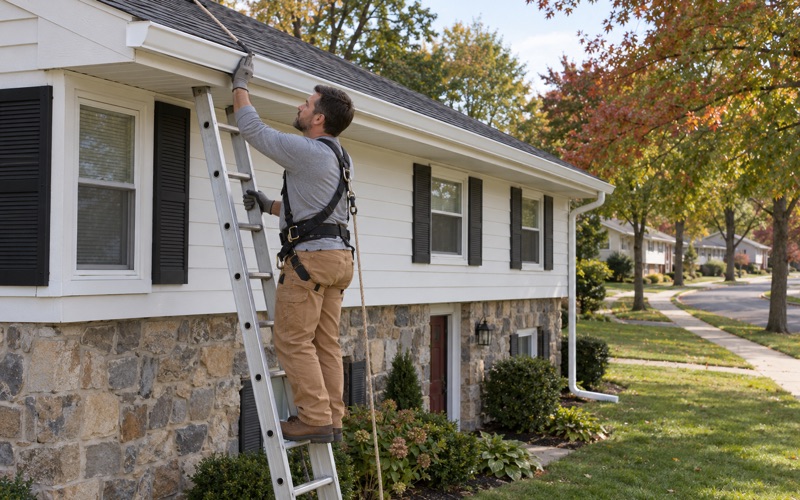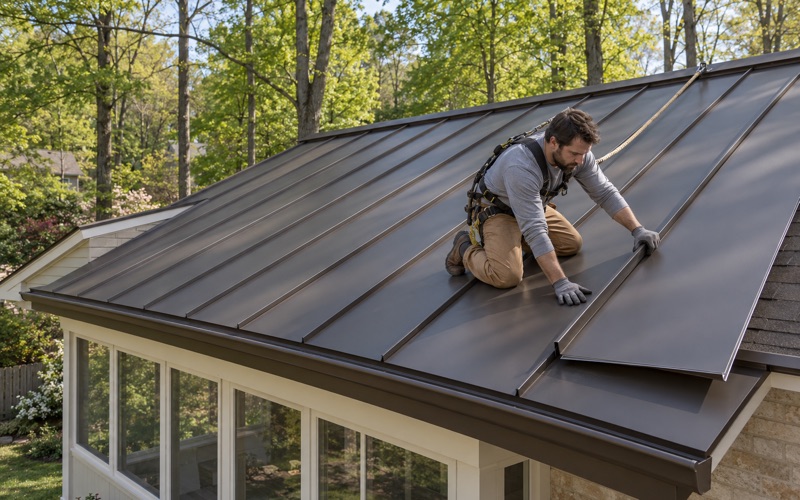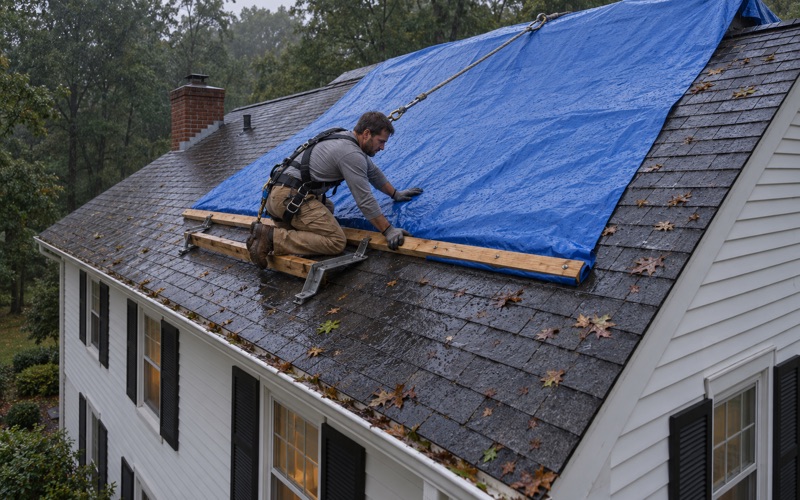
Abington Superior Roofing brings more than 20 years of roofing in Franconia and the rest of Montgomery County to owners who want a clear read on what their roof needs. Most calls here begin with a question after a storm: is the damage real, and can it be fixed without a new roof? We answer that plainly, and we answer it before replacement ever comes up.
Every leak call gets two inspections, one from the attic and one from the roof itself. Water rarely enters where the ceiling stain appears, so we trace it back to the actual opening before we write a price. That habit keeps owners from paying to fix the wrong spot.
Before any job is priced, we also check the rules of the township the house sits in. Each municipality in our service area handles re-roofing its own way, and a quote built on another township’s process can miss a step, a fee or a week of lead time.
The August 19, 2021 Tornado South of Souderton
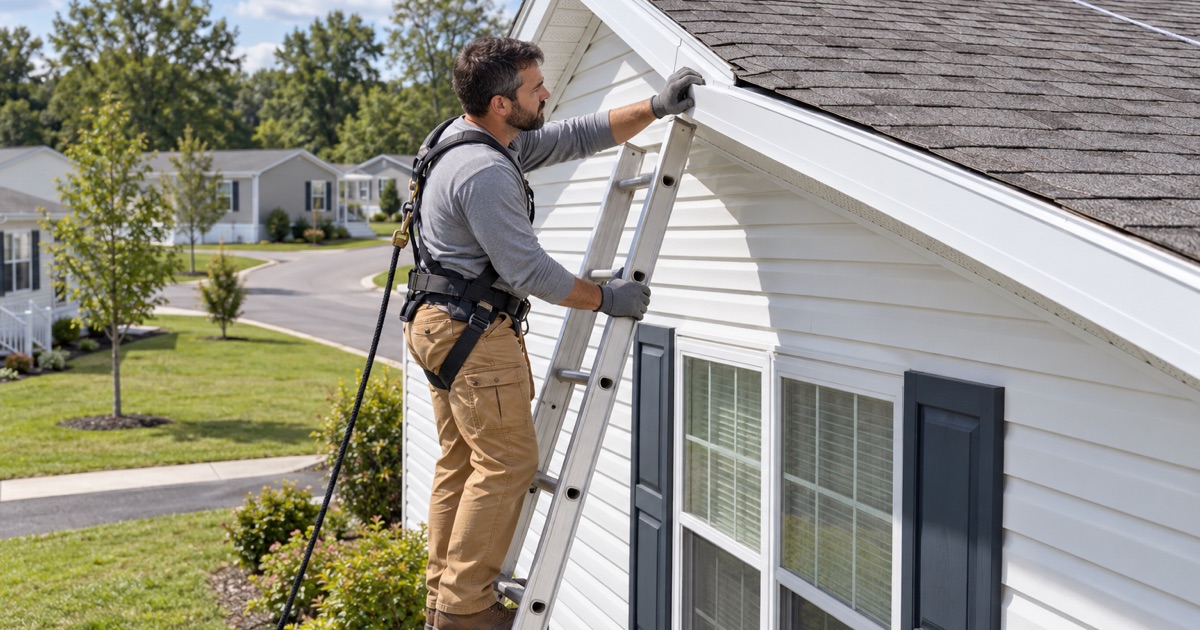
Storm work here starts with a night most owners remember. The details below come from the National Weather Service survey, and we stay inside what it says.
What the National Weather Service Recorded
In the remnants of Tropical Depression Fred, a tornado formed roughly a mile and a half south of Souderton just after midnight on August 19, 2021. The NWS Mount Holly survey rated it EF-1, with an estimated peak wind of 105 mph. It traveled 8.77 miles to Hilltown Township, Bucks County, and measured up to 140 yards across at its widest.
The survey lists the damage along that path in plain terms. It tore siding off a residence on Garrison Lane, ripped a metal roof from a garage on Green Street in Silverdale and damaged a farmhouse roof along Souderton Road. The tornado touched down at 12:25 a.m. and had reached Hilltown fifteen minutes later.
Why Franconia Is Missing From the Report Title
The survey is titled Hatfield Twp-Hilltown Twp, and it never names Franconia. Yet the Hidden Springs mobile home community, where the survey reports minor damage to the roofs and siding of several residences, sits on Kingspond Lane. The Census Geocoder places that address inside Franconia Township, so the roof damage recorded there happened here.
That matters when an owner files a claim or reads an old news story and wonders whether their street was affected. The preliminary statement issued that same day did list Franconia Township as part of the survey area. We work from the survey’s own wording and never stretch it into totals or claims it does not make.
What a 105 mph Gust Does to a Roof Edge
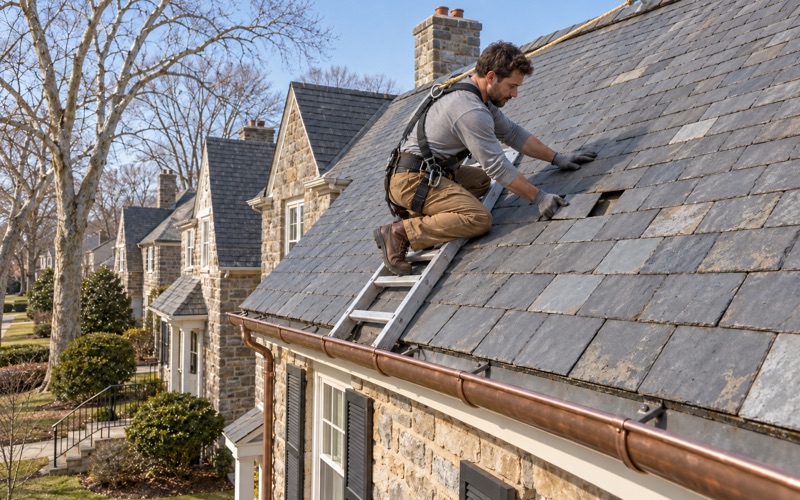
Wind damage rarely starts in the middle of a roof. It starts at the eaves, rakes and ridge, where uplift catches a shingle tab or a loose panel edge and pries it up. Once one piece lifts, the next row is exposed to the same force, and the failure travels across the slope.
That is why we look hard at drip edge, starter courses and ridge caps after any strong storm. A roof can lose a handful of tabs and still look whole from the street. Shingles rated to ASTM D3161 Class F or ASTM D7158 Class H are built for higher winds, and they are worth weighing whenever a replacement is already on the table.
Looking for roofing closer to Plumstead? See Roofing Services in Plumstead.
Roof Damage in Franconia’s Mobile Home Community
The survey’s Hidden Springs entry is the roof damage we can place inside Franconia by its address. The homes there, and others like them, need a different kind of inspection than a two-story colonial.
Hidden Springs and the Township’s 107 Mobile Homes
Franconia counts 107 mobile homes, about 1.9 percent of its housing units, and 88 of them are owner-occupied, according to the 2024 American Community Survey. Those 88 owners carry the cost of their roofs themselves.
A manufactured home’s roof is lighter and lower than a stick-built roof, and it takes wind differently. Metal panels flex at their seams, and coated roofs crack where the coating has aged. The minor damage the survey recorded at Hidden Springs is exactly the kind that turns into a slow leak if nobody climbs up to look.
Checking a Manufactured-Home Roof After Wind
We start at the perimeter. On metal roofs we check seams, fastener heads and the edge trim where wind gets underneath. On shingled or coated roofs we look for lifted edges, cracked coating and split flashing around vents, because any movement at the edge tells us where to look next.
Inside, we check ceiling panels and the area around skylights and plumbing vents for staining or soft spots. Manufactured homes have shallow roof cavities, so water travels only a short distance before it shows. A small stain beside a vent stack often points to a failed pipe boot rather than storm damage, and we tell the owner which one we found.
Repair Before Replacement
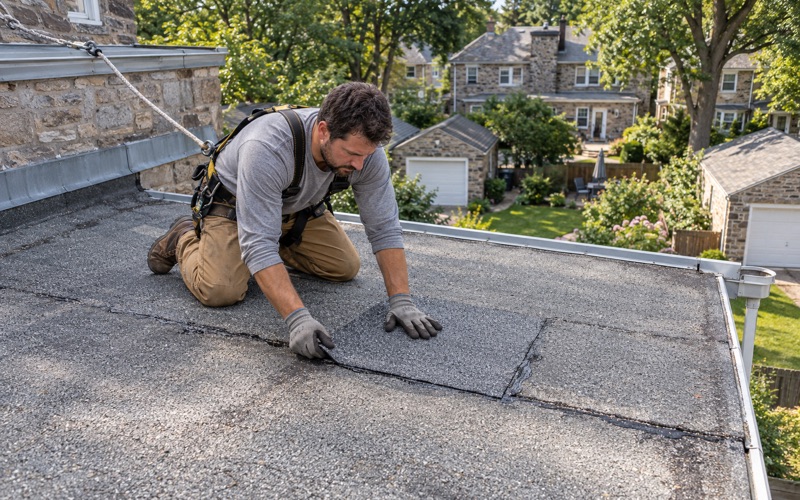
Most wind damage of the minor kind the survey describes can be repaired. Resealing a seam, refastening edge trim, replacing a pipe boot or patching a lifted section costs a fraction of a new roof, and we price that option first.
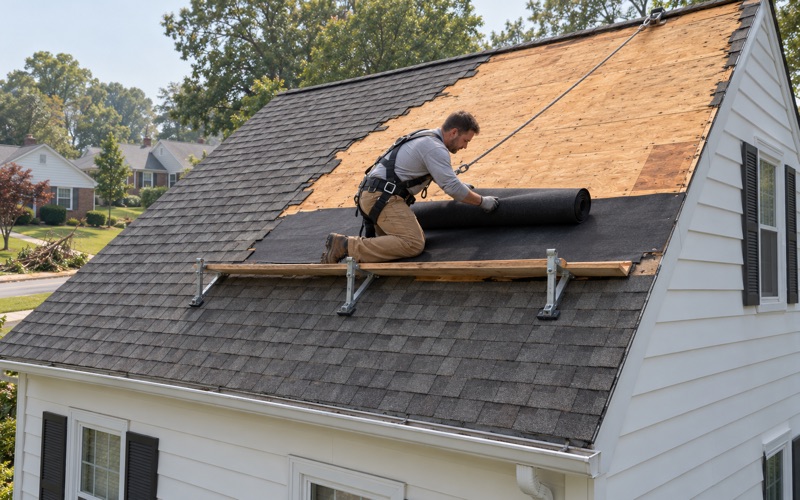
When a roof is near the end of its life anyway, we explain why a repair would mean paying twice. If decking turns out to be damaged once old material comes off, we photograph it and show the owner before replacing a single sheet, at the per-sheet price already written into the contract.
The 1990s Streets Around the Park
Most of Franconia’s housing looks nothing like Hidden Springs. Census figures show 1,555 units built during the 1990s and 737 more during the 2000s, so 41.6 percent of the stock dates from those two decades. Original roofs on those houses have now been up for well over fifteen years.
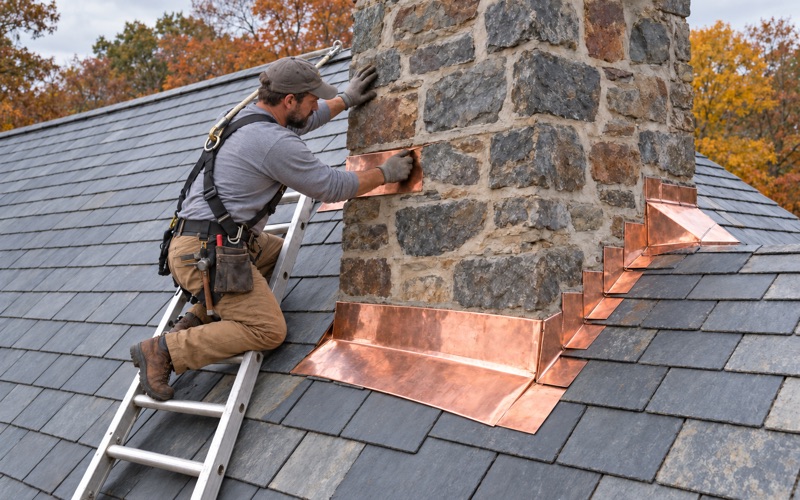
On those homes, wind damage often shows first at step flashing along sidewalls and at the chimney. When we replace one of those roofs, we replace the step, counter and chimney flashing with it rather than reusing old metal under new shingles. Gutters and downspouts are sized and pitched as part of the same job.
Storm Damage, Insurance and Pennsylvania Claim Timelines
A claim is only as strong as the record behind it. Our role is to document the roof and explain it, while the claim itself stays in the owner’s hands.
Photos and a Written Damage Report
We photograph every damaged area, from lifted shingles to torn flashing, and pair each image with a short note on location and likely cause. The finished report goes to the owner for their own claim, and it is theirs to use as they see fit.
We keep storm damage separate from ordinary wear. An adjuster will notice if old granule loss or a dried sealant bead is presented as wind damage, and that weakens the whole file. Honest documentation of what the storm did, and what it did not do, holds up better.
Meeting the Adjuster on Site
When an owner asks, we will meet the insurance adjuster at the house and walk the roof together. We point out what we found and answer technical questions about materials and repair methods. We do not negotiate the claim, because that work belongs to the owner or to a public adjuster licensed under the Pennsylvania Public Adjuster Licensing Law.
The Pennsylvania Insurance Department publishes homeowner claim guidance that is worth reading before the adjuster arrives. Insurers also work under the unfair claims settlement timelines found at Title 31, Chapter 146 of the Pennsylvania Code. Knowing those timelines helps an owner recognize when a response is overdue.
Contracts That Follow the Home Improvement Law
Once a repair or replacement is agreed, the contract follows the Pennsylvania Home Improvement Consumer Protection Act. It carries the three-business-day cancellation notice, and on any contract over $5,000 the deposit stays within the one-third limit the law sets.
Emergency tarping after a storm can be arranged quickly, but permanent work waits for the owner’s decision and a signed contract. Rushing a storm repair before the claim is settled often leaves the owner arguing with the insurer over work that is already finished.
Franconia’s Permit Packet: HOA Approval and Quotes
Franconia Township Building and Zoning works out of the township office at 671 Allentown Road, Telford. Its paperwork has a few specific requirements, and we plan around them from the first estimate.
What the Township’s Pages Do and Do Not Say
The 2024 fee schedule, adopted by resolution that January, has no roofing or re-roofing line, and the building pages do not say whether a residential re-roof needs a permit. We do not guess either way. Before pricing a job here, we call the township at 215-723-1137 and confirm what applies to that house and that scope.
Building, electrical and plumbing permit applications must be submitted in person, by mail or through the black lock box at the township building. None are accepted by email. When a permit does apply, we build the drop-off into the schedule rather than discovering it the week the crew is due.
HOA Written Approval Comes First
Franconia’s submission checklist states that properties located in an HOA must receive HOA written approval of the project to be submitted with the permit. For an owner in a planned community, that letter is part of the packet rather than a follow-up.
We give owners a materials sheet with the shingle line, color and trim details an association typically asks to see. Communities formed under the Uniform Planned Community Act set their own architectural rules, and approval in hand before the start date keeps a crew from sitting idle.
Two Copies of an Itemized Quote
The checklist also asks for two copies of the quote or estimate. Our written scopes list tear-off, decking, underlayment, flashing, ventilation and gutters as separate lines, so the copy the township keeps matches the one the owner signs and compares against other bids.
The same checklist asks for a contractor license number and waives the insurance certificate when one is supplied. Pennsylvania issues no state roofing license and instead registers home improvement contractors under HICPA, so we confirm with the township what it will accept on that line.
- 20+ Years in Roofing
- Free Written Estimates
- Line-by-Line Scopes