
Abington Superior Roofing handles gutter installation in Abington, PA as part of the roof, not as an afterthought, serving surrounding cities including Lower Moreland, Upper Southampton, East Goshen, Warwick Township and Plymouth Township. After more than 20 years of roofing work here, we have seen how many leaks, rotted fascia boards and wet basements trace back to gutters that were the wrong size, pitched the wrong way or hung behind the drip edge.
We size and pitch gutters and downspouts together with the roof above them. That means looking at how much roof drains to each run, where valleys concentrate water, and where each downspout can discharge safely away from the house.
Whether you need new seamless aluminum gutters on a postwar ranch, half-round copper on a slate roof, or gutters replaced along with a full re-roof, the job is planned edge to edge, so the roof and the gutters work as one system.
Residential Gutter Installation
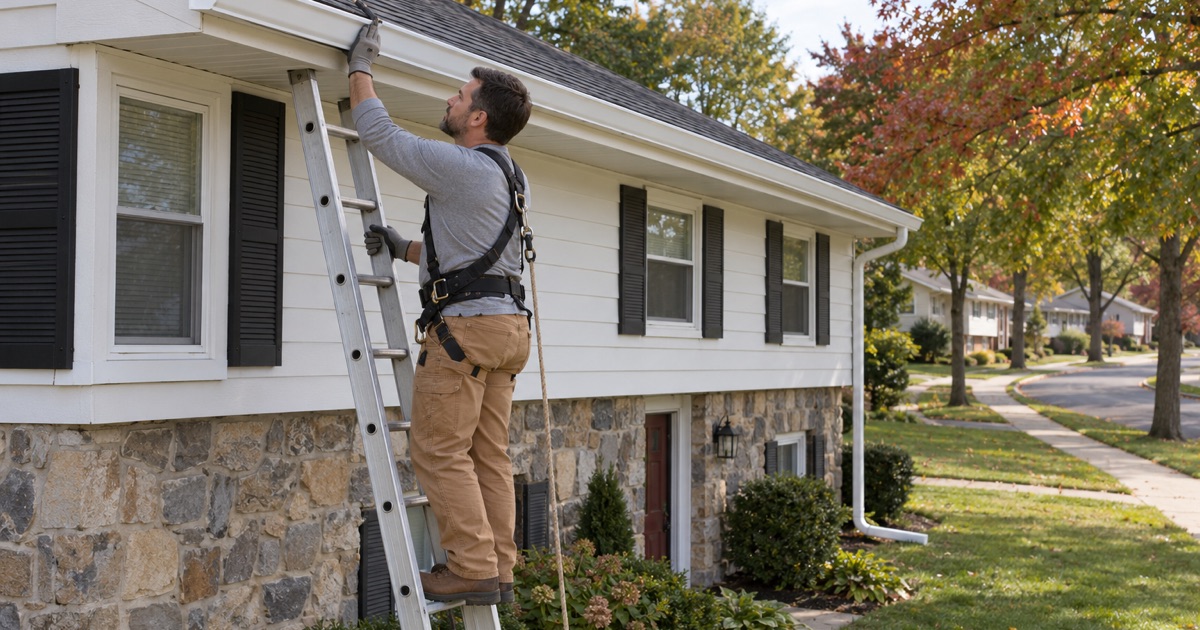
Seamless Aluminum Gutters
Seamless aluminum gutters are formed on site from a continuous coil, so each run is a single piece from corner to corner. With joints only at corners and end caps, there are far fewer places for water to drip or for leaves to catch.
Aluminum does not rust, holds paint well, and comes in a wide range of colors to match trim and siding. For most houses in this area, seamless aluminum is the practical, long-lasting choice.
Sizing Gutters to the Roof
Gutter size should follow the roof area that drains into it, the pitch of that roof, and how much water valleys deliver to one spot. Steep roofs and large slopes send water down faster, and a gutter that is too small overflows in exactly the storms that matter.
Most homes take 5-inch or 6-inch K-style gutters, with downspouts sized to match. We choose the size for each run separately rather than putting the same gutter on every side of the house.
Pitch and Downspout Placement
A gutter has to slope steadily toward its downspout, enough to drain completely but not so much that it looks crooked against the fascia. Long runs often need a high point in the middle, sloping to downspouts at both ends.
Downspout locations matter as much as the gutter itself. We place them where water can be carried away from the foundation, walkways and driveways, and where it will not freeze into an ice patch on a step every winter.
Hidden Hangers and Fasteners
Gutters are held by hangers screwed through the fascia into the rafter tails or blocking behind. Spacing the hangers closely keeps the gutter from sagging under snow, ice and leaves, which is when weak installations pull away.
We use hidden hangers with screws rather than spikes, which loosen over time. If the fascia behind the gutter is soft, it is replaced before the new gutter goes up, because a gutter is only as solid as the board it hangs on.
Gutters Installed With the Roof
Drip Edge and Gutter Apron
Water should leave the roof and land in the gutter, not run down behind it. That depends on drip edge or gutter apron at the eave, set so the shingles overhang into the trough and the metal laps over the back of the gutter.
Many older houses have no drip edge at all, which is why their fascia boards rot and their gutters stain the siding. Replacing the gutters with the roof lets us get this detail right in one pass.
Fascia and Soffit Repairs
When gutters have overflowed or leaked for years, the fascia board and the soffit behind them often rot. Hanging new gutters on decayed wood is a waste of good gutters.
We replace damaged fascia and soffit sections before the gutters go up and can wrap fascia in aluminum to protect it. On houses built before 1978, painted trim is handled with lead-safe work practices under the EPA renovation rule.
Kick-Out Flashing Where Roofs Meet Walls
Where a roof edge ends against a wall, such as at a dormer, a garage or a second story, water running down the roof can pour straight down the wall instead of into the gutter. Over time it rots the sheathing behind the siding.
A kick-out flashing at the bottom of that roof-to-wall joint diverts the water into the gutter. We install them wherever the roofline calls for one, and they are among the cheapest insurance on the whole house.
Gutters for Older Houses and Slate Roofs
Half-Round Copper Gutters
Older slate and stone houses often look best with half-round copper gutters and round copper downspouts. Copper lasts for decades, weathers to a brown and eventually green patina, and matches the copper valleys and flashing these roofs often have.
We install copper with soldered joints and copper hangers, never with steel or aluminum parts that would corrode where they touch. The result looks like it belongs on the house, because it is the same material the house was built with.
Built-In and Box Gutters
Some older houses have built-in gutters set into the roof edge or the cornice, lined with metal. When the lining fails, water goes straight into the wall or the cornice, often out of sight until the damage is serious.
We reline built-in gutters with new metal or membrane, or discuss converting them to hung gutters where that suits the house. Either way, the goal is to keep the original appearance while stopping the hidden leaks.
Where the Water Goes After the Gutter
Downspout Extensions and Grading
A gutter that works perfectly is useless if the downspout dumps water against the foundation. That water ends up in the basement, under the slab or against the footing.
We extend downspouts away from the house, add splash blocks or underground drain lines where the yard allows, and point out grading that slopes back toward the foundation. Moving the water is the whole purpose of the system.
Sanitary Sewer Connections and Township Checks
Downspouts should never discharge into the sanitary sewer, which is designed for wastewater, not rainwater. Some townships look for this, and Upper Providence Township’s rental inspection checklist asks directly whether downspouts are connected to the sanitary sewer.
When we find a downspout tied into a sewer line, we tell you and reroute it to the surface or an approved stormwater connection. It is the kind of issue that can surface at a sale or an inspection if no one deals with it first.
Gutter Permits in Some Townships
Townships set their own rules for exterior work, and some include gutters. Aston Township, for example, lists siding and gutters on its building-permit list alongside roofing.
We check the rule for your address before scheduling, and if a permit is required we include it in the plan and the price. In Abington, where roof work needs a township permit, gutters installed as part of a re-roof are handled within that job.
Commercial and Multi-Family Gutters
Larger Gutters for Bigger Roofs
Apartment buildings, storefronts and small commercial properties often have long roof runs that collect far more water than a house. Standard residential gutters overflow on them in heavy rain, spilling onto entrances and sidewalks.
We install larger commercial-profile gutters and oversized downspouts where the roof calls for them, with heavier hangers to carry the load. On low-slope roofs, we coordinate gutters with scuppers and edge metal so water leaves the roof where it should.
Planning Around Tenants and Entrances
On a multi-family or commercial building, downspouts have to discharge away from doors, walkways and parking areas where ice would become a hazard. Placement takes more thought than on a single house.
We plan downspout locations with the building owner, schedule work around business hours or tenant access, and keep entrances clear while the crew is on site. The finished system moves water off the roof and away from where people walk.
- 20+ Years in Roofing
- Free Written Estimates
- Line-by-Line Scopes