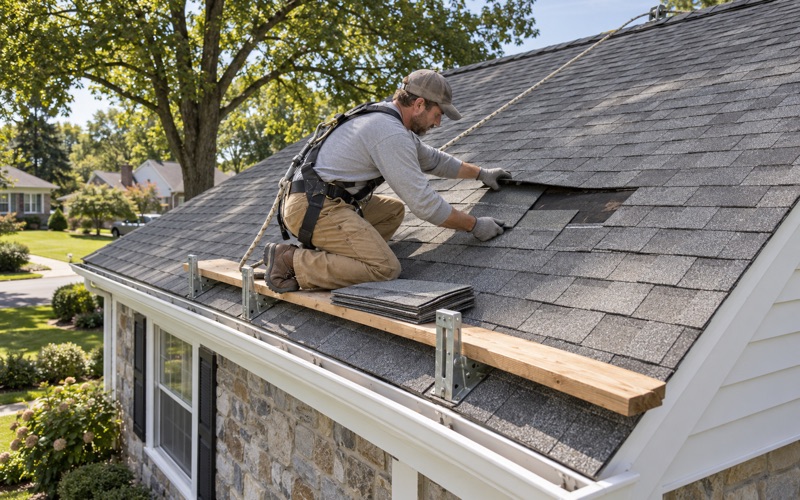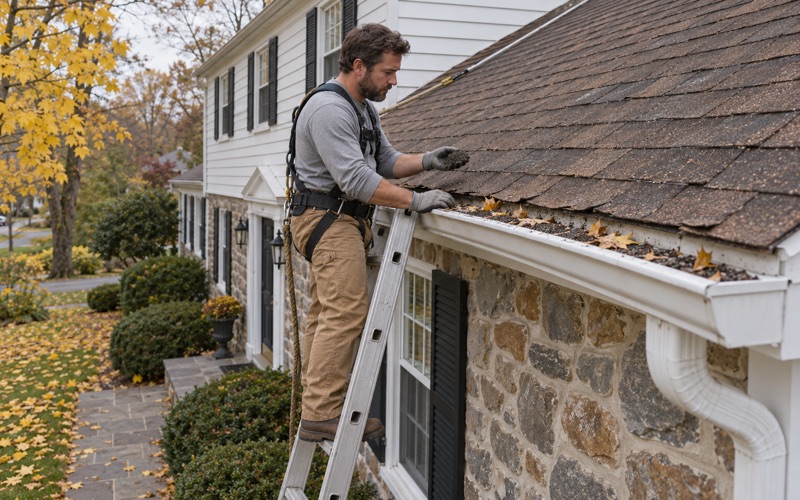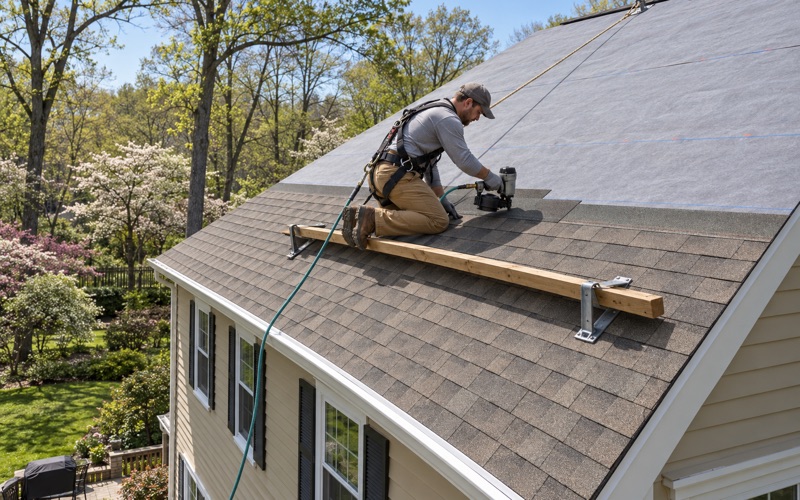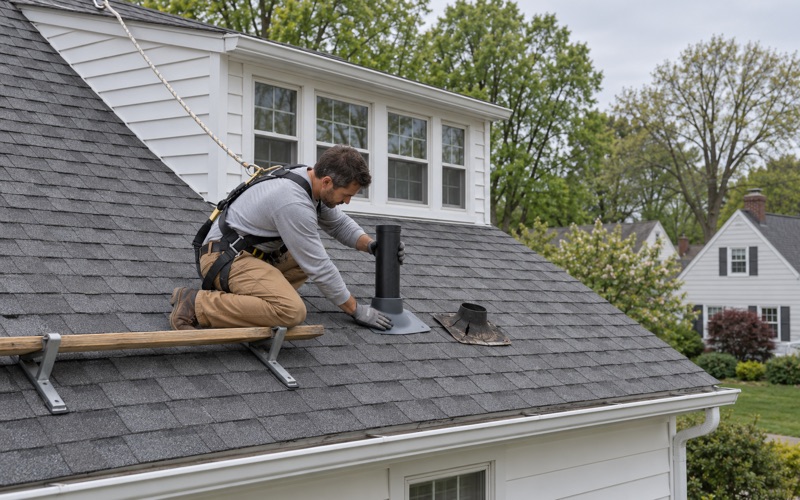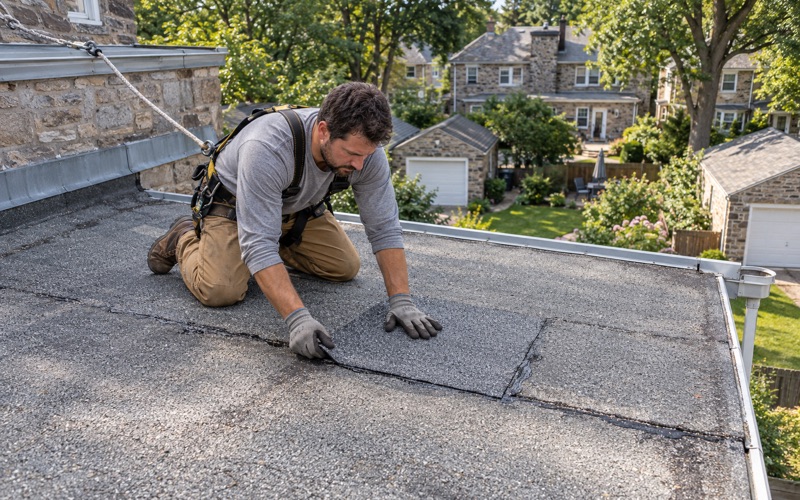
Abington Superior Roofing brings more than 20 years in the trade to roofing in Hilltown, where a single property often carries several roofs rather than one. A farmhouse, a detached garage, a horse shelter and a chicken coop can all sit on the same deed, each covered at a different time with a different material, and each aging at its own pace.
We start every visit by sorting out what actually needs work. If a roof can be repaired, we say so plainly before replacement is ever mentioned. When there is a leak, we go into the attic or the hayloft as well as onto the roof, so the water is traced to the spot where it really enters before anything gets a price.
Outbuildings and houses are treated differently under the rules, which is why we confirm the permit picture for your own township before quoting. Our written scopes break out tear-off, decking, underlayment, flashing, ventilation and gutters as separate lines, so you can set our number beside anyone else’s and compare the two item by item.
Barns, Coops and Horse Shelters on Hilltown Lots
Why so many back lots still hold animals
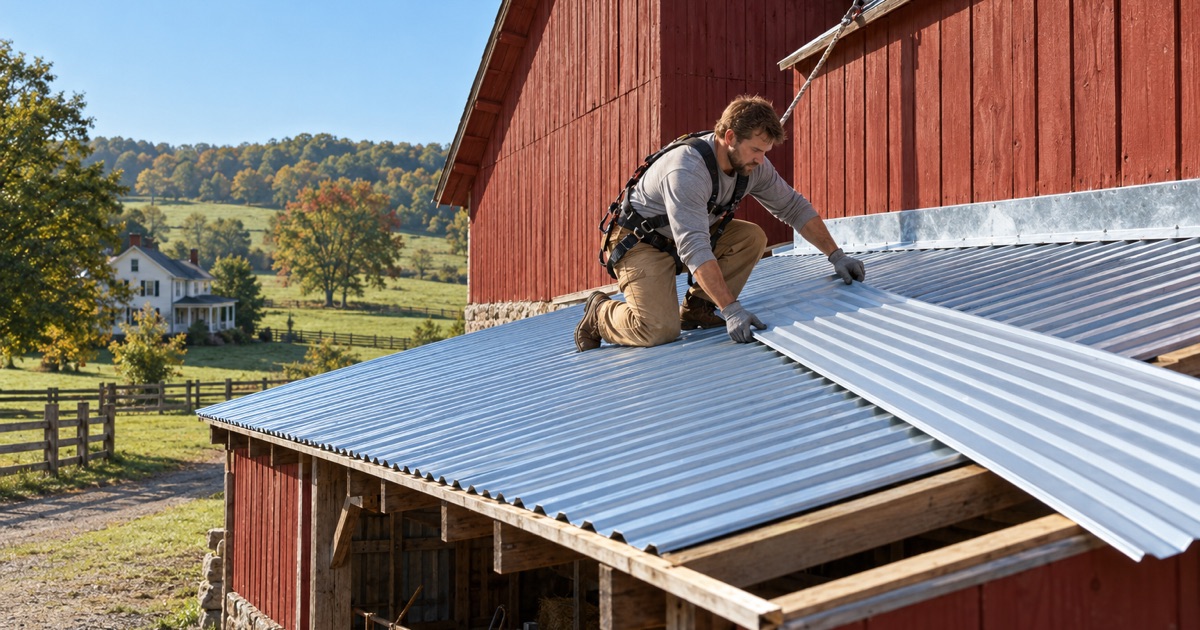
Hilltown remains a township where livestock are part of residential life. The township requires a zoning permit for anyone who wants to keep chickens, poultry, horses or other livestock on a residential property, and its zoning ordinance allows those animals only on lots with a minimum of three acres.
That combination leaves many larger parcels with working outbuildings behind the house. Some are old timber structures, some are pole buildings put up more recently, and plenty have been patched piecemeal over the years with whatever material was on hand. Before we recommend anything, we walk each building and note what it covers, what it houses and how its roof has held up.
Setbacks decide where the building sits
Under Section 160-23.I.17 of the Hilltown Township Zoning Ordinance, as the township’s Spring 2026 guide describes it, barns, coops and shelters must meet required setbacks, typically 50 feet from property lines and roads and 100 feet from neighboring homes. Those distances shape how we stage a job, because the outbuilding usually sits well away from the driveway.
A long carry from the truck to a coop at the back of a three-acre lot changes the logistics of tear-off and delivery. We plan where the dumpster goes, how material reaches the building and how the lawn or pasture between them is protected. At the end of every work day the crew cleans up and runs a magnet sweep for nails, so animals and people are not walking through debris.
Farmland that has been set aside
Hilltown established its Agricultural Security Area on July 28, 1986, under the state’s Agricultural Area Security Law, and the township has added parcels by resolution since then. Bucks County and Heritage Conservancy preserved the 90-acre Weikel property here through two easements, and the county said they added to a contiguous expanse of preserved land exceeding 525 acres.
Inside that kind of landscape, a barn is usually expected to stay a barn for a long time. That favors coverings chosen to outlast the next few decades over the cheapest patch, and it is one reason we talk through repair against replacement building by building. Quoting the whole property as one lump sum hides the choices an owner should get to make.
Looking for roofing closer to Skippack? See Roofing in Skippack.
When a Farm Building Falls Outside the State Building Code
What the agricultural exclusion covers
The Pennsylvania Uniform Construction Code does not apply to an agricultural building, under section 403.1(b)(4) of Title 34 of the Pennsylvania Code. The state defines that as a structure used to store farm implements, hay, feed, grain or other agricultural or horticultural products, or to house poultry, livestock or other farm animals, and it includes a milk house or mushroom house.
The definition stops at habitable space and at rooms where products are processed, treated or packaged. A barn with an apartment in its upper level, or a farm stand where produce is washed and boxed, is a different conversation. We raise that question before pricing rather than after a crew is already on the roof, because the answer can change what the job requires.
What the exclusion does not remove
Falling outside the state code does not free an outbuilding from every rule. A backyard coop or horse shelter on a residential lot still needs the township zoning permit, and the setbacks described above still apply. We ask how a building is actually used before we assume anything about the approvals it needs.
When the use is unclear, Hilltown Township Building and Zoning at 13 West Creamery Road is the office that settles it, and the township also has a Uniform Construction Code Appeals Board. We would rather confirm the answer with the township at the start than discover partway through a roof that the building is treated differently than everyone expected.
Historic farmsteads in the township
Several properties here are listed on the National Register of Historic Places, including Green Hills Farm, which is also a National Historic Landmark, and the Reuben and Elizabeth Strassburger Farmstead, run by the Hilltown Historical Society with three pre-Civil War buildings. The Uneek Havana Cigar Company building at Blooming Glen is listed as well.
Older barns and sheds, whether around Blooming Glen or out toward Deep Run, can carry original framing under much newer roofing. We inspect rafters, purlins and sheathing before choosing a covering, because a heavy material laid over tired framing creates a problem the roof alone cannot fix. If the structure needs a carpenter first, we tell you that before anything else.
Re-Roofing the House on the Same Parcel
Hilltown’s own re-roofing application
The farmhouse or home on the same lot follows a separate path from the barn. Hilltown publishes its own Residential Re-Roofing Application, and non-residential projects use the township’s commercial building permit application instead. Permit treatment of a re-roof is set township by township, so we check Hilltown’s rule for your house before the job is priced.
The form asks for roof slopes, ventilation, the covering type, roofing paper thickness, flashing type and thickness, the existing sheathing, the total square feet of replacement and the number of existing layers. The township does not accept faxed applications and will not process one without an estimated cost and paperwork, so our written scope is organized to answer those questions directly.
The two-layer limit and older houses
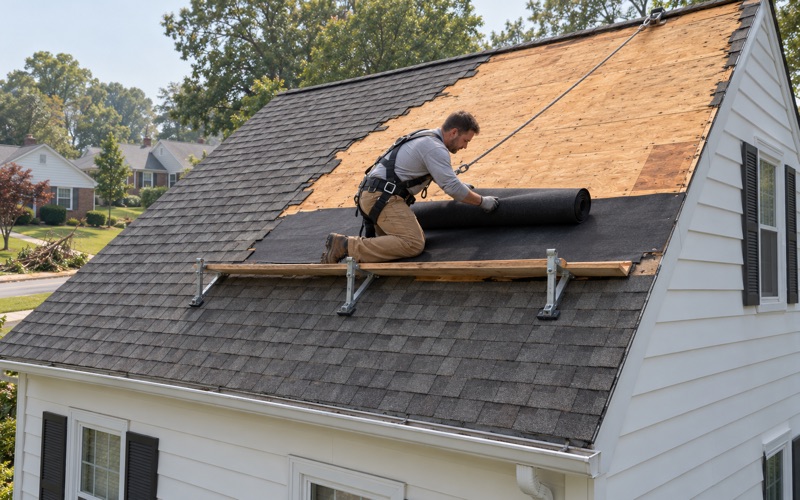
The application states that only two layers of shingles or other material shall be permitted. On an older house that has already been covered over once, that usually means a full tear-off rather than another layer, and we confirm the layer count from the attic and at the eaves before giving you a number.
About 14.1 percent of Hilltown housing units, 882 of them, were built in 1939 or earlier, according to the American Community Survey. When we strip a roof that old, any damaged decking is photographed and shown to you before it is replaced, at the per-sheet price already written into the contract. Nothing about the decking is decided without you seeing it.
Flashing, gutters and drainage with the house roof
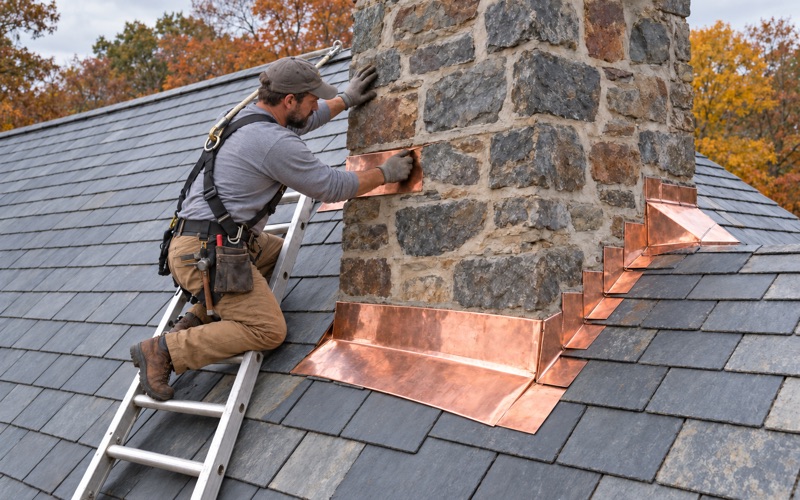
Step, counter and chimney flashing comes off and gets replaced with the new roof rather than being reused under fresh material. Gutters and downspouts are sized and pitched as part of the same plan, which matters on larger lots where runoff from a broad roof has a long way to travel before it leaves the property.
The township has seen what heavy water does. On September 1-2, 2021, during the remnants of Ida, the National Weather Service logged a flash flood east-northeast of Hilltown Township that washed out Hilltown Pike. A trained spotter also measured 10.0 inches of snow here on January 25, 2026. Both are good reasons to plan drainage and eave protection with care.
Metal, Shingle or Slate, and One Quote for Both
Choosing a covering for an outbuilding
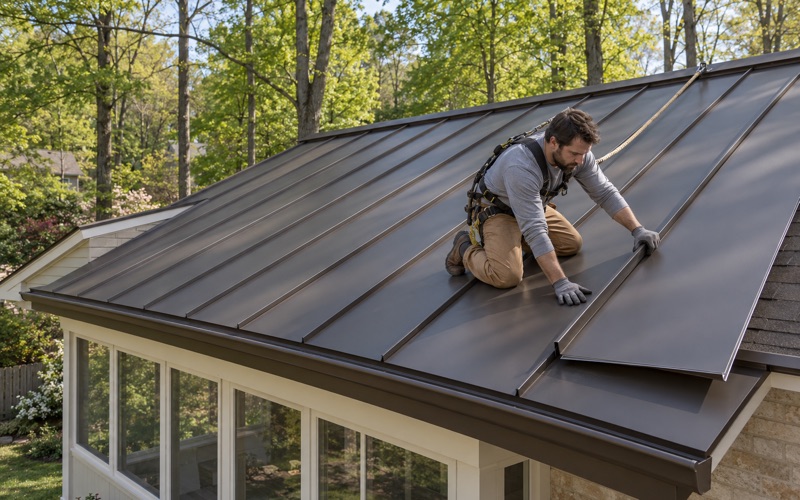
Standing seam metal is a common choice for barns and shelters because it sheds snow readily and suits long, simple roof planes with few penetrations. Architectural shingles can match an outbuilding to the house when the two sit close together, and slate still tops some older structures where the original roof remains largely sound.
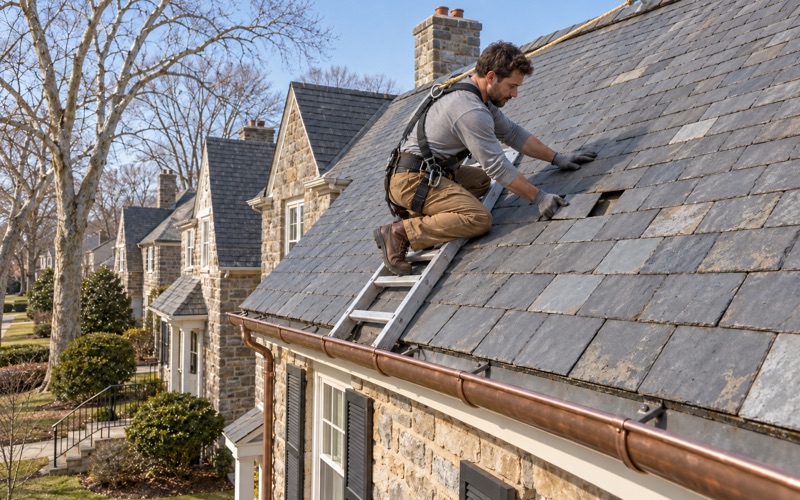
Where slate is still sound, we repair it slate by slate with copper nails and slate hooks before anyone suggests tearing it off. Hilltown’s re-roofing form lists asphalt shingles, standing seam metal, wood shakes, clay or concrete tiles, slate shingles and low-slope membranes among its covering types, so whichever material suits the house can be documented properly.
Coordinating the house, the barn and the schedule
Pricing the barn and the house together often makes sense, since one mobilization, one dumpster and one crew schedule can cover both. We still write each building as its own section of the scope, so you can see what the outbuilding costs by itself and decide whether to do it now or leave it for another season.
If the house carries solar panels, the removal and reinstall go into the schedule from the start rather than being discovered on the day. Our contracts follow Pennsylvania’s home improvement law, including the three-business-day cancellation notice and a deposit kept within the legal limit, and they spell out every building the work covers.
Storm damage across several buildings
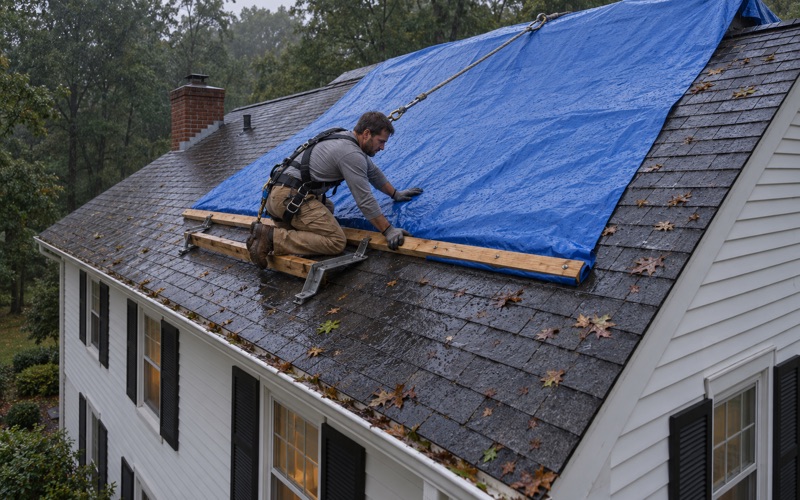
After a wind or hail event, damage can show up on the house, the barn and a run-in shed at the same time. We photograph and write up what we find on each building for your own claim, and when you ask, we will meet the adjuster on site. We do not negotiate the claim for you; we document the roofs.
Hilltown covers 26.9 square miles, from Line Lexington, where a small portion of the township falls in the North Penn School District rather than Pennridge, out to the farm roads around Deep Run and Fricks. Wherever your property sits, we give an honest read on whether each roof needs repair or replacement before a price is put in front of you.
- 20+ Years in Roofing
- Free Written Estimates
- Line-by-Line Scopes