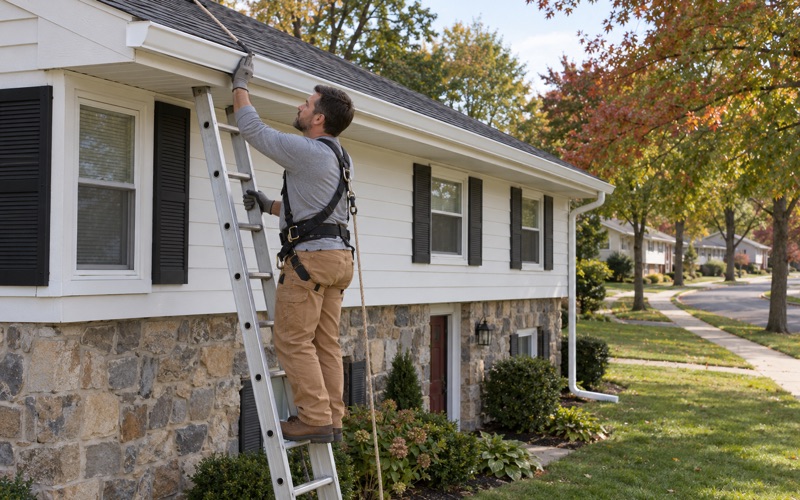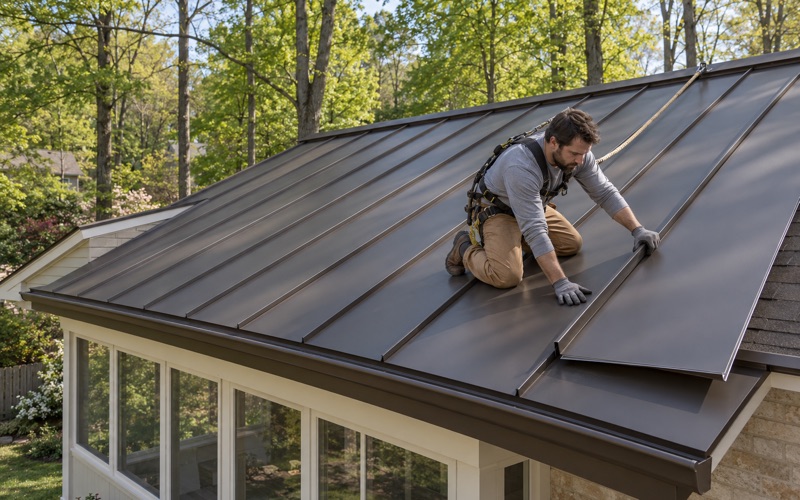
Abington Superior Roofing has worked on roofs for more than 20 years, and roofing in Lansdale asks a particular thing of that experience. Many homes here are rented, so a leak is often an owner’s problem on paper before it becomes a tenant’s problem on the ceiling. We plan our work around that from the first visit.
Our approach starts with finding the water. We go into the attic as well as onto the roof, follow the stain back to where the leak actually enters, and only then put a price on the fix. If the roof can be repaired, we say so plainly before replacement ever comes up.
This page covers what changes about roofing work in this borough: the annual rental license, the inspection guidelines that name the roof and gutters, the borough’s own roof permit, and the attached and multi-unit buildings that make up so much of the local housing.
Lansdale’s Rental License and What the Inspector Looks At
Lansdale licenses residential rentals through its Residential Rental Registration License, and the borough’s Code Enforcement Office keeps two Rental/Property Maintenance Inspector positions on staff. For an owner with even one rented unit, that program shapes how a roof problem should be handled.
What the Annual License Costs and Why a Lapse Matters
Under the borough’s 2026 fee schedule, the license costs $65 per dwelling unit each year, with $30 per boarding unit and a late charge of $5 per day after December 31. Re-inspection costs another $65 per visit once a unit goes past two inspections, so repeat trips add up quickly.
The rental application spells out a harder consequence. A unit that is not licensed annually will not be re-licensed until the building is found to be in full compliance with all current borough codes, under LBC 304-15. An open roof defect on a lapsed unit is something an owner wants cleared before applying, not after.
Roof, Chimney, Eaves and Gutters on the Borough’s List
The borough’s apartment inspection guidelines group the exterior under “Structure maintenance” and name the roof, chimney, eaves and soffits, and gutters alongside the foundation and walls. The standard is written simply: the exterior and interior of the structure must be in good repair and free of defects.
That list matches the parts of a building we look at on every rental call. A slipped shingle near the ridge, cracked mortar around a chimney, a soft soffit board or a gutter pulling away from the fascia each falls under a named item. We note them all in one written report rather than fixing the obvious leak and leaving the rest.
Ceilings and Leak-Free Plumbing Inside the Unit
The same guidelines carry over to the interior, where ceilings appear on the list and plumbing must be leak free. A roof leak often shows up first as a ceiling stain in a top-floor unit, and a tenant may describe it as a plumbing problem simply because it drips.
Sorting the two out is part of our attic check. If the wet path leads to a pipe boot, a flashing gap or a valley, we fix the roof and tell the owner which interior repair still needs doing. If it leads to a supply line instead, we say so and stay off the roof.
Looking for roofing closer to Doylestown Township? See Roofing Services in Doylestown Township.
Repairing a Rental Roof Before the License Comes Due
Because the license follows the calendar year, the weeks before December 31 are when owners tend to call about roofs they have been watching. Starting earlier leaves time for the permit, the material order and a dry stretch on the schedule.
Repair First, Replacement Only When the Roof Is Done
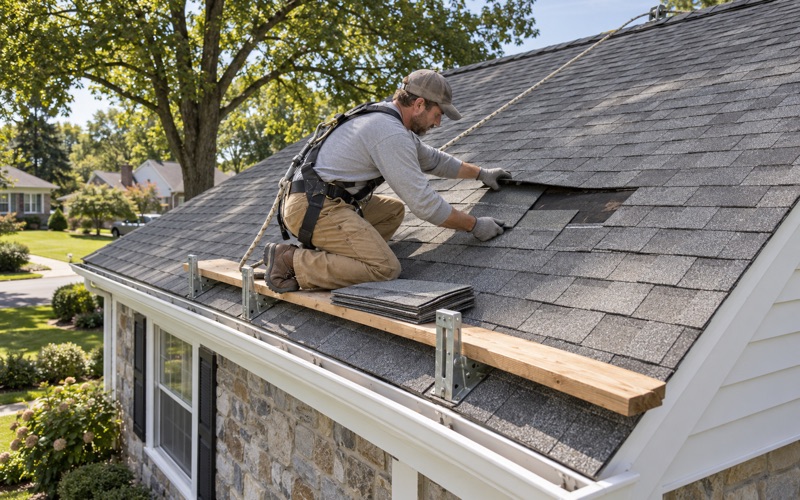
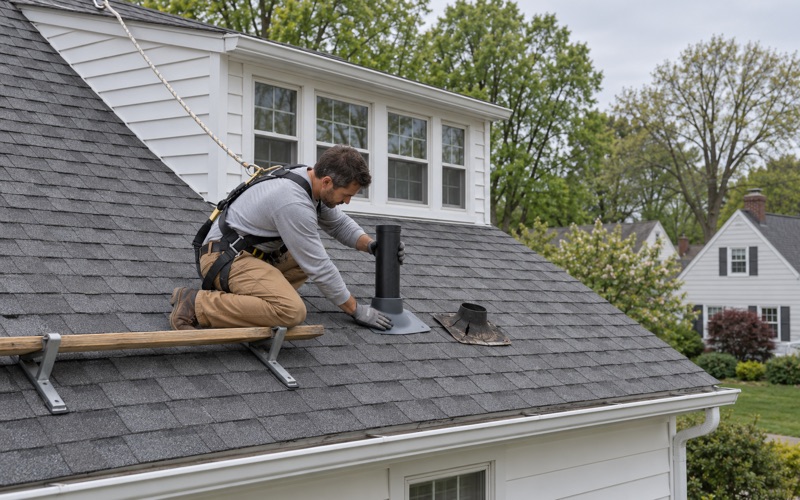
Many rental roofs need targeted work rather than a new roof: a run of replaced shingles, new pipe boots, resealed flashing at a dormer, or a section of decking that has gone soft. When that is the honest answer, it is the one we give, and we price the job as a repair.
When a roof is past repair, we explain why in terms an owner can check for themselves, such as brittle shingles across every slope or decking that flexes underfoot. Replacement then gets its own written scope, so the decision rests on what we found rather than on what is easier to sell.
Flashing and Decking Handled in the Open
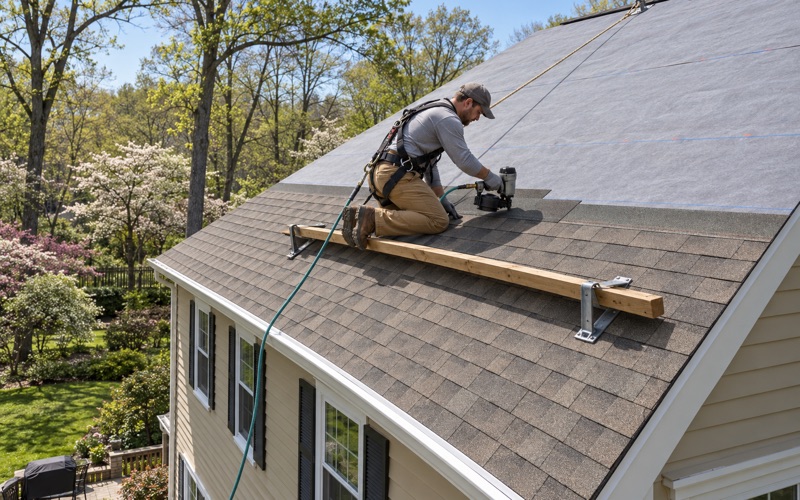
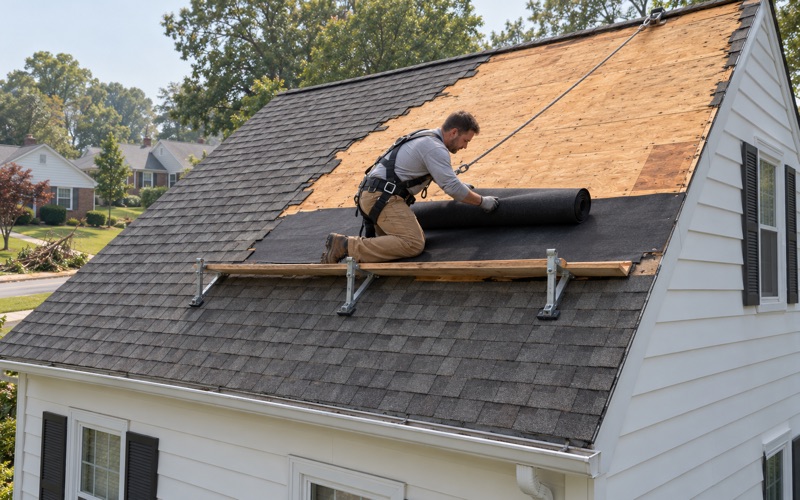
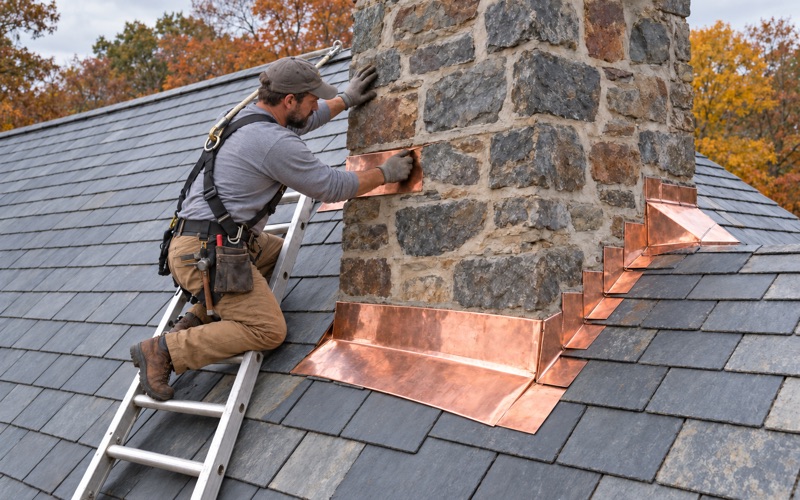
On a replacement, step flashing, counter flashing and chimney flashing come off with the old roof and go back new, because reused metal under fresh shingles is a common source of the next leak. Drip edge goes on at the eaves and rakes, and pipe boots are replaced rather than caulked.
If the decking under the tear-off turns out to be damaged, we photograph it and show the owner before any sheet is replaced. The per-sheet price is already set in the contract, so a landlord knows the most that a bad surprise can cost before the first shingle comes off.
Gutters, Eaves and Soffits as Part of the Roof
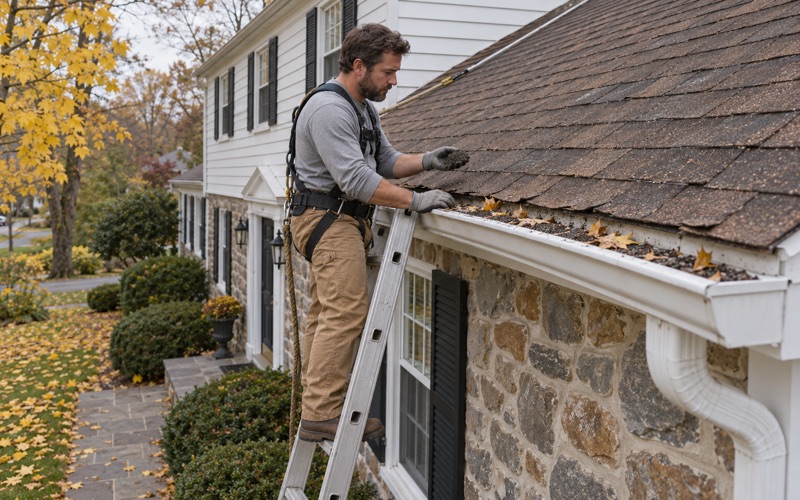
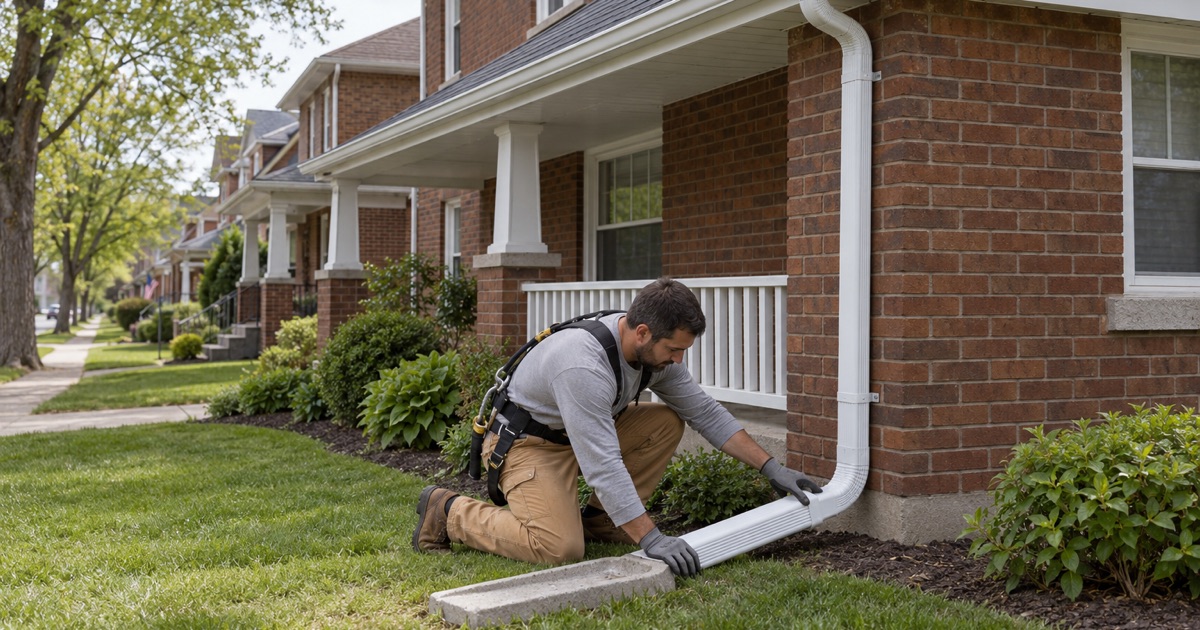
Gutters sit on the inspection list next to the roof, and they belong in the same plan. We size and pitch seamless aluminum gutters and downspouts with the roof itself, check the eaves and soffits behind them, and pair soffit intake with a ridge vent so the attic can breathe.
At the end of every work day we clean the driveway, the yard and the gutters and run a magnet sweep for roofing nails. On a rental with tenants coming and going, that daily cleanup matters as much as the finished roof.
The Lansdale Roof Permit: Repair or Replace, Flat or Pitched
Lansdale handles roofing permits through its Code Enforcement Office at One Vine Street, and the borough’s rules are its own. Permit treatment of roofing varies from one municipality to the next, so we check the rule for the property’s own municipality before we price any job.
What the Borough’s Permit Page Lists
The borough’s “What Requires a Permit?” page lists “Roof” among the items whose demolition, repair, replacement, addition or new installation needs a permit, and it publishes no list of exempt projects. Chimney work appears on that same list.
The roofing permit application has boxes for New or Repair/Replace work and for a Flat or Pitched roof, and it states that every section must be completed for the permit to be processed. It also asks for a copy of the written proposal or contract, which is one more reason our scopes are written out in detail.
Fees and the Cost of Starting Too Soon
The 2026 fee schedule prices a residential roof permit at $75 and a commercial roof permit at $250, each plus the $4.50 state fee. Which column applies depends on the property, and we confirm that with the borough rather than guessing.
The same schedule sets the penalty for a stop work order, or for work started before a permit, at the normal permit fee times two. We build the permit into the job timeline from the first estimate, so no crew sets a ladder against the building before the paperwork is in place.
A Contract the Permit File Can Use
The application asks for the contractor’s “PA License (HIC)#”, which is the home improvement contractor registration number under the state’s home improvement law. Our contracts follow that law, including the three-business-day cancellation notice and a deposit kept within the legal limit.
Each written scope lists tear-off, decking, underlayment, flashing, ventilation and gutters on separate lines. That gives the borough a clear description of the work, and it gives an owner comparing two bids a fair way to line them up item by item.
Twins, Duplexes and Small Apartment Buildings in the Borough
Lansdale takes its name from Phillip Lansdale Fox, chief surveyor of the North Penn Railroad, and grew from 2,754 residents in 1900 to 18,773 at the 2020 census. It remains a dense commuter borough on SEPTA’s Lansdale/Doylestown Line. Its housing is dense too, and attached homes outnumber detached ones.
Twin and Attached Roofs
Census figures count 2,523 attached units in the borough against 2,036 detached ones. On a twin or a row of attached homes, one owner’s roof meets a neighbor’s at the shared wall, and a new roof that ignores that seam can push water toward the house next door.
We plan attached-home roofs with the neighboring roof and the party wall in mind, tying flashing into the adjoining side and talking through the transition before work starts. For an owner who rents out one half of a twin, that planning also keeps a dispute with the neighbor out of the timeline.
Two- to Four-Unit Buildings
About 1,224 units, or 16.3% of the housing here, sit in buildings of two to four units, and 1,035 renter households live in them. One roof often covers several tenants on these buildings, so one leak can reach more than one unit and more than one lease.
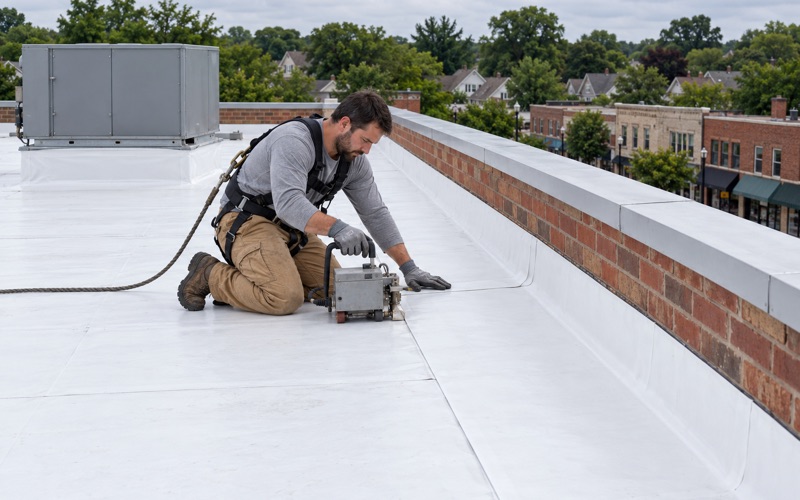
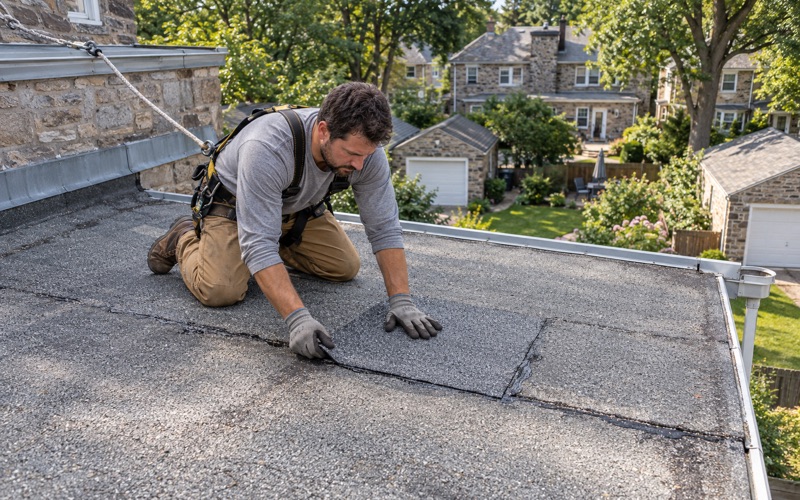
Low-slope rear sections and porch roofs on small buildings call for different material than the main pitched roof. Depending on the section, we work with EPDM rubber membrane, TPO, or torch-down modified bitumen, and the permit application’s Flat or Pitched box is marked to match the work.
Older Housing and What It Hides
The borough’s housing stock is old: 1,946 units date from 1939 or earlier, and another 3,016 went up between 1950 and 1969. Roofs on homes that age may have been covered more than once, and stacked layers add weight to framing that may not be sized for it.
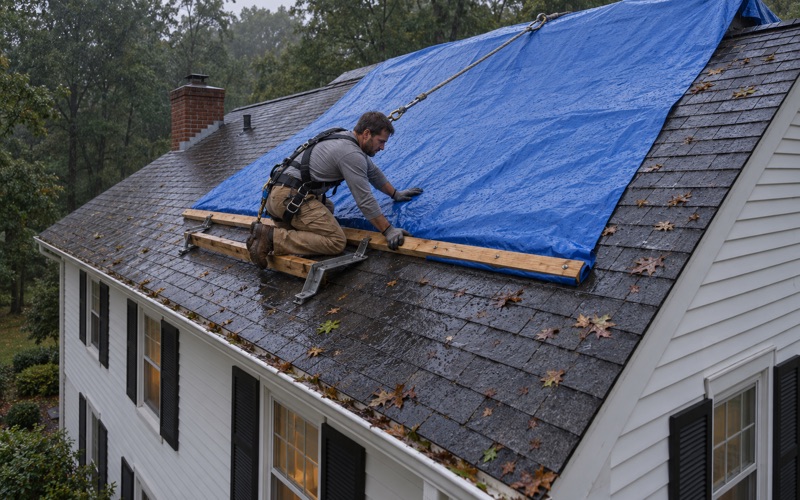
Painted trim and fascia on pre-1978 homes fall under the EPA lead-safe rule when they are disturbed, which changes how eave and gutter work is set up. If storm damage is part of the story, we photograph it and write it up for the owner’s own claim, and we will meet the adjuster on site when asked.
- 20+ Years in Roofing
- Free Written Estimates
- Line-by-Line Scopes