Abington Superior Roofing has spent more than 20 years on roofing in Lower Salford and across our service area, and most of the calls we take here after a heavy snow come down to two questions. Where is the water actually getting in, and does the roof need a repair or a replacement? We answer both in a set order, starting in the attic and ending with a written scope you can read line by line.
A stain on a bedroom ceiling rarely sits under the spot where water entered. Meltwater travels along rafters, sheathing and the top of the drywall before it shows, so every leak call includes time in the attic as well as on the shingles. We find the entry point first, and only then put a price on the fix.
Permits matter here as well. The township treats roof repair as permit work and collects the fee when the application goes in, so we fold that filing into the schedule from the first visit. The sections below cover the January storm, the ice-dam leaks that followed it, the permit itself, and how we decide between fixing a roof and replacing it.
The January 25, 2026 Snowstorm and the Leaks It Left
What the Spotter Measured
On January 25, 2026, a trained spotter in Lower Salford Township recorded 9.0 inches of snow, a figure the National Weather Service office in Mount Holly included in its final snowfall reports the next morning. That report records depth and nothing more. It does not describe damage, and we do not read more into it than it says.
What a snowfall of that depth does on a pitched roof is predictable, though. The snow insulates the deck, heat from the living space melts the bottom layer, and the water runs down toward eaves that are still below freezing. Over the following days, that cycle is what turns a quiet roof into a ceiling stain in Harleysville or Lederach.
Why Leaks Show Up Days Later
Many homeowners expect a roof to leak during a storm, not a week after it. Snow leaks work the other way. The water arrives slowly as the pack melts, and it often takes several freeze and thaw cycles to back far enough up the slope to find a gap in the shingles or the flashing.
A late leak is still worth a call. The longer meltwater sits on sheathing and insulation, the more of the deck it softens, and a small repair in February can become a wider decking replacement by spring. We would rather look at a faint stain early than open a finished ceiling later.
Planning Repairs Around Western Montgomery Forecasts
Lower Salford sits inside the forecast zone the National Weather Service calls Western Montgomery, and that is the zone we watch when we schedule work here. A forecast is not a climate record, but it tells us whether a mild afternoon is coming that lets us seal flashing and set shingles properly, or whether a tarp has to hold a few more days.
The township covers about 14.5 square miles centered on the crossing of Route 63 and Route 113, taking in Harleysville, Lederach, Mainland and Vernfield, with the East Branch Perkiomen Creek and Skippack Creek draining it. From the Dielman Kolb Homestead near Lederach, dated to 1717, to houses finished this decade, roofs here span a long stretch of building history, and all of them carry the same snow.
Looking for roofing closer to Easttown? See Easttown Roofing.
Ice Dams and Meltwater Leaks in Harleysville, Lederach and Mainland
How an Ice Dam Forms at the Eave
An ice dam is a ridge of frozen meltwater along the lower edge of the roof. Water that melts higher up runs down, reaches the cold overhang, and freezes there. Each melt adds to the ridge, and the pool behind it starts working its way under shingles that were designed to shed water, not hold it.
Most of the leaks we trace after a heavy snow start within a few feet of the eave or along a valley. The damage often shows on an exterior wall or above a window, which is why owners sometimes blame the siding or the window frame before anyone suspects the roof.
Attic Clues We Look For
In the attic we look for wet or stained sheathing near the eaves, frost on the underside of the deck, damp insulation and rusted nail tips. Each points to a different cause. Frost and rusted nails usually mean warm, moist air is reaching the attic, while a wet band at the eave points to water pushed back under the roof edge.
We also check how air moves. A ridge vent needs matching intake at the soffits, and insulation stuffed against those soffits leaves the attic warmer than it should be. Better ventilation will not stop the next storm, but it reduces how much snow melts from below and how fast ice builds along the edge.
Gutters, Flashing and the Roof Edge
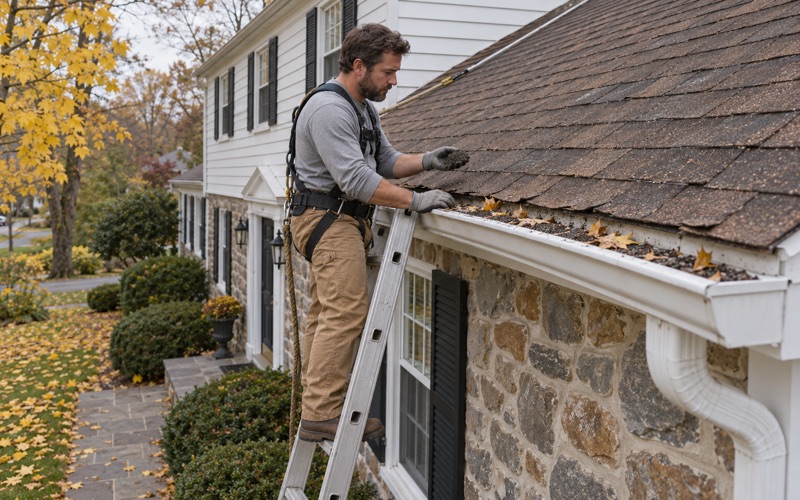
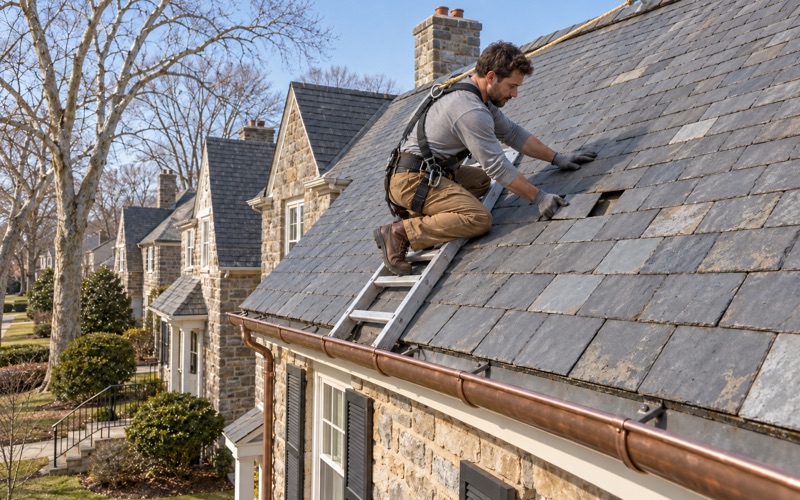
Gutters packed with ice add weight and give meltwater nowhere to go, so we size and pitch them along with the roof rather than treating them as a separate job. Downspouts that are too small or sloped the wrong way hold water at the very corner where a dam already wants to form.
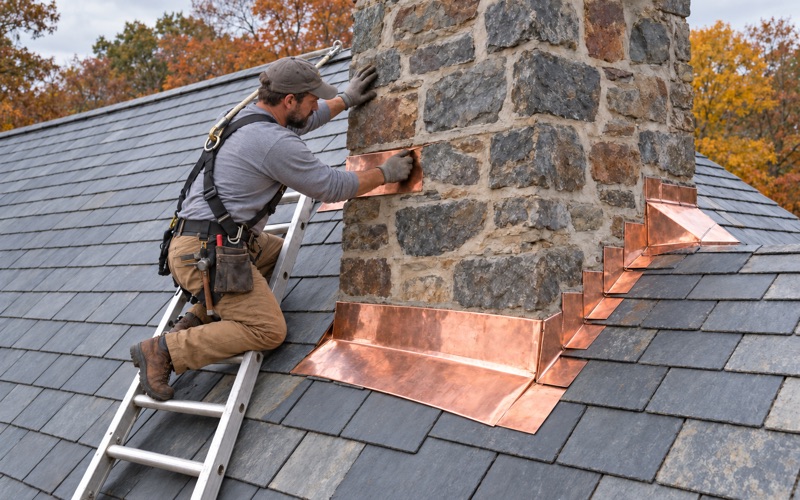
Flashing is the other weak point. Step flashing along a wall, the counter flashing above it and the metal around a chimney all sit where snow piles deepest. When we replace a roof section, that flashing is replaced with it rather than reused under new shingles, and kick-out flashing at the base of a wall keeps meltwater out of the siding.
Roof Repair Is Permit Work in Lower Salford
What the Township Permits Page Lists
Lower Salford Township Building and Zoning lists roof repair and replacement among the projects that require a permit, and its permits page lists no exemption. Roofing is also one of the permits paid when the application is submitted rather than when the permit is issued. That is the township’s own rule, and it is the one we follow on a house here.
Permit treatment of roofing is set township by township in this part of the state, so we confirm the rule for the house’s own township before pricing any job. A neighboring municipality may handle the same repair differently, and an estimate built on the wrong rule is an estimate that changes later.
Filing at 379 Main Street Before Work Starts
The building and zoning office is at 379 Main Street, Harleysville, and it answers questions by phone at 215-256-8087 or by email. We file the roofing application and pay the fee before the permanent repair begins, so the permit is part of the schedule rather than a step remembered after the shingles are already on.
Timing matters after a storm, because many owners call during the same week. Building the filing into our first estimate means the start date we give you already allows for it, and you are not left waiting on paperwork with a tarp on the roof longer than necessary.
Why Starting Without a Permit Costs More
The township fee schedule doubles the fee when a project is started without the permits it needs. On a roof repair that is an avoidable cost, and it can complicate a later sale as well. Lower Salford enforces the Uniform Construction Code and references the 2018 ICC codes, so the work is inspected against a known standard.
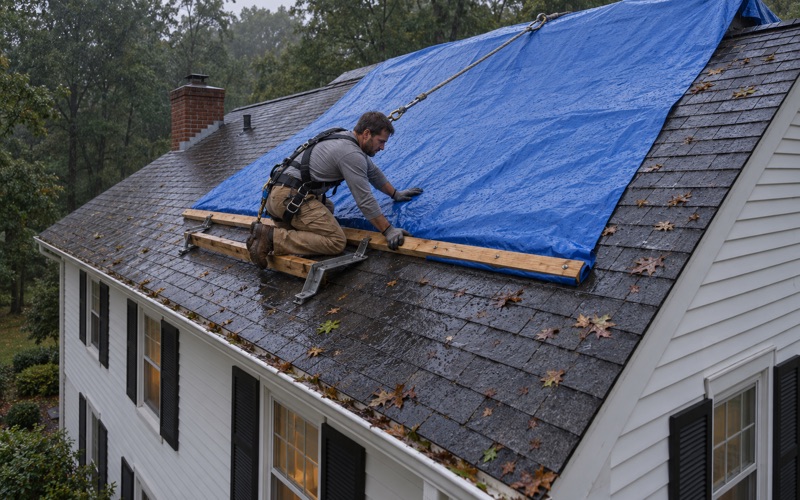
Stopping active water is often the first job, and we will protect the house the day we see it. We check with the township how that temporary work is treated, file before the lasting repair, and mark clearly on the written scope which part is emergency protection and which part is the permitted repair.
Fixing the Leak or Replacing the Roof
When a Repair Is the Right Answer
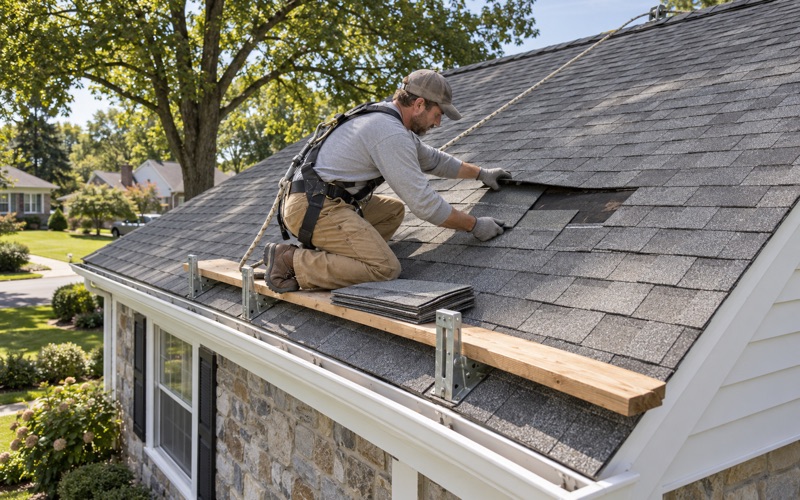
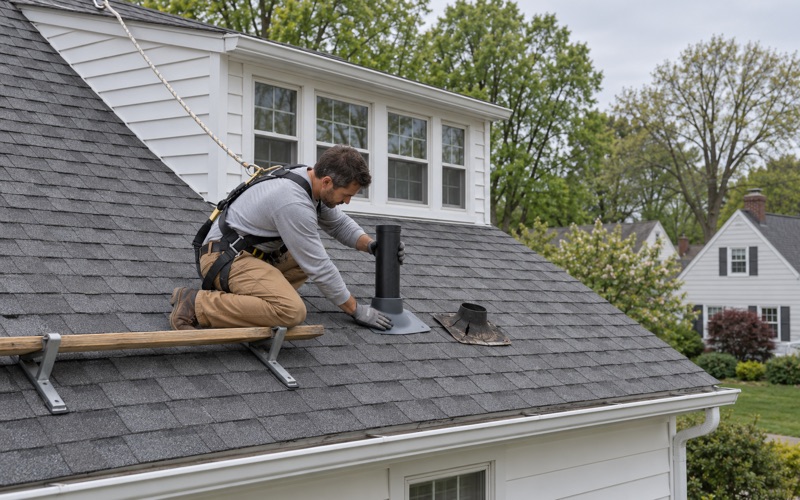
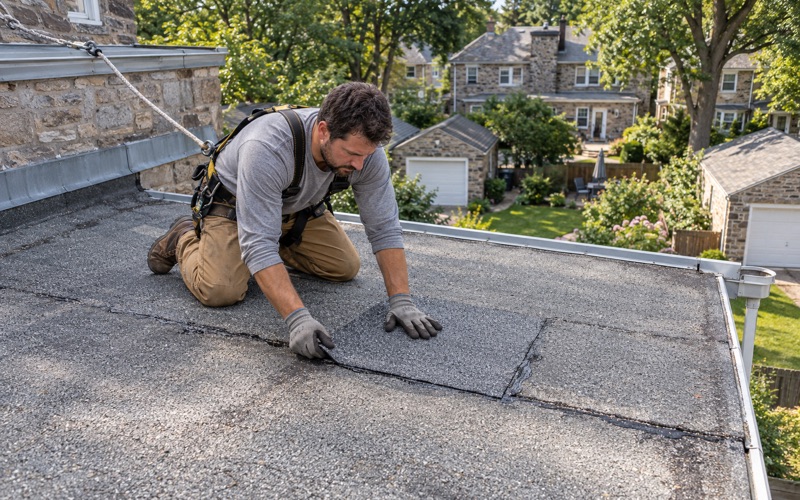
Many snow leaks come from one failed spot: a lifted shingle course at the eave, a cracked pipe boot, or flashing that pulled away from a chimney. If the deck is sound and the rest of the roof has life left, we say so and price the repair. That answer comes before anyone talks about replacement.
Age alone does not decide it either. More than a fifth of the township’s housing units date from the 1980s, and large shares were built during the 1990s and 2000s. Two houses from the same decade can carry very different roofs, so we judge each one on what the attic and the shingles show rather than on the year it was built.
When Replacement Makes More Sense
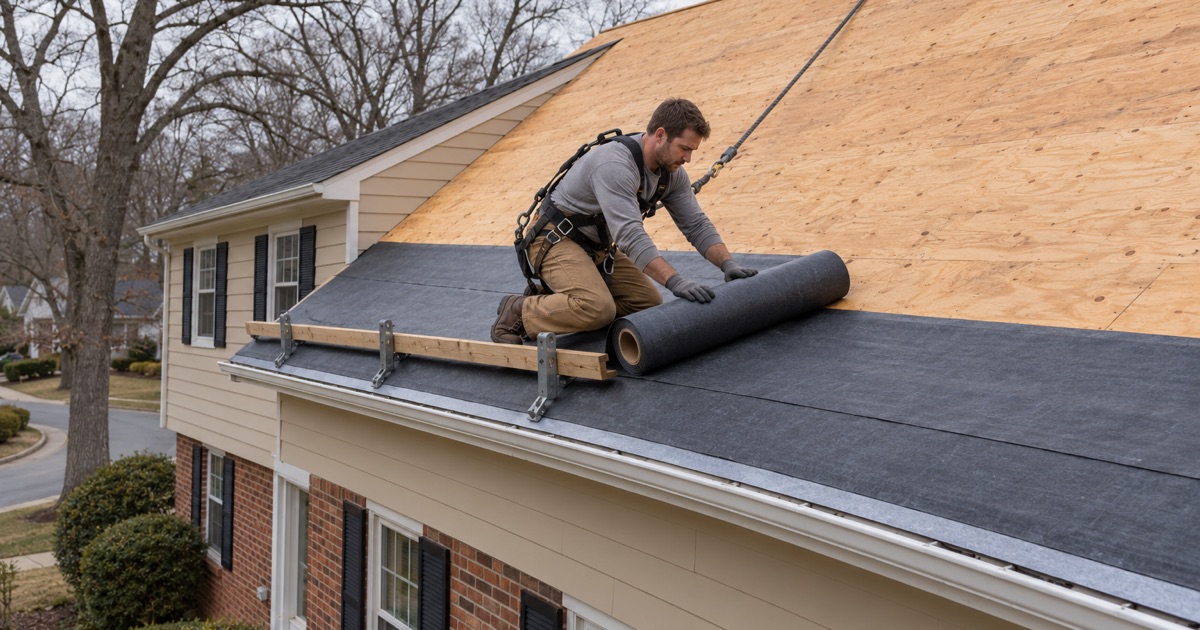
Replacement becomes the better choice when leaks appear in several places, the shingles are curling or shedding granules across whole slopes, or the decking is soft over a wide area. The building code also limits a roof to two layers, so a house that already has two needs a full tear-off rather than another layer on top.
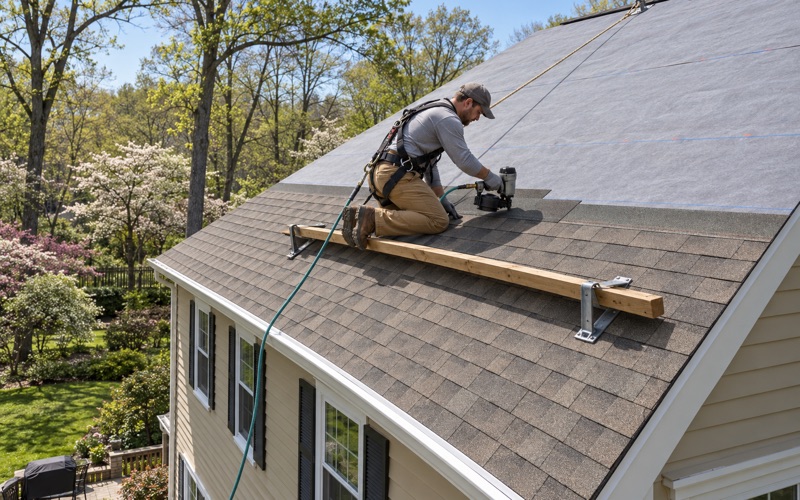
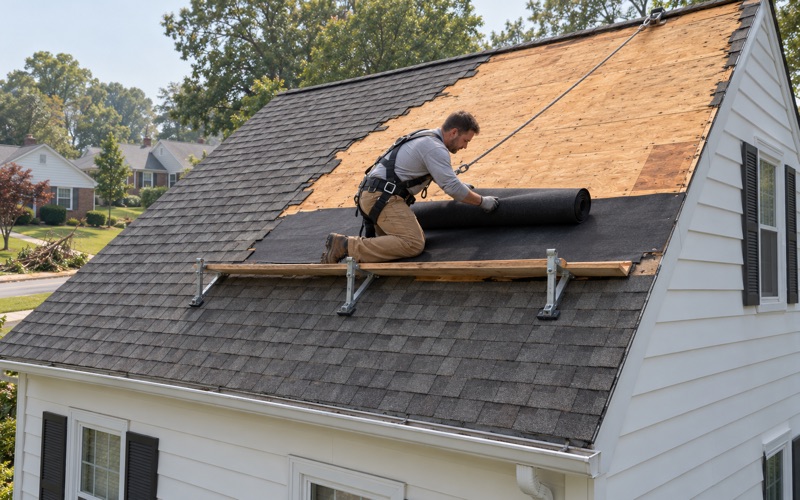
When the old roof comes off and damaged decking turns up, we photograph it and show it to you before replacing it. The price per sheet is written into the contract beforehand, so the final invoice matches what you agreed to. New underlayment, an ice barrier along the eaves and fresh drip edge go down before the shingles.
Attached Homes and Shared Walls
About 1,085 of the township’s housing units are single-family attached homes, and their roofs run across a shared wall. A repair on one side has to tie into the neighbor’s roof without opening a seam, so we plan where the new work meets the old before the crew climbs up.
Snow tends to drift against the taller section where two roofs meet at different heights, so these joints get a careful look after a storm. We keep the transition watertight and make sure the neighbor’s gutters and flashing are left undisturbed by the work on yours.
Insurance, Contracts and Daily Cleanup
If the storm damage leads to an insurance claim, we photograph it and write it up for your own claim, and we will meet the adjuster at the house when you ask. We do not negotiate the claim for you. Our contracts follow Pennsylvania’s home improvement law, with the three-business-day cancellation notice and a deposit kept within the legal limit.
Every written scope breaks out tear-off, decking, underlayment, flashing, ventilation and gutters as separate lines, which makes comparing two estimates straightforward. At the end of each work day we clean the driveway, yard and gutters and run a magnet across the lawn to pick up stray roofing nails.
- 20+ Years in Roofing
- Free Written Estimates
- Line-by-Line Scopes