Abington Superior Roofing installs metal roofing in Abington, PA on whole houses, porches, bay windows and low-slope additions, serving surrounding cities including Lower Moreland, Upper Southampton, East Goshen, Warwick Township and Plymouth Township. With more than 20 years of roofing in this area, we know where metal earns its price and where shingles remain the sensible choice.
Most of our metal work is standing seam: long panels running from ridge to eave with raised seams and concealed fasteners. It handles the freeze-thaw cycles, wind and occasional heavy snow of southeastern Pennsylvania with very little maintenance, and it looks right on everything from a modern addition to a stone farmhouse porch.
We treat metal as a complete roof system, not just panels. Underlayment, flashing at walls and chimneys, snow guards and the tie-in to any adjoining shingle roof are all planned and written into the scope before work starts.
Standing Seam Metal Roofs
How Standing Seam Works
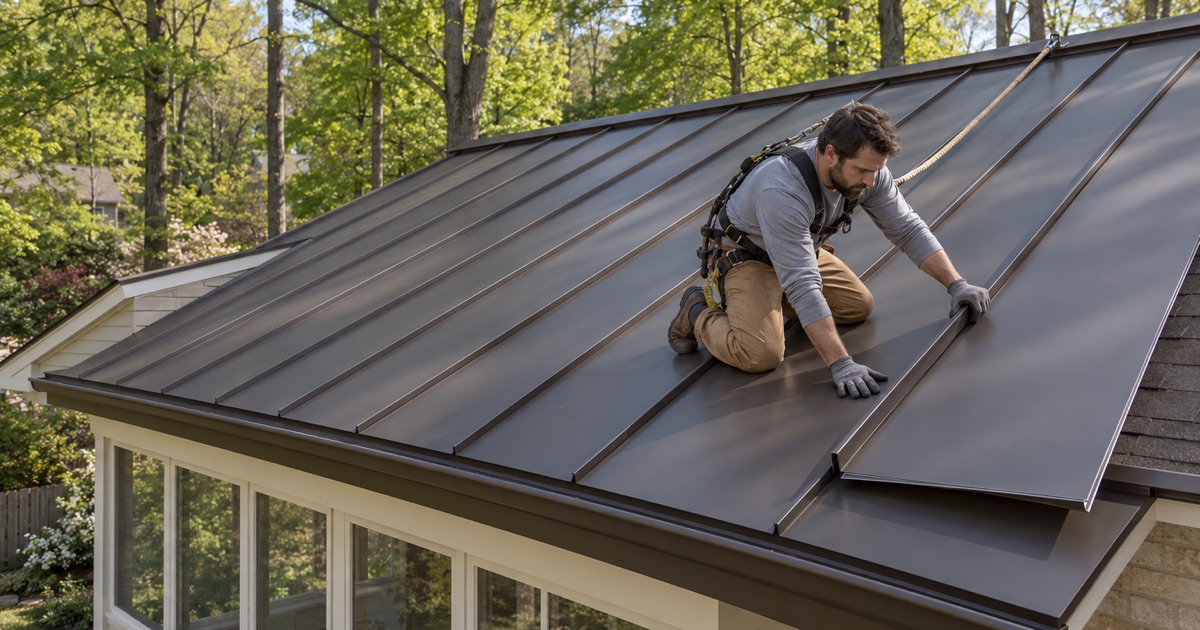
Standing seam panels run continuously down the slope, joined to each other by vertical seams that stand above the water line. Clips fastened to the deck hold the panels while letting them expand and contract with temperature, which is what keeps the fasteners from loosening over time.
Because no screws pierce the face of the panel, there are no exposed rubber washers to fail. That is the main reason standing seam lasts so much longer than the screw-down panels used on barns and sheds.
Snap-Lock and Mechanically Seamed Panels
Snap-lock panels click together and suit most residential slopes. Mechanically seamed panels are folded together with a seaming tool and are preferred on lower slopes, where water moves slowly and a tighter seam matters.
We choose the panel profile based on the pitch of your roof and how exposed it is to wind. On a porch roof with a gentle pitch, the choice of seam makes a real difference in how the roof performs over decades.
Underlayment Beneath the Metal
Metal roofs get hot in summer sun, and standard felt can soften and stick under them. We install a high-temperature synthetic underlayment, with self-adhering ice barrier at the eaves and in valleys.
The underlayment is the roof’s second line of defense against wind-driven rain and condensation forming under the panels. It is invisible once the job is done, which is why it gets its own line in our scope.
Metal on Porches, Bays and Additions
Porch Roofs That Keep Leaking
Many porches in this area have roofs too shallow for shingles, and shingles on a low pitch leak no matter how carefully they are installed. Standing seam metal is made for those slopes.
Replacing a leaking porch roof with metal also solves the wall flashing problem where the porch meets the house. We install proper counter flashing at that joint, which is where most porch leaks actually start.
Bay Windows and Small Roof Sections
Bay windows, entry overhangs and dormer tops are small, often curved or steep, and awkward to shingle well. Formed metal covers them cleanly and sheds water quickly.
We fabricate panels and trim to fit these small sections, matching color or using copper where it suits the house. On a brick or stone front, a metal bay roof is often the detail people notice first.
Tying Metal Into a Shingle Roof
When a metal porch or addition meets a shingled main roof, the transition is where a mixed roof will leak if it is rushed. Water has to pass from one material to the other without finding a seam to run into.
We detail that transition with the right flashing and underlayment overlap, so the shingles lap over the metal correctly. It is a small part of the job and the part that decides whether the whole roof stays dry.
Metal Roofing Materials and Finishes
Steel and Aluminum Panels
Most residential standing seam is painted steel with a metallic coating under the paint, which balances strength and cost. Aluminum is lighter, will not rust, and is often used on coastal buildings and low-slope sections.
We explain the gauge, coating and finish of each option and what they mean for durability. A cheaper panel with a thinner coating looks the same on installation day and very different twenty years later.
Copper Roofing and Accents
Copper is the traditional metal for bay windows, dormers, cupolas and porch roofs on older houses, and it weathers to a natural patina. It is also the metal that matches existing copper valleys and half-round gutters on slate roofs.
We fabricate and solder copper details with copper fasteners and cleats, never mixing in steel or aluminum, which would corrode where they touch. Copper costs more up front and lasts for generations.
Paint Finishes and Colors
Painted metal panels come in a wide range of colors, from dark bronze and charcoal to traditional barn red and lighter reflective shades. Higher-grade paint systems resist fading and chalking far better than basic finishes.
We bring color samples to view against your siding, brick or stone in daylight. A metal roof is a long commitment, so the color should look right on the house, not just in a brochure.
Living With a Metal Roof
Snow Guards Over Walkways and Entrances
Snow slides off metal roofs in sheets, sometimes all at once, which can damage gutters, plants and anything below. Over doors, walkways and driveways that is a safety issue as well.
We install snow guards where sliding snow would cause problems, spaced according to the roof’s size and pitch. On porches over entrances, they are one of the most important parts of the job.
Permits and Township Rules
Abington Township requires a roofing permit for roof replacements, and that includes metal. Neighboring townships each set their own rules for re-roofing under the Pennsylvania Uniform Construction Code.
We check the rule for your address, file any required permit, and build it into the schedule. If your house sits in a historic district, we also check whether the material or color needs review before work begins.
- 20+ Years in Roofing
- Free Written Estimates
- Line-by-Line Scopes