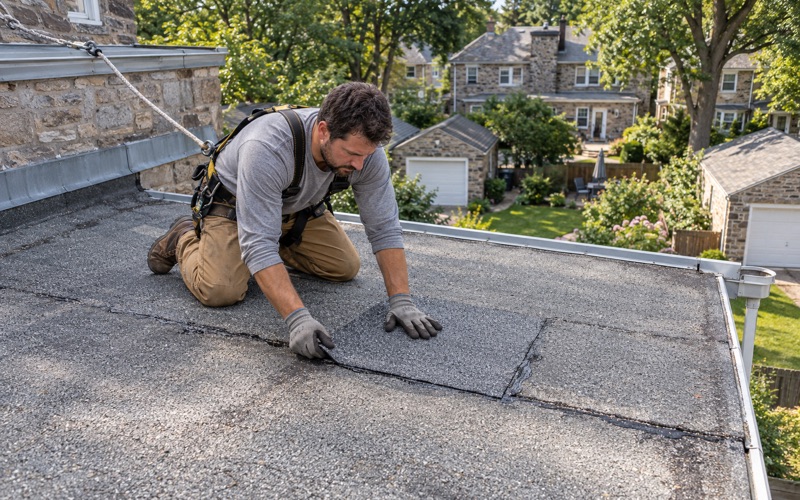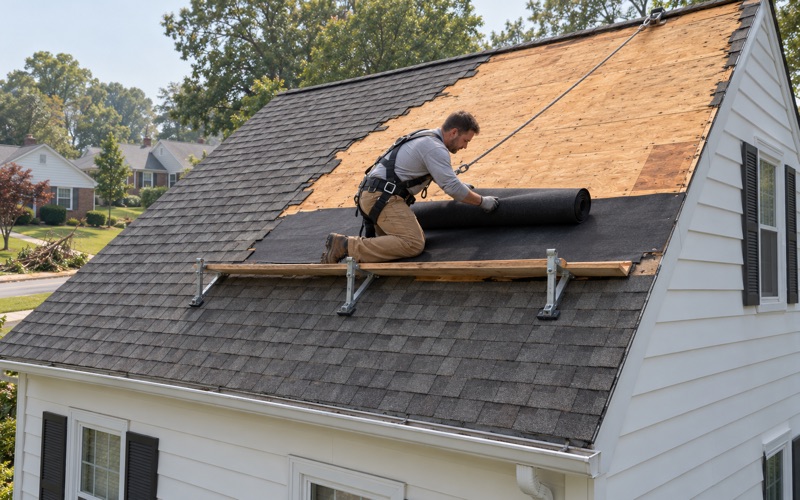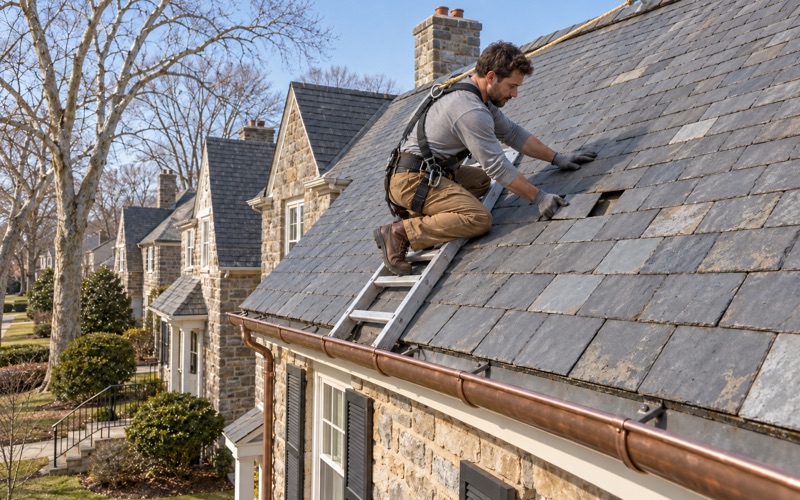
Abington Superior Roofing brings more than 20 years of experience to roofing in Nether Providence, and on the older houses here the question that shapes a re-roof is often about paint rather than shingles. Most replacements disturb the painted wood along the roof edge, and on a house of the right age that brings a federal lead-safe rule into the job. We sort out whether it applies before a price is written, not after the crew has started pulling gutters.
That check sits beside the rest of our estimate. When a homeowner calls about a leak, we look in the attic as well as on the roof so the water is traced to where it actually gets in. Then we say plainly whether the roof can be repaired, and replacement only comes up once that answer is no.
When replacement is the right call, the permit rule for the house’s own township is confirmed before anything is priced. The scope is then written so the painted trim, the gutters and the roof itself appear as separate pieces of work. That is what lets an owner see exactly where the lead-safe rule changes the cost and where it changes nothing.
Nether Providence’s Pre-1978 Houses and What the Rule Covers
Most of the housing predates 1978
The housing stock here skews old. The American Community Survey’s 2024 five-year estimates count 5,227 housing units across the township, and at least 3,483 of them were built before 1970. Add the 609 units from the 1970s and the share built before 1980 reaches 4,092 units, or 78.3 percent.
The Census buckets do not split at 1978, so 3,483 is the floor of homes certainly built before that year rather than the full count. The 1950s alone account for 1,554 units. With 4,499 of the 5,091 occupied homes owner-occupied, most of these roofing decisions land on the people who live in the house.
What the lead-safe rule reaches on a roof
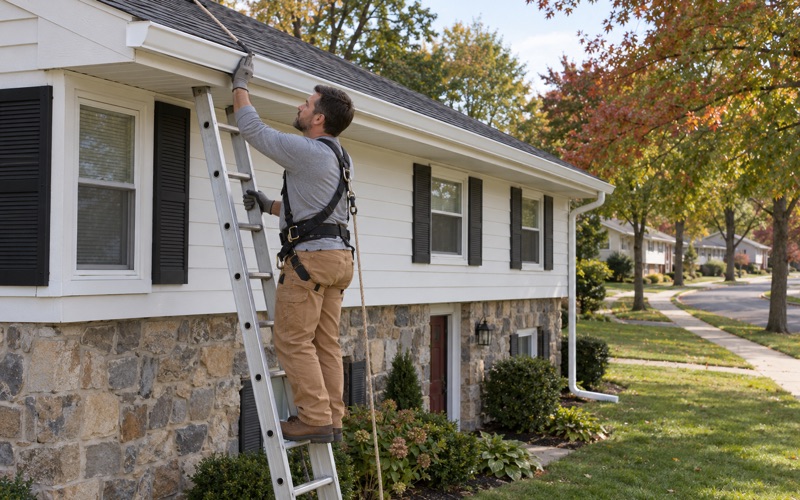
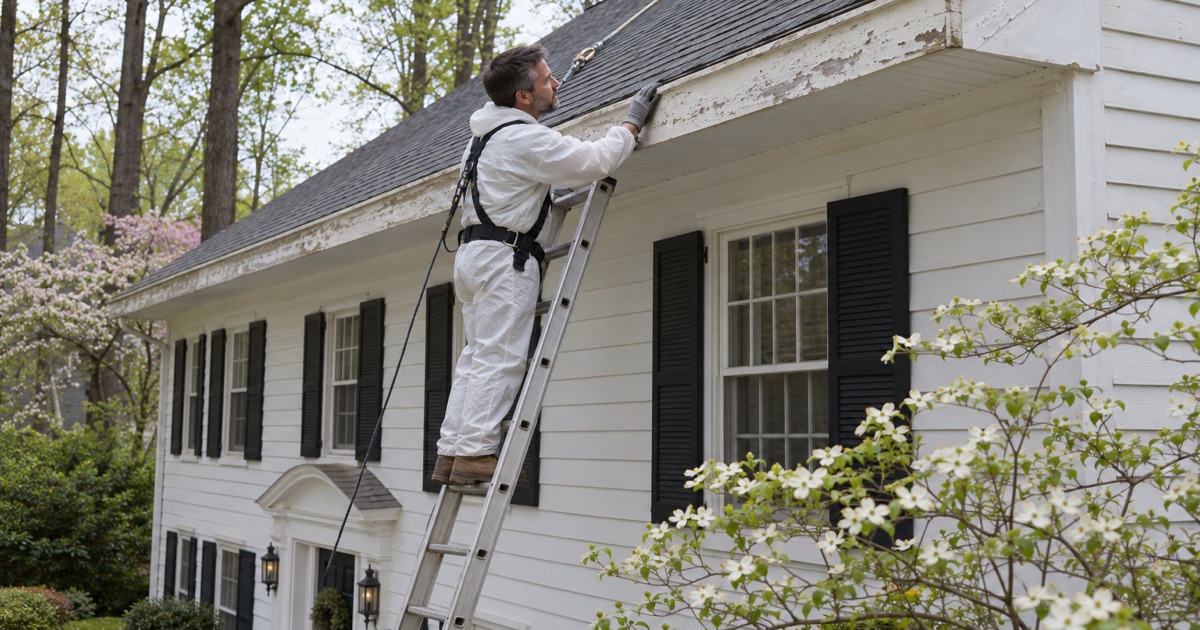
EPA’s Renovation, Repair and Painting rule covers target housing built before 1978. It is aimed at work that disturbs painted surfaces, and on a roofing job those surfaces are not the shingles. They are the wood around the roof: the fascia the gutters hang from, the soffit under the overhang, the rake boards along the gables and the trim tucked behind the drip edge.
When old gutters come down, when a rotten section of fascia is pried off, or when new drip edge is slid under painted trim, that painted wood is what gets disturbed. The shingles leave as ordinary roofing debris. The paint question lives at the edges of the job, and that is where our planning starts.
What the build year does and does not tell you
No one should assume a particular house carries lead paint, and we never do. Whether the trim on a given home in Wallingford or Moylan has lead in it is something only testing answers, and none of the figures above reflect any testing. What the build year tells you is whether the rule’s protections apply to the work.
That distinction matters for planning. On a house built before 1978, we treat the job as one where lead-safe work practices may be needed at the edges. We tell the owner that before the price is set, so the schedule and the scope leave room for it instead of the issue surfacing on the first morning.
Looking for roofing closer to Willistown? See Roofing Services in Willistown.
The 20-Square-Foot Exterior Limit, Counted Across the Whole House
Where minor maintenance ends
The rule carves out minor repair and maintenance, and the outdoor threshold is small. EPA’s guidance says exterior work stays minor only if, combined with the other renovation work on the outside of the building, it disturbs no more than 20 square feet of painted surface. It also cannot use prohibited practices, involve window replacement or demolish painted surfaces.
Past that line, the job is no longer minor maintenance. It needs a certified firm and lead-safe work practices, which change how painted trim is opened up, how debris is caught and how the site is cleaned. For a homeowner, that difference belongs in the plan from the first conversation.
Every side and every task share one total
The detail that surprises most owners is how the 20 square feet is counted. EPA’s companion guidance says the figure is the total across all sides of the exterior, not a separate allowance for each side. The front, the back and both gable ends draw on one budget.
It is shared across tasks as well. If the same job replaces a run of fascia at the front, swaps gutters at the back and opens trim around a dormer, those disturbed areas are added together. Three small pieces of trim work can cross a line that no single one of them would cross alone.
Why a full re-roof can add up
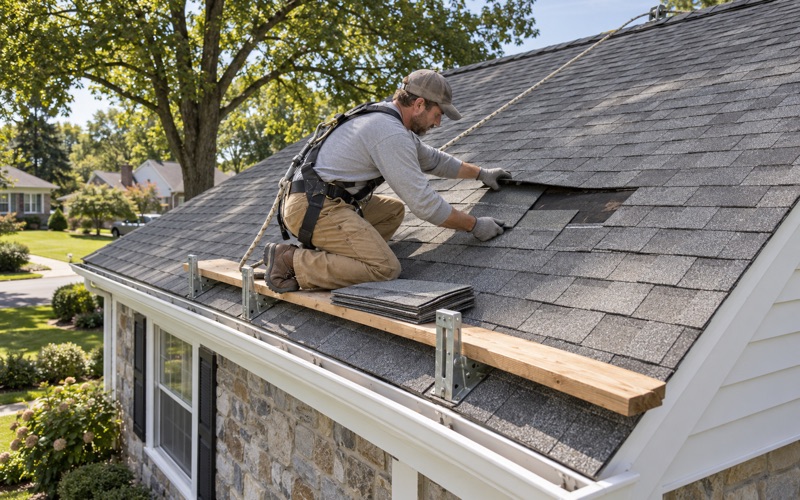
A re-roof rarely touches just one board. Gutters come down along the eaves, drip edge goes on at the eaves and rakes, and soft fascia found behind an old gutter has to be cut out. Whether a particular job passes 20 square feet depends on its scope, so we measure the painted wood the work will actually disturb rather than guessing.
Measuring early also keeps the estimate honest. If a job can be scoped to stay under the threshold, the paperwork says so and explains how. If it cannot, the lead-safe work is priced as its own item instead of being folded quietly into the roofing number.
Fascia, Soffits and Trim Behind the Gutters
The fascia board
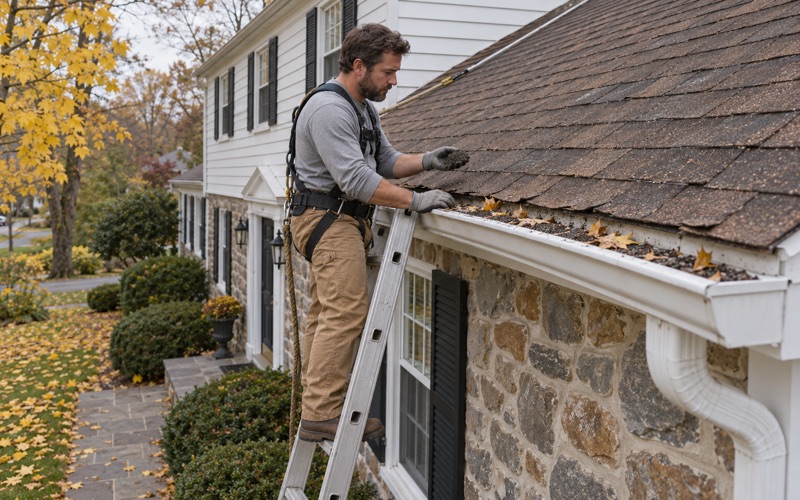
Fascia is where most of the painted surface on a roofing job sits. Gutters hang from it, and the board behind a gutter that has overflowed for years is often the part of the edge that has taken the most water. When it has gone soft, it has to be replaced, which means cutting and removing painted wood.
We size and pitch new gutters together with the roof rather than as an afterthought, so the fascia work is planned once. On an older house that single plan matters, because taking the gutters down, repairing the fascia and rehanging the gutters are all exterior tasks that count toward the same total.
Soffits and rake boards
Soffits and rake boards come into play less often, but they do come into play. Ventilation work that adds soffit intake for a ridge vent can mean cutting into painted soffit, and a rake board that has to come off to set new drip edge at the gable is painted wood too.
We flag those items on the scope so the owner can see them before agreeing to anything. A ridge vent with soffit intake is a sound improvement on many older roofs. On a house built before 1978, it is also one more area of disturbed paint to add into the count.
Drip edge and the trim behind it
Drip edge at the eaves and rakes is standard on a new roof, and installing it means working right against the top of the fascia and the trim behind the old gutter. Pulling an old gutter hanger or prying back a strip of trim to seat the metal is exactly the kind of small disturbance that adds up across a house.
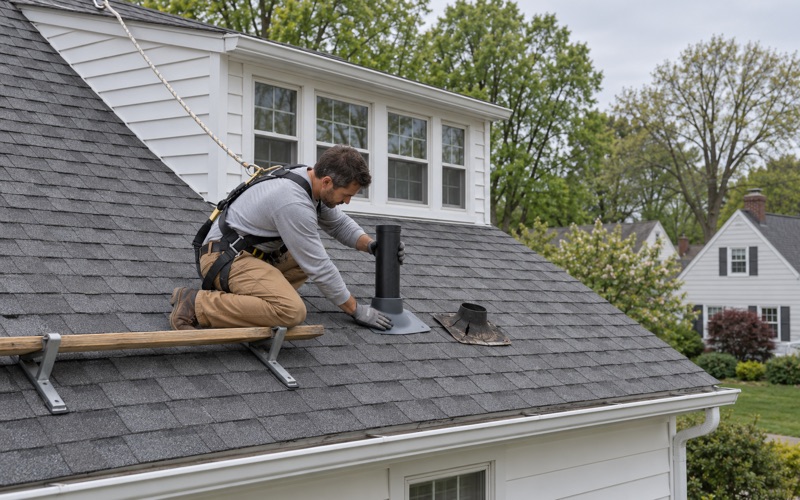
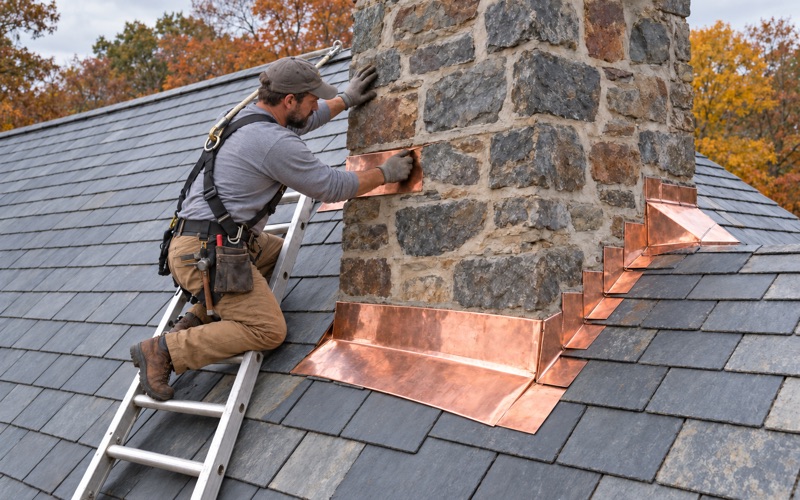
Flashing is handled on its own terms. We replace step, counter and chimney flashing with the roof instead of reusing it under new material. Where that work meets painted siding or trim, we note it on the scope so it is counted alongside everything else at the edges.
Planning a Lead-Safe Re-Roof in Wallingford
Federal certification is the one that applies
Some states run their own renovation programs in place of EPA’s. Pennsylvania is not on EPA’s list of authorized states, so work here falls under EPA’s federal certification. That holds whether the house sits in Wallingford, Moylan, South Media or Garden City; across Nether Providence, the federal program is the standard a firm has to meet.
For an owner collecting estimates on an older house, the practical step is simple. Ask each contractor how the trim and gutter work will be handled under the rule, and whether a certified renovator will be on the job. A clear answer belongs on the written estimate, not in a phone call you have to remember later.
A scope you can compare line by line
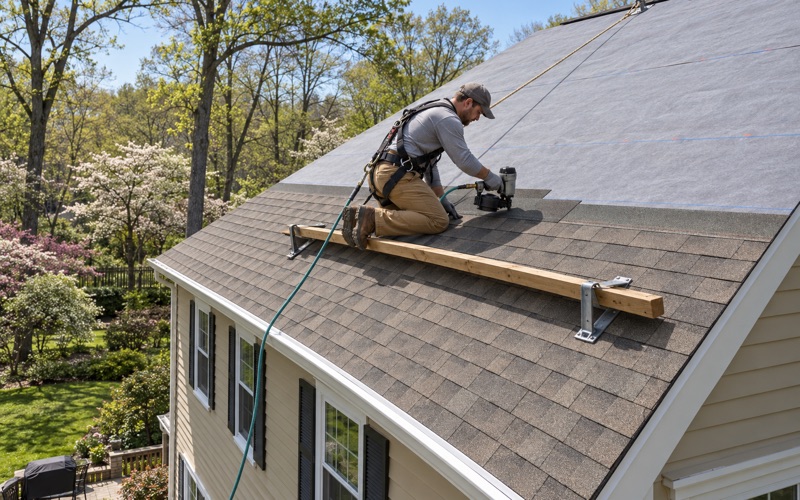
Our written scopes break the job into tear-off, decking, underlayment, flashing, ventilation and gutters as separate lines. On a pre-1978 house, the painted trim work gets called out as well. That makes two estimates comparable item by item, including the part of the job the lead-safe rule touches.
The same discipline applies under the shingles. If damaged decking turns up once the old roof is off, we photograph it and show the owner before replacing it, at a per-sheet price already set in the contract. Nothing about the deck is decided out of sight.
Keeping the site clean each day
Lead-safe practices govern how dust and debris are controlled at the painted edges, and they sit alongside our ordinary end-of-day routine. At the close of every work day we clean the driveway, the yard and the gutters, and we run a magnet sweep across the lawn for roofing nails.
The township has 3,797 detached houses, and on a detached house the edge work happens directly above the yard and the plantings along the foundation. A measured scope, a planned edge and a clean site every evening are what let a re-roof on an older Wallingford home finish without surprises.
- 20+ Years in Roofing
- Free Written Estimates
- Line-by-Line Scopes