Abington Superior Roofing brings more than 20 years of work to roofing in Plumstead, and this page centers on the question homeowners here ask after a storm: what did that hail actually do to the roof? The honest answer usually takes a ladder, an attic light and a camera, not a glance from the driveway.
We look at a roof the same way whether the call starts with a drip or a dent. Someone checks the attic as well as the shingles, so water is traced to where it really enters before any number is written down. You also hear plainly whether a repair will do the job before anyone mentions a full replacement.
That approach matters most after hail, because the damage it leaves is often quiet. Bruised shingles and dented metal can sit for months before a stain shows on a ceiling. Below we cover the dated hail record that belongs to this township, what stones that size can do, how to document them, and what impact-rated shingles can and cannot offer.
Quarter-Sized Hail Over Danboro, September 8, 2023
What the Storm Prediction Center Logged
On the afternoon of September 8, 2023, the Storm Prediction Center recorded two reports of hail measuring 1.00 inch, the size forecasters call quarter-sized. The note attached to the second report says quarter-sized hail fell in Danboro around 4:30 that afternoon and again at 4:57. Both reports carry the same point, listed as one mile east-northeast of Fountainville.
That is a dated, published record rather than a neighbor’s memory, and it is useful for that reason. It tells a homeowner which afternoon to think back to and roughly when the stones came down. What the record does not include is any count of damaged roofs, so whether a given house took harm is a question only an inspection answers.
Why the Location Puts It Inside Plumstead
The coordinates on those two reports geocode to Plumstead Township in Bucks County, which is why we treat this storm as part of the local record rather than a regional headline. Danboro, Fountainville and Plumsteadville are all villages within the township, and a hail core can drop stones on one of them while leaving another dry.
A third quarter-sized report that evening came from Pipersville, but its coordinates fall in Bedminster Township, not Plumstead. We mention it only so the count stays honest: two reports, one point, one afternoon. If your house sits near Danboro, that afternoon is worth remembering the next time you size up an aging roof.
A Forecast Zone, Not a Climate Record
The National Weather Service office in Mount Holly covers the township, and the point at its center falls in forecast zone PAZ105, Upper Bucks. That is the zone to follow in its forecasts on a stormy afternoon. It is a forecast zone, not a climate record, and it says nothing about how often hail falls here.
What to Check From the Yard
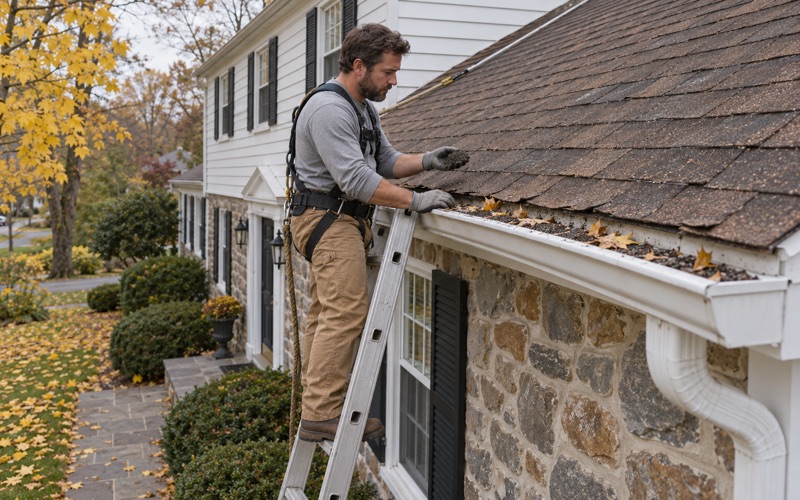
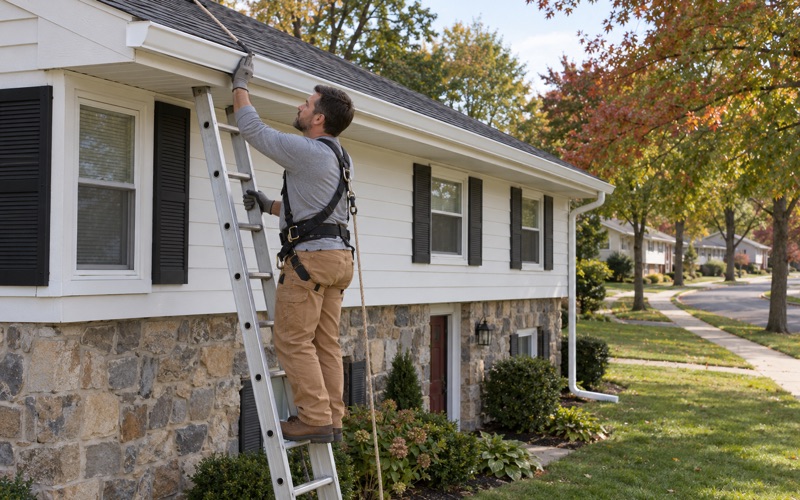
Before anyone climbs, a walk around the house tells you a little. Look for fresh dimples on the downspouts, granules collected at the bottom of the gutters, and dings on a metal mailbox or grill lid. None of these prove the roof was damaged, but they show where stones landed hard enough to leave a mark.
Do not climb onto a wet or steep roof to check it yourself. Much of the township’s terrain is steep and rocky, which makes ladder footing on a sloped yard less forgiving than it looks. A pair of binoculars from the lawn is a safer first step, and a proper inspection covers the rest.
Looking for roofing closer to Upper Providence Township? See Upper Providence Township Roofing.
What One-Inch Hail Does to Shingles, Gutters and Vents
Bruised and Cracked Asphalt Shingles
Hail an inch across can bruise or crack asphalt shingles without opening a leak that day. A bruise is a soft spot where the mat underneath has been fractured, and from the ground it looks like nothing at all. Over the following seasons, granules wash off that spot and the asphalt beneath it starts to weather faster than the shingle around it.
Whether a particular roof took that kind of hit depends on its age, the shingle type and which way each slope faced the storm. Older three-tab shingles that have already shed granules tend to show impact sooner than newer architectural shingles. That is why we never assume damage from the size of the stones alone, and why we never assume a roof escaped either.
Dents on Gutters, Vents and Pipe Boots
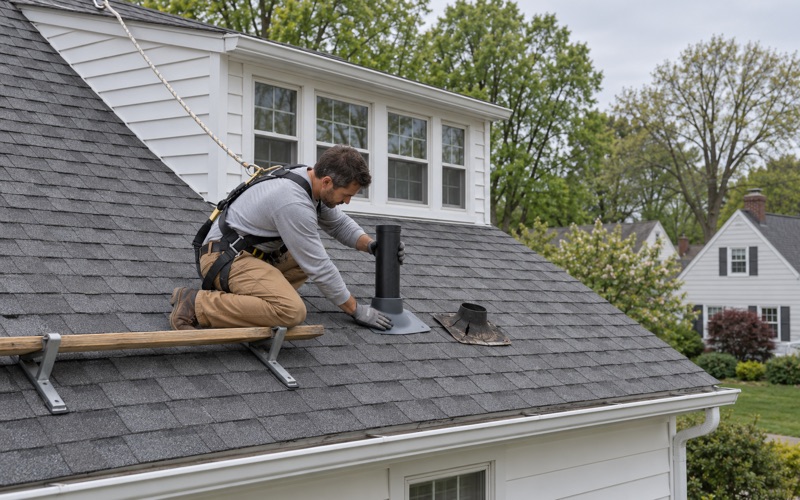
Soft metal records hail better than shingles do. Aluminum gutters, box vents, ridge vent caps and the lead or rubber boots around plumbing pipes can carry clear dents after a storm. A dented gutter usually still drains, but a crushed vent cap or a split pipe boot is a direct path for water into the attic.
We check those parts piece by piece and photograph each one. When gutters need replacing, we size and pitch them along with the roof plan rather than hanging new sections on old hangers and hoping. Seamless aluminum gutters and downspouts are a common choice, matched to how much water each slope sends their way.
Flashing and the Slow Leak
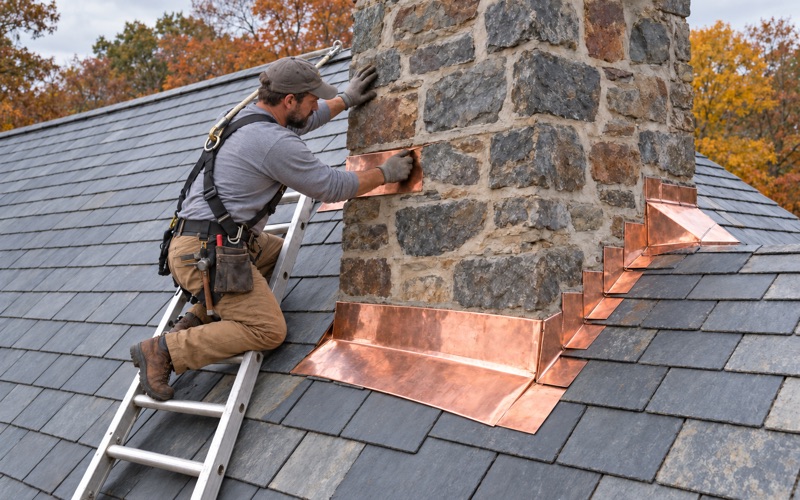
Step flashing along sidewalls, counter flashing at the chimney and the apron where a roof meets a wall can all take dents that open small gaps. Water that slips behind bent flashing tends to show up weeks later as a stain far from the point of entry. That delay is what makes a hail leak hard to trace from inside the house.
Our attic check exists for exactly this. Following the water back along the decking and rafters usually leads to the real entry point, which may be a flashing seam rather than the shingle above the stain. When we replace a roof, step, counter and chimney flashing are replaced with it rather than bent back and reused under new material.
Photos and an Inspection Before Any Claim
What a Hail Inspection Covers
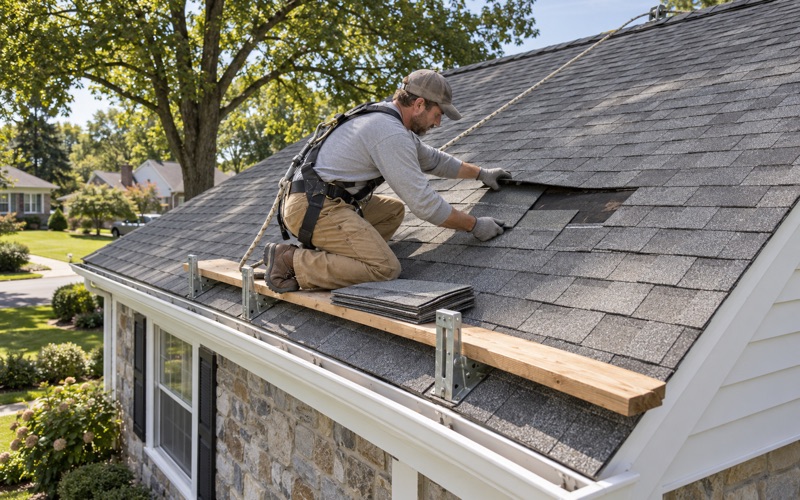
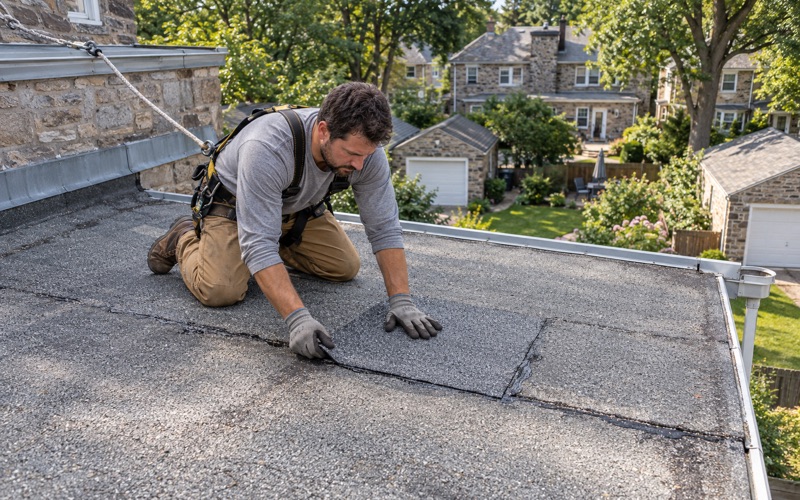
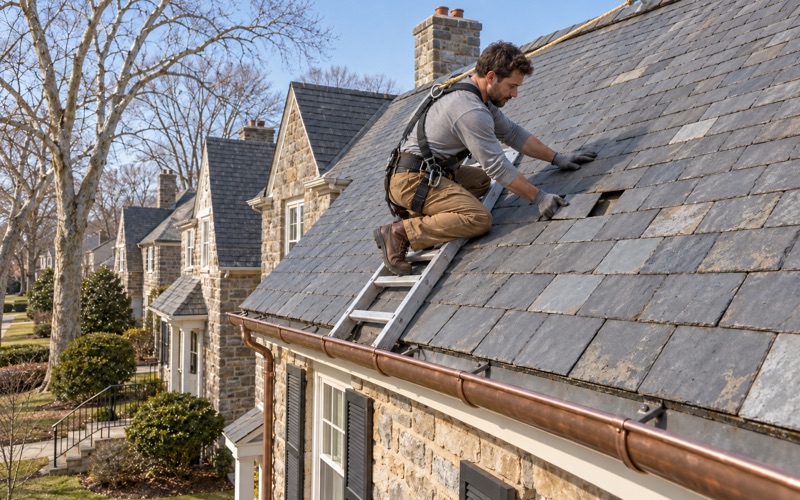
A hail inspection on a Plumstead home starts on the roof surface, slope by slope, marking and photographing every bruise, crack and dent we find. It continues to the gutters, vents and flashing, then moves inside to the attic to look for daylight, damp sheathing or fresh water marks. The goal is a record a homeowner can rely on, whatever it shows.
Sometimes the honest finding is that the roof came through fine. We say so plainly, because a clean report is worth having on file too. If you later sell, the Pennsylvania seller property disclosure statement asks about known roof problems, and a dated inspection lets you answer from a record rather than from memory.
Writing It Up for Your Own Claim
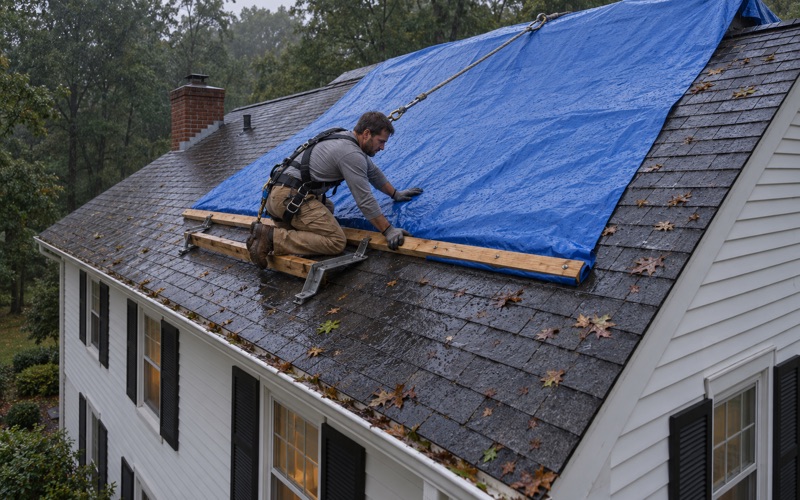
When we do find damage, we write it up with photos for your own insurance claim. If you ask, a member of our crew will meet the insurance adjuster at the house and walk the roof with them, pointing out what we documented. What we do not do is negotiate the claim or speak for you to your insurer.
That line is deliberate. In Pennsylvania, people who negotiate claims on a homeowner’s behalf are public adjusters, licensed under the Public Adjuster Licensing Law, and a roofer is not one. The Pennsylvania Insurance Department publishes homeowner claim guidance, and it is worth reading before you file.
Repair or Replacement
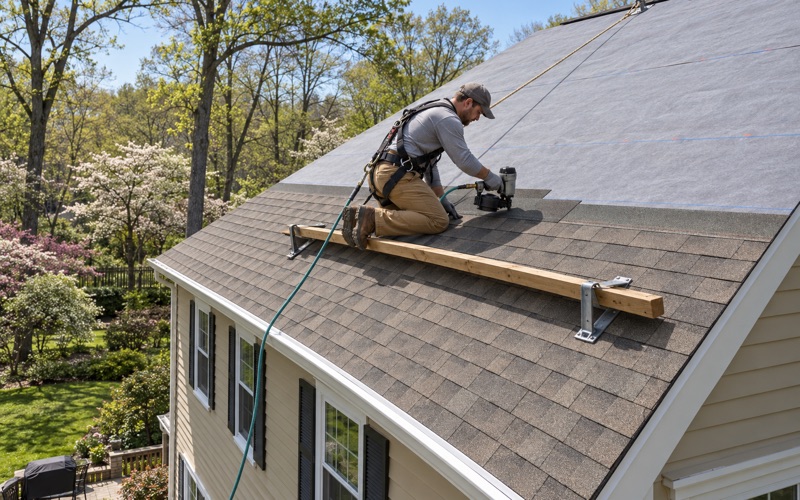
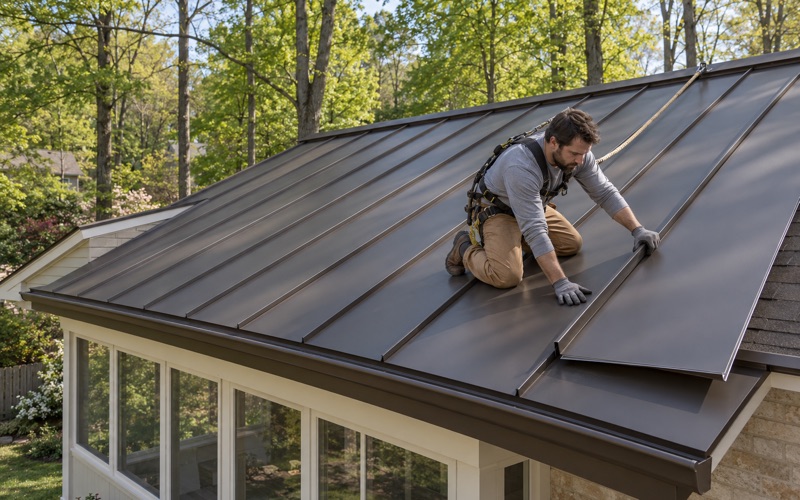
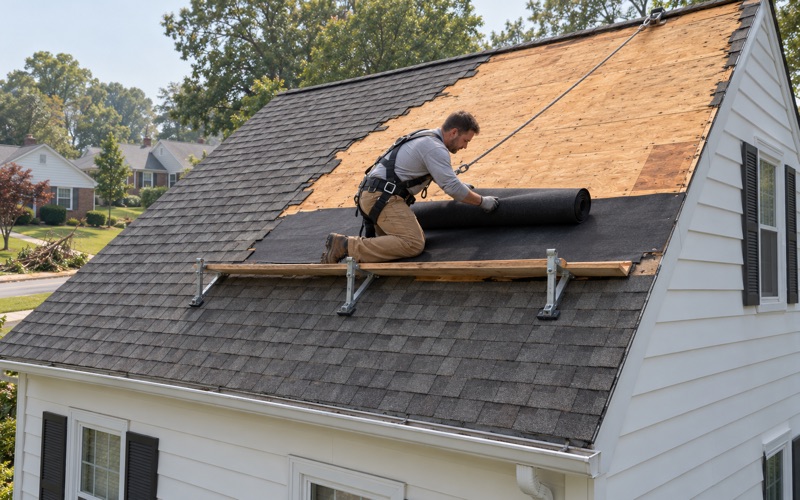
A storm does not automatically mean a new roof. If damage is limited to a few slopes or a handful of vents, a repair may be the right call, and we tell you that first. When replacement makes more sense, our written scope lists tear-off, decking, underlayment, flashing, ventilation and gutters as separate lines so you can compare any two estimates item by item.
Once the old shingles come off, the decking underneath sometimes turns out to be soft or delaminated. We photograph any damaged boards and show them to you before replacing them, at a per-sheet price already written into the contract. Our contracts follow Pennsylvania’s home improvement law, including the three-business-day cancellation notice and a deposit kept within the legal limit.
Impact-Rated Shingles and What They Do Not Promise
What a Class 4 Rating Measures
Many homeowners who have lived through a hail afternoon ask about impact-rated shingles when it is time to re-roof. A UL 2218 Class 4 rating means the shingle passed the highest class of a standardized impact test. Several architectural shingle lines come in impact-rated versions, and they install much like standard laminated shingles.
For a house near Danboro or Fountainville, where the published record already includes quarter-sized stones, the rating is a reasonable thing to weigh. It is one factor among several, alongside wind rating, underlayment, ventilation and the cost difference over a standard shingle. We lay those side by side in the estimate rather than treating impact rating as an upsell.
What It Does Not Promise
An impact rating is not hail coverage. IKO, for example, states that hail damage is not covered under its limited warranty and that its Class 4 rating is for insurance premium purposes. Whether a rated roof changes your premium is a question for your own agent, not for the shingle label.
Read the manufacturer’s warranty for the exact shingle you are considering before you choose it. A large enough stone can still mark a rated shingle, and a rated roof still needs sound flashing, vents and gutters around it. The shingle is one layer of protection, not a promise that the next storm leaves nothing behind.
Fitting the New Roof to Plumstead Township
Permit treatment of re-roofing in Pennsylvania is set township by township, so we confirm the current rule with Plumstead Township Zoning and Code Enforcement on Stump Road in Pipersville before pricing the job. The township’s construction work application includes a roofing line in its contractor table and asks each contractor for proof of state home improvement contractor registration.
The housing mix shapes the plan as well. Of 5,379 housing units counted in the township, 2,010 were built in the 1990s and 538 date to 1939 or earlier, so one inspection here might be on a roof about thirty years old and the next on a far older house. At the end of every work day, we clean the driveway, yard and gutters and run a magnet sweep for roofing nails.
- 20+ Years in Roofing
- Free Written Estimates
- Line-by-Line Scopes