Abington Superior Roofing has spent more than twenty years on roofing in Plymouth Township and the rest of eastern Montgomery County, and a good share of that work starts with a phone call after a storm. When wind opens a roof, the questions arrive all at once: how to stop the water tonight, what to photograph for the insurer, and whether the wood underneath is still sound enough to build on.
This page is about those evenings and the weeks after them. We cover what one summer thunderstorm line did to a house here, how an emergency tarp is set on a damaged roof, which photos and notes help an owner file their own claim, and how we check decking and rafters before a single new shingle goes on.
Our approach does not change because the call is urgent. We look in the attic as well as on the roof, we tell you plainly whether the damage can be repaired before replacement comes up, and every written scope breaks tear-off, decking, underlayment, flashing, ventilation and gutters into separate lines you can compare.
June 19, 2025: A Roof Collapse in Plymouth Township
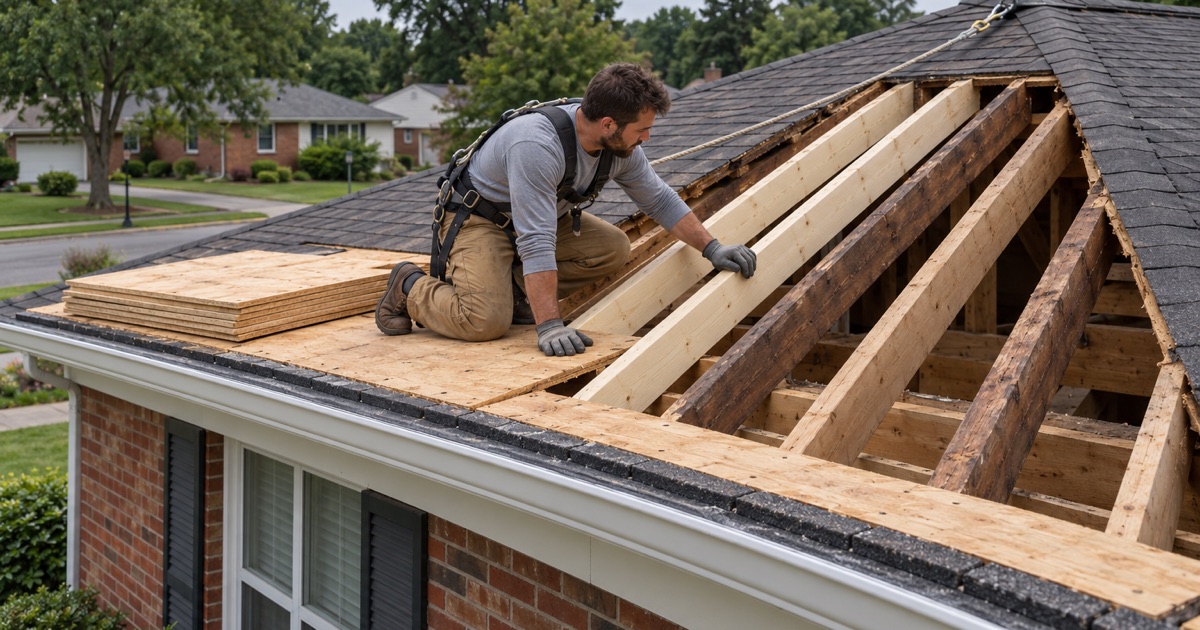
What the record shows
On the evening of Thursday, June 19, 2025, strong storms with heavy wind moved across Montgomery County. CBS News Philadelphia reported the next day that the roof of a Plymouth Township home collapsed during those storms, leaving water and insulation throughout the house. The resident was in a bedroom when it happened and expected to stay in a hotel for several weeks while repairs were made.
That report is one house, documented by one television page, and we treat it that way. It does not give a street, a wind speed or a count of other damaged homes, and we will not add any. What it does show is how quickly an ordinary weeknight can turn into a tarp on the roof, an emergency call and a long repair.
The storm line across Montgomery County
The Storm Prediction Center logged seven Montgomery County wind reports that evening, and none of them sits in Plymouth Township. Elsewhere in the county, a roof was blown off a building in Bala Cynwyd, three trees landed on a house near Whitpain, and Lower Moreland reported a tree onto a house. Ardmore, Lower Providence and Hatboro also appear on the list.
The gap in the log is a useful reminder. A storm report depends on someone filing it, and a house can be badly damaged without its town ever showing up in the national record. Plymouth sits in National Weather Service zone PAZ104, Eastern Montgomery, under the Mount Holly office, and the warnings for that zone are the ones worth watching on a hot June afternoon.
Why an ordinary thunderstorm can do this
The June storm was not a named system or a hurricane remnant. It was a summer thunderstorm line of the kind that crosses the county several times in a typical season. Lines like that push short, hard gusts that find any weakness already present, such as lifted shingle tabs, loose flashing, rotted decking at the eaves or a tree limb leaning over the ridge.
Most of the township’s houses were built between 1950 and 1969, according to Census estimates, so many roofs here sit on framing that is now well over half a century old. Age alone does not mean failure, but it means the wood deserves a careful look after any storm that tears into it.
Looking for roofing closer to Cinnaminson? See Cinnaminson Roofing.
Emergency Tarping and Keeping Water Out
The first hours after a collapse
When part of a roof gives way, the first job is safety, not shingles. We keep everyone out of rooms under the opening, look for sagging ceilings that may be holding water, and check whether wet insulation is weighing down drywall. If a ceiling is bellied with water, it is drained in a controlled way before it comes down on its own.
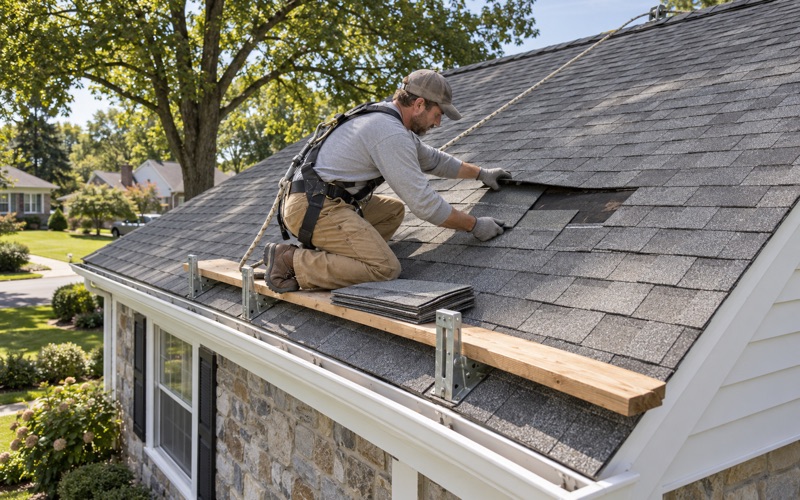
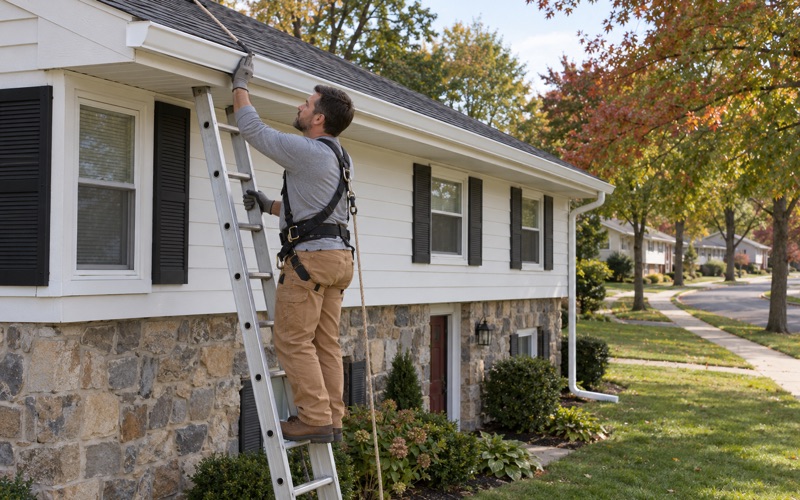
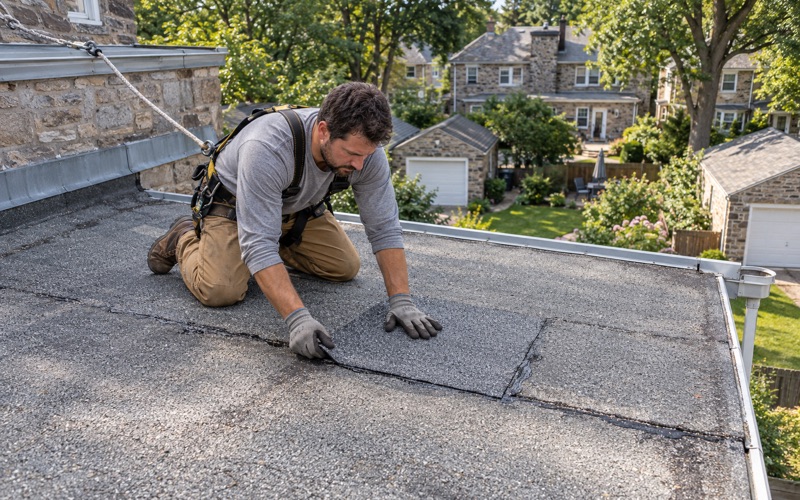
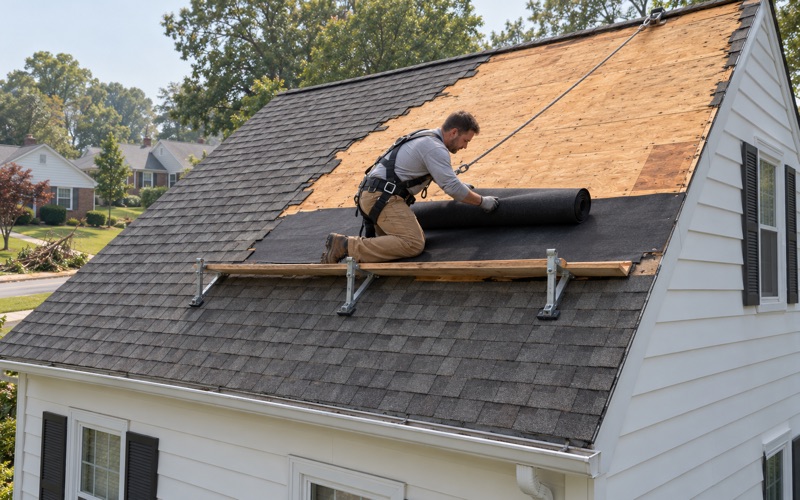
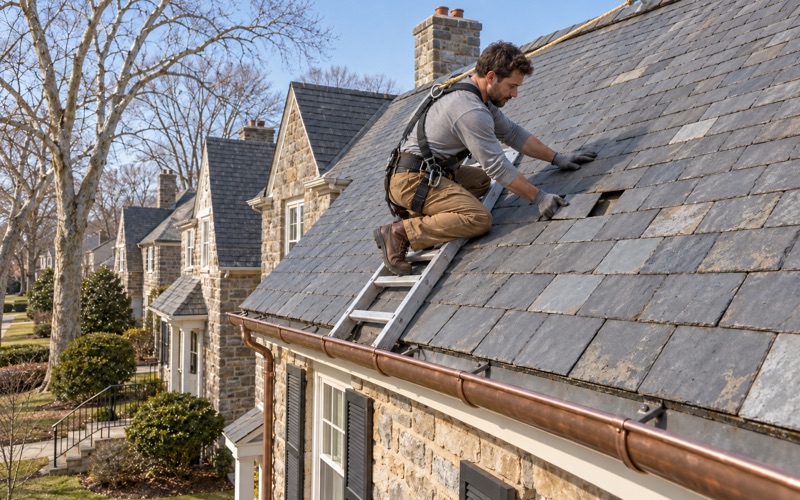
Nobody should climb onto a roof that has just partly failed. Our crew works from ladders and anchored fall protection, following the federal rule that applies at six feet for residential roofing, and we judge from the attic side whether the framing near the opening can carry a person at all.
How a tarp goes on a damaged roof
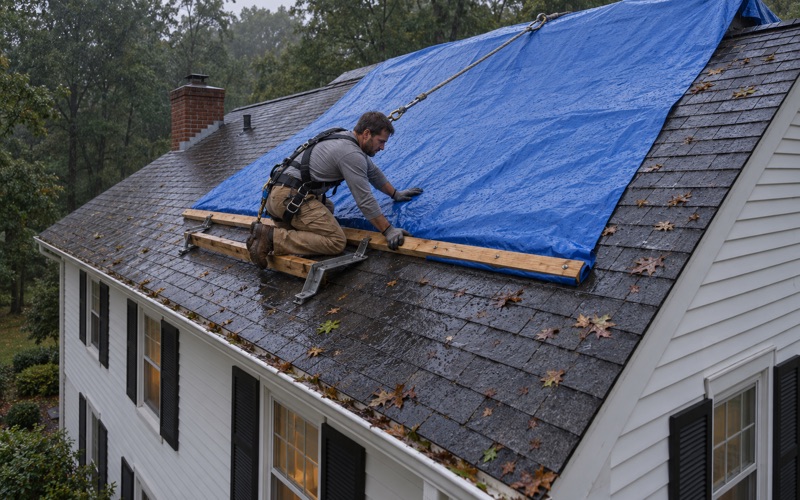
A tarp that blows off in the next storm does more harm than no tarp. We extend it over the ridge where possible so water sheds over the top instead of running under the edge, and we fasten it through wood battens rather than nailing the fabric directly. The battens spread the load and keep the next gust from tearing the tarp along a line of nail holes.
The tarp covers the opening and the damaged area around it, not only the hole you can see from the street. Water travels along decking and rafters before it shows on a ceiling, so we trace it from the attic and size the cover to where the water actually got in. That temporary cover is meant to hold until the permanent repair, not to become the repair.
Who signs off on the rebuild
Plymouth Township has governed itself under a home rule charter since 1976, and its own Code Enforcement office at 700 Belvoir Road handles building questions. Each township in our service area sets its own rule for roof work, so we check Plymouth’s requirements for your specific repair before we price it, rather than assuming another township’s practice applies.
A rebuild after a collapse usually involves framing, decking and a large share of the roof, which is a different matter from swapping a few shingles. We build any permit the township requires into the schedule and the contract from the first estimate, so the paperwork does not hold up the moment your house is ready to close in.
Photos and Records for a Wind Claim
What we photograph
The photo record starts before the tarp goes on, when it is safe to take it. We photograph the opening from the ground and from the roof edge, the attic side of the damage, any broken rafters or split decking, wet insulation, and the ceilings below. Each photo is taken wide first and then close, so an adjuster can tell where on the house a detail sits.
We add a short written description to the photos: which slopes were damaged, what material is on the roof, what we found in the attic and what the temporary cover protects. That write-up goes to you, the owner, to use however your own claim requires. Storm debris such as fallen limbs is photographed in place before it is moved whenever that can be done safely.
Meeting the adjuster
If you ask us to, a member of our crew will meet your insurance adjuster at the house. We can point out the damage we documented, open the attic, and answer questions about how the roof is built and what a repair would involve. Having the person who saw the damage firsthand on site often saves a second visit.
We also give you a written scope with every item on its own line, from tear-off and decking through underlayment, flashing, ventilation and gutters. When an adjuster’s estimate and ours differ, that format lets you see exactly which lines disagree instead of comparing two lump sums.
Your claim stays yours
There is a line we do not cross. We do not handle, negotiate or settle insurance claims, because in Pennsylvania that work belongs to the policyholder or a licensed public adjuster under the state’s Public Adjuster Licensing Law. Our role is to document the roof accurately and to repair it well.
The Pennsylvania Insurance Department publishes guidance for homeowners on filing a claim and on the timelines insurers must follow. If your claim stalls, that guidance is the right place to start, and our photos and written scope stay available to support whatever you decide to do.
Inspecting Decking and Rafters After Storm Damage
The attic comes first
After wind damage, the most important inspection happens underneath the roof. From the attic we look for cracked or displaced rafters, nails pulled out of the ridge board, daylight around the opening and water stains that run well past the visible hole. Insulation soaked during a storm can hide wet decking, so we check the wood itself rather than only the surface.
A collapse rarely stops cleanly at the edge of the opening. Rafters on either side may have twisted or split when the section gave way, and their connections at the wall plate deserve the same attention as the broken pieces. What we find in the attic decides whether the job is a repair or a larger rebuild.
Decking, sheet by sheet
Once the damaged roofing is off, we photograph every sheet of decking that is cracked, delaminated, soft or stained and show those photos to you before anything is replaced. The price per sheet is set in the contract ahead of time, so the number of sheets is the only thing that changes, and you can see why each one was replaced.
Wet decking that feels firm can still fail later, so we probe the surface and check the fastening along the rafters. Sound sheets stay in place. We would rather tell you a section is fine than replace wood you did not need to pay for.
Rafters, flashing and the new roof
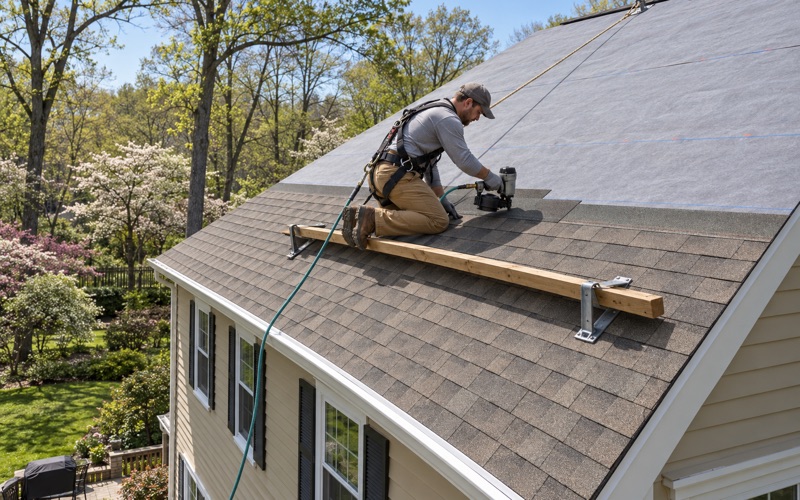
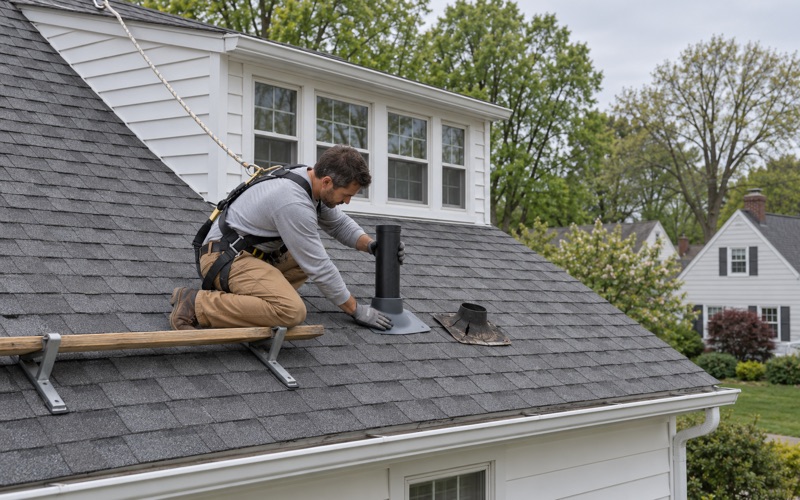
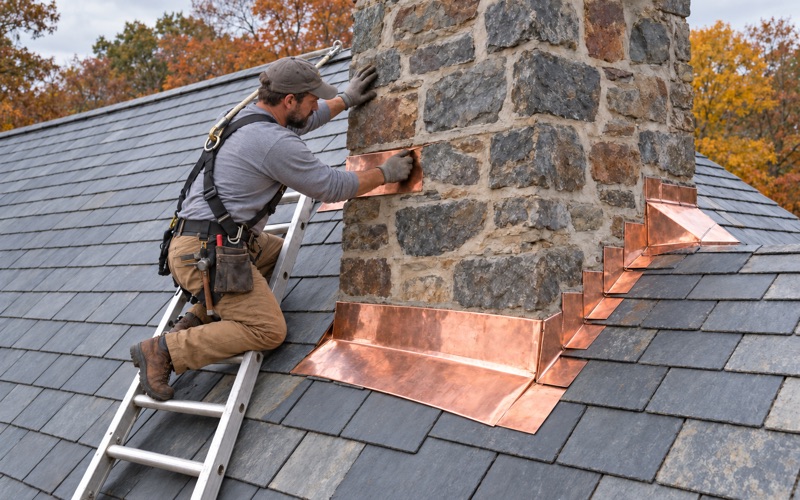
Broken or split rafters are repaired or sistered before new decking goes over them, and that framing work is part of what the township reviews. With the structure sound, we lay underlayment, install drip edge at the eaves and rakes, and replace step, counter and chimney flashing with the new roof rather than reusing old metal around the repaired area.
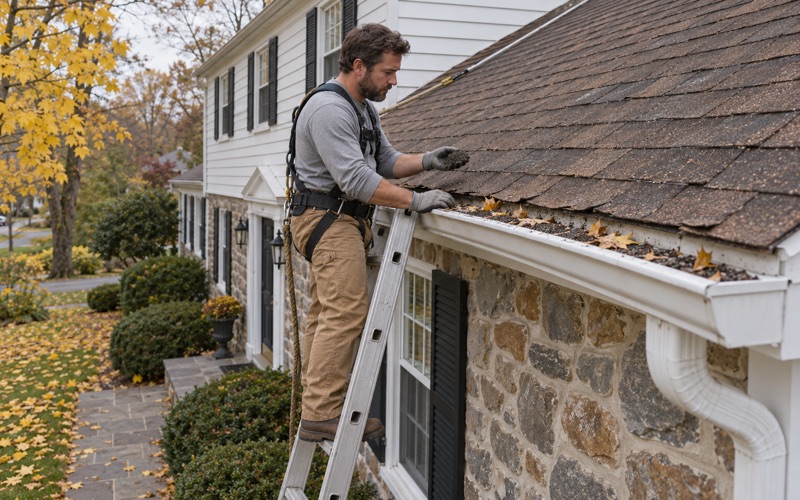
The gutters are checked at the same time, since a storm that collapses a section of roof often bends the gutter below it. We size and pitch replacement gutters and downspouts with the roof. At the end of every work day the driveway, yard and gutters are cleaned and the ground is swept with a magnet for roofing nails.
- 20+ Years in Roofing
- Free Written Estimates
- Line-by-Line Scopes