
Abington Superior Roofing handles roof replacement in Abington, PA from the first estimate to the final nail sweep, serving surrounding cities including Lower Moreland, Upper Southampton, East Goshen, Warwick Township and Plymouth Township. With more than 20 years of re-roofing houses here, we plan the whole job before the first shingle comes off, including the township permit, the decking and the flashing.
A replacement is the largest roofing decision most homeowners make, so we treat it as one. We confirm the roof genuinely needs replacing rather than repairing, then give you a written scope that lists tear-off, decking, underlayment, flashing, ventilation and gutters as separate lines, so you can compare our estimate item by item with anyone else’s.
In Abington Township every re-roof needs a township roofing permit, and the neighboring townships each set their own rules. We check the rule for your house first, build the permit into the schedule, and handle the application, so the job is legal and documented from day one.
Residential Roof Replacement, Layer by Layer
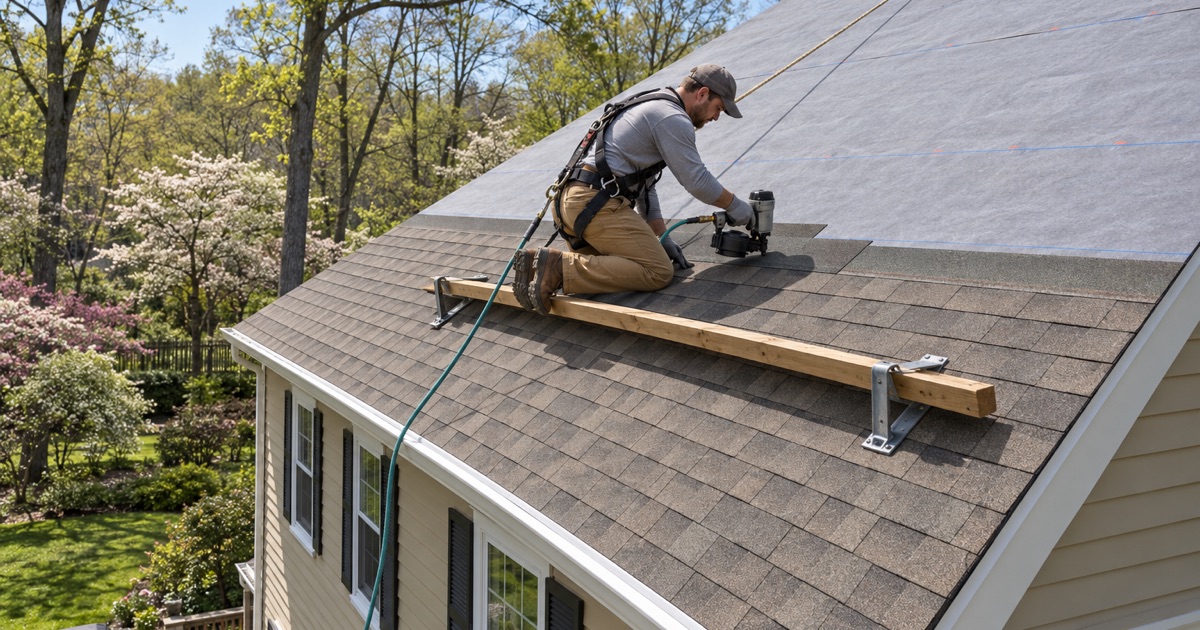
A Full Tear-Off to the Deck
We strip every replacement down to the roof deck instead of laying new shingles over old ones. Building code caps asphalt roofs at two layers, and many older houses here already have them, so a tear-off is often required anyway. Even when it is not, stripping the roof is the only way to see the decking.
The crew works with a dumpster or trailer in position and tarps over plantings, siding and windows below. Old shingles, felt and nails go straight into the container, and loose debris is cleaned up as the work moves across the roof.
Decking Photographed and Priced per Sheet
Once the old roof is off, soft, delaminated or rotted sheathing becomes visible. Every damaged sheet is photographed and shown to you before it is replaced, and the price per sheet is set in the contract before work begins.
That approach removes the most common source of disputes in roof replacement, the surprise decking charge. You see the damage, you know the unit price, and the final invoice matches what you agreed to.
Ice Barrier, Underlayment and Drip Edge
At the eaves we install a self-adhering ice barrier meeting ASTM D1970, extended inside the exterior wall line as the residential code requires. It seals around nails and stops the water that ice dams push back under the shingles.
The rest of the deck gets synthetic underlayment, and drip edge goes on at the eaves and rakes so water drops cleanly into the gutters. These layers are invisible once the shingles are on, which is exactly why they are listed separately in our written scope.
Flashing Replaced, Not Reused
Step flashing, counter flashing and chimney flashing are replaced with the roof rather than reused under new material. Old flashing that is bent, rusted or caulked is the weak point of a new roof if it stays.
We also install new pipe boots, kick-out flashing where roof edges meet walls, and valley metal or woven valleys as the roof requires. A new roof is only as watertight as its flashing, so this work is never optional on our jobs.
Choosing Shingles and Other Roofing Materials
Architectural Shingles and Wind Ratings
Most of our replacements use architectural laminated shingles such as GAF Timberline HDZ, Owens Corning Duration or CertainTeed Landmark. They are thicker than old three-tab shingles, look more dimensional, and carry wind resistance ratings such as ASTM D3161 Class F or ASTM D7158 Class H when installed correctly.
We walk you through colors and lines with full-size samples, looking at them against your brick, stone or siding in daylight. The aim is a roof that suits the house for the next few decades, not just a sample board.
Impact-Rated and Class A Fire-Rated Options
Shingles tested to UL 2218 Class 4 resist hail better than standard shingles, which some homeowners choose for peace of mind and some insurers recognize. Most asphalt shingles also carry a Class A fire rating under ASTM E108 or UL 790.
We explain the cost difference and what each rating actually means, so you can decide whether an upgrade is worth it for your house. We never present a rating as more than it is.
Metal and Low-Slope Sections
Many houses combine a shingled main roof with a low-slope porch, a rear addition or a bay window that shingles cannot properly cover. Those sections need standing seam metal, modified bitumen, EPDM or TPO, each tied into the main roof with the right flashing.
We replace those sections together with the main roof whenever possible, because a new shingle roof joined to an old flat roof leaves the weakest seam in place. The scope shows each section and material separately.
Permits, Paperwork and Contracts
The Abington Township Roofing Permit
Abington Township requires a permit to install or replace roofing on any building, because it removed the 2018 residential code exemption that lets some municipalities skip roofing permits. Applications go through the township’s online permit system.
We file the application, schedule the work around its approval and keep the permit record with your job file. When you sell the house, a permitted roof is one less question for a buyer or their inspector.
The Dumpster or Storage Permit
Abington Township also asks residents to request a permit for a temporary dumpster or storage pod on their property, and the township lists no fee for it. A tear-off dumpster is exactly that kind of container.
We take care of that request along with the roofing permit, so the container can be placed legally on the day the crew arrives. It is a small detail, and it is the kind of detail that holds up a job when no one plans for it.
A Contract Written to Pennsylvania Law
Our contracts follow Pennsylvania’s Home Improvement Consumer Protection Act. They include our registration number, the start and completion dates, the full price, the scope of work and the three-business-day cancellation notice the law requires.
On contracts over $5,000 we keep the deposit within the legal limit of one-third of the price plus special-order materials. You keep every protection the law gives you, written into the document you sign.
Twins, Solar Panels and Commercial Roofs
Replacing One Half of a Twin
On a twin or attached home, your roof meets your neighbor’s along the shared wall. We plan where our work ends, how the new roof ties into the old one, and how the seam is flashed before the job starts.
We talk through that plan with you and, when you want, with your neighbor. A properly planned seam keeps both homes dry and avoids the visible patch line that a hurried tie-in leaves.
Roofs Under Solar Panels
When a roof under solar panels is replaced, the panels must be removed and reinstalled by the solar installer. We coordinate those dates and write them into the schedule from the start.
We also replace the flashing at every mount, so the new roof does not depend on old seals around the solar attachments. Planning it this way keeps the roof from sitting half-finished while everyone waits.
Commercial Roof Replacement
Small commercial buildings, mixed-use storefronts and apartment buildings often have low-slope roofs reaching the end of their membrane life. We replace them with modified bitumen, EPDM or TPO systems, with new edge metal, drains and flashing.
We plan the work around tenants and business hours where possible. The scope separates insulation, membrane, flashing and edge work so building owners can budget accurately.
- 20+ Years in Roofing
- Free Written Estimates
- Line-by-Line Scopes