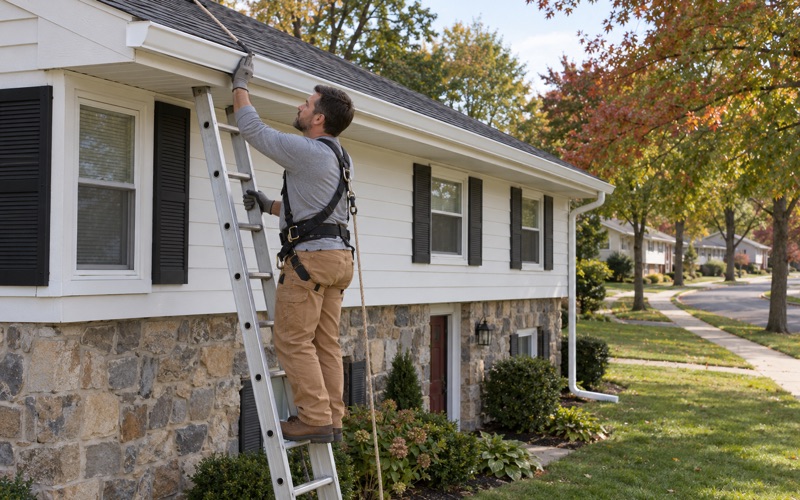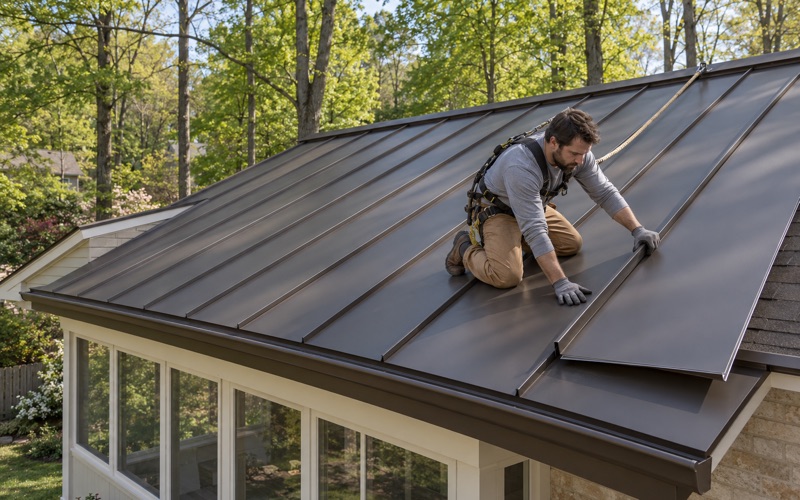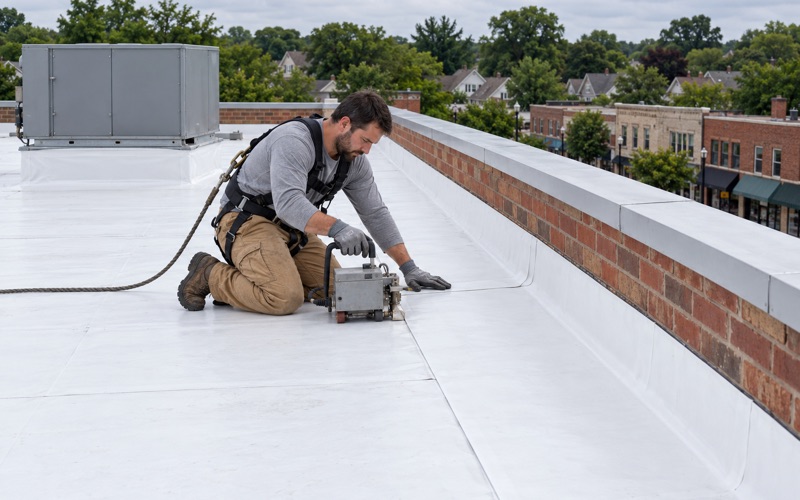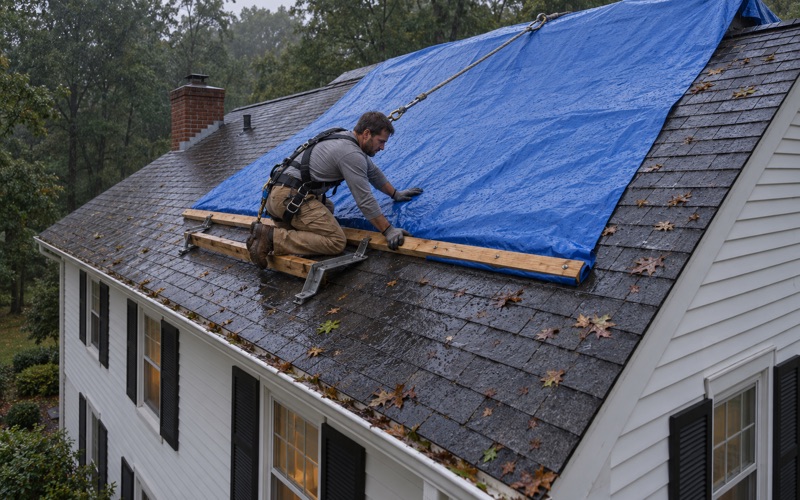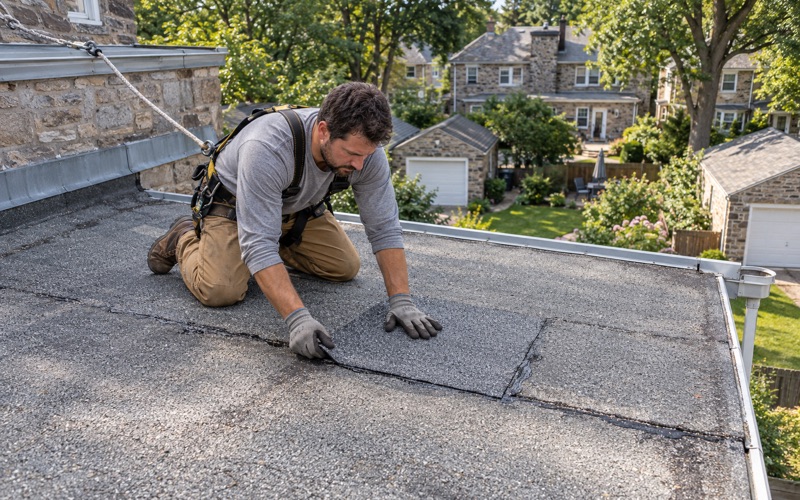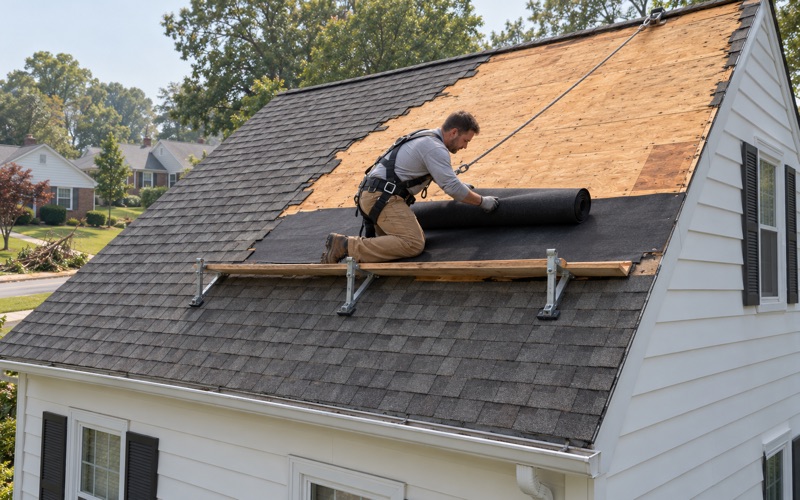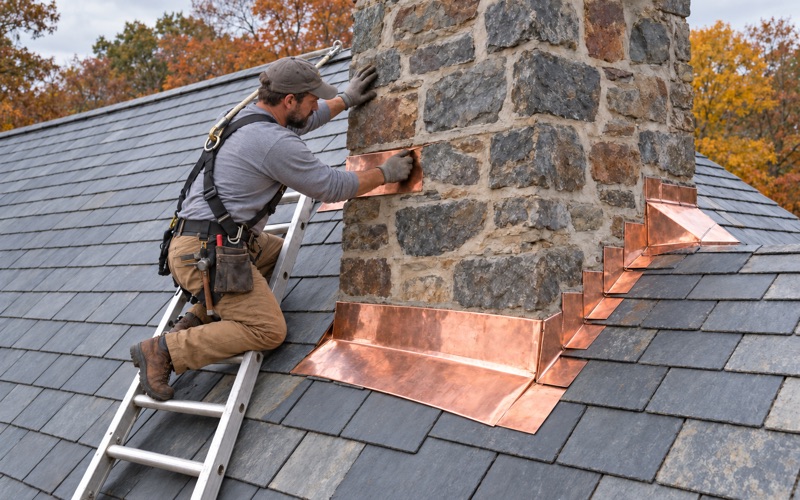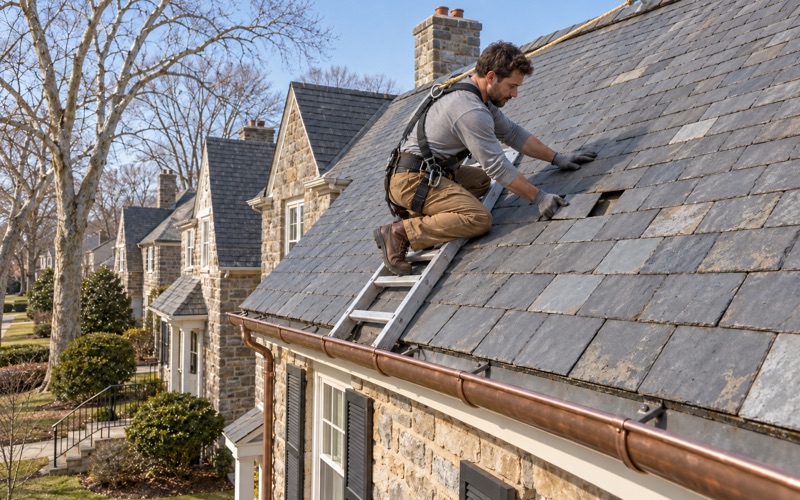
Abington Superior Roofing has spent more than 20 years on roofing in Skippack and the surrounding part of Montgomery County, and our first visit to any house here goes into the attic as well as onto the roof. A leak gets traced to the spot where water actually enters before anyone writes down a price.
We also tell you plainly whether a repair will hold before replacement comes up at all. When a full re-roof does make sense, the estimate breaks tear-off, decking, underlayment, flashing, ventilation and gutters into separate lines, so our numbers can sit beside another contractor’s and be compared item by item.
Skippack Township requires a permit for roofing work, and that step goes into our schedule and contract from the first estimate rather than after the dumpster arrives. Older coverings, village-core buildings and rotted sheathing each change how a job here is planned, and the sections below walk through what that means for a house or a storefront.
Roofs in Skippack Village and Creamery Village
The township’s zoning treats two places as its heart: Skippack Village and Creamery Village. Most housing across the township is much newer, but the villages hold many of the older buildings, and their roofs come with expectations that a subdivision roof does not carry.
The Village Commercial District’s Stated Purpose
Skippack Code Section 200-26 sets out the VC Village Commercial District, and its stated primary purpose is to preserve and build upon the strengths of Skippack Village and Creamery Village as the core areas of the township. The General Commercial District under Section 200-27 repeats that village-core language, so the idea reaches past a single zoning label.
The same section asks for development compatible with the unique historical character and scale of the villages with respect to uses, building dimensions, building materials and functions. Building materials are named outright. For a roof, that makes the choice of shingle, metal or slate part of how the building fits its street, not only a matter of price and warranty.
What Subsection 10 Asks of Every Building
Subsection 10 of the VC section reads plainly: all buildings shall be designed, maintained, restored and preserved in a manner that will maintain the character and appearance of the surrounding village. Maintenance and restoration both appear on that list, and a roof replacement sits squarely between them.
We want to be accurate about what this language is. It is zoning-purpose text, not a separate approval process for roofs, and we found no township body that signs off on a roof’s appearance. What it gives an owner is a clear standard to weigh a new roof against, and we build our material recommendation around that standard.
Shops, Inns and Older Houses Along Skippack Pike
Skippack Pike, which is also Route 73, runs through the village, and its shops, inns and older houses sit close to the road where the roof is part of what every passerby sees. A mismatched ridge line, a bright new drip edge on a dark old eave, or a careless flashing detail reads from the sidewalk as a change to the streetscape.
Commercial buildings along the pike also have to keep operating while the work happens. We plan staging, dumpster placement and daily cleanup around open storefronts and overnight guests, and the magnet sweep for roofing nails at the end of each day covers walkways and parking areas as well as the yard and gutters.
Looking for roofing closer to Lower Salford? See Roofing Services in Lower Salford.
Slate, Cedar and Older Coverings That Come Off First
The township’s re-roofing sheet applies Chapter 9 of the 2018 International Residential Code to all new roofs, roof repairs and roof replacements, and it quotes the tear-off conditions of IRC R907.3 directly. Those conditions decide whether a new roof may go over the old one, and on older Skippack buildings the answer is often no.
Coverings That Cannot Be Roofed Over
Under the conditions the township quotes, a new covering may not be installed over an existing roof that is water-soaked or deteriorated, or one made of wood shake, slate, clay, cement or asbestos-cement tile. A roof that already carries two or more applications of any covering must also come off completely.
The sheet adds asphalt shingles in areas exposed to moderate or severe hail to the list of conditions requiring removal. It also notes narrow exceptions, drawn from the 2009 edition of the code, for metal, standing seam or spray polyurethane applied over an existing membrane, which matter mostly on low-slope commercial roofs.
Slate Worth Saving and Slate Worth Replacing
Census estimates count 528 housing units in the township built in 1939 or earlier, about 12.0% of the stock. When one of those older roofs is slate, we repair it slate by slate with copper nails and slate hooks before anyone suggests tearing a sound roof off, because good slate can outlast several shingle roofs.
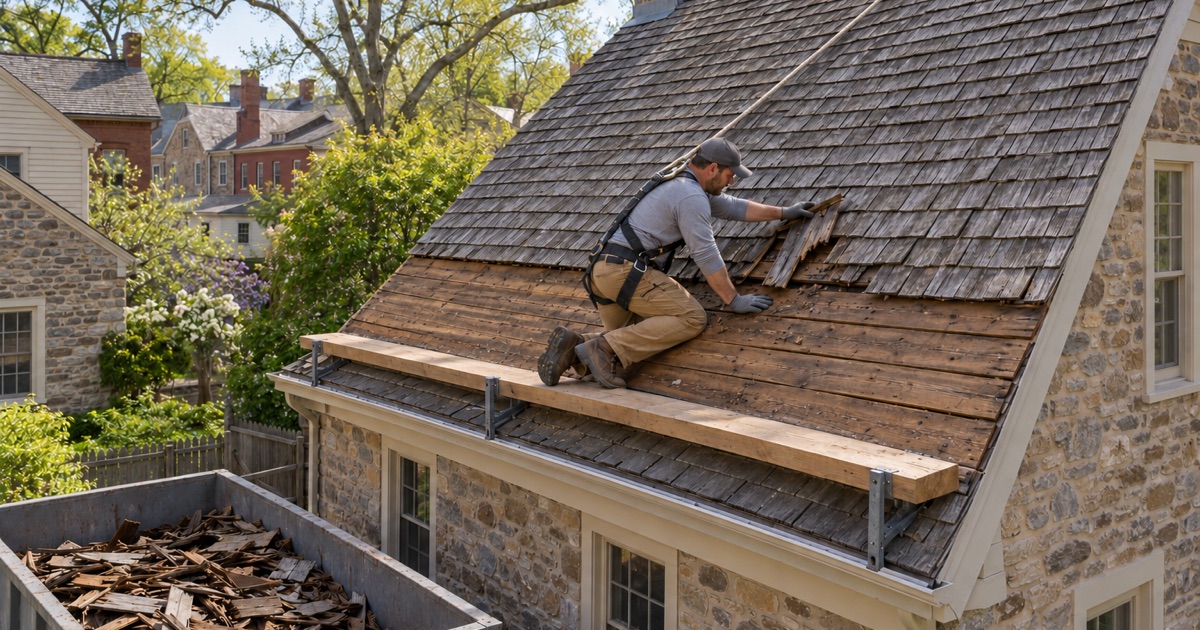
When slate has failed past repair, or the owner chooses a different material, the code conditions above mean every piece comes off. That tear-off is heavy work, and it exposes the boards underneath, which is exactly where the next decision on a Skippack permit begins.
Cedar and Layered Asphalt
Wood shake falls under the same removal requirement as slate, so a cedar roof can never serve as the base for new shingles. Many older roofs have also been covered once already, and a second layer of asphalt over a first is the two-application condition that forces a full tear-off.
We check layer counts at the eaves and from the attic during the first visit, so the estimate already reflects a complete removal where the code calls for one. Finding a hidden second layer on the morning of the job is how prices change midstream, and we would rather find it before you sign.
Flashing Comes Off With the Old Roof
Step flashing, counter flashing and chimney flashing are replaced along with the covering, never bent back and reused under new material. On older village buildings with chimneys and dormers, worn flashing is often where a leak started, and reusing it carries the same problem onto a brand-new roof.
The 25% Sheathing Line on Skippack’s Roofing Permit
Skippack’s re-roofing sheet is direct: per township regulations, permits are required for performing roofing work. It then draws a second line. If more than twenty-five percent of the wooden roof sheathing is compromised, rotted or expected to be replaced during the job, a formal building permit must be submitted for review and approval by the Building Code Official.
Why Sheathing Is Hard to Predict
Sheathing stays hidden until the old roof is off, and on a slate or cedar tear-off, or a roof that has leaked for years, the share of rotted boards can run larger than anyone expected from the attic. That makes the 25% line something to plan for before work starts, not a surprise to manage halfway through.
Every damaged sheet we find is photographed and shown to the owner before it is replaced, and the price per sheet is already written into the contract. You see what is rotted and know what it costs, and the photo record supports the permit paperwork if replacement approaches the threshold.
Permits Filed Before Work Begins
The township’s 2026 fee schedule doubles permit fees for work started before approval. We file before the crew arrives and build the review time into the schedule. Skippack Township Building Codes and Permits works out of 4089 Heckler Road, and the number on its permit sheet is 610-454-0909.
Each township around here sets its own re-roof rule, so we read Skippack’s own sheet for your address before pricing the job rather than assuming a neighbor’s practice applies. Providence Square is shared with Worcester, so for a house near that line we confirm which township the property actually falls under.
Winter Weight and Deck Condition
Skippack falls in the National Weather Service’s Western Montgomery forecast zone, served by the Mount Holly office. On January 25, 2026, a trained spotter in Skippack measured 12.2 inches of snow, the kind of load that tests a weakened deck and pushes meltwater under worn shingles at the eaves.
Where we replace decking, we follow it with a self-adhering ice and water barrier along the eaves, as the ice barrier provision of the residential code calls for, and a synthetic underlayment across the field. Ventilation gets checked at the same time, since a warm attic under heavy snow is a common source of ice dams.
Matching a New Roof to a Village Streetscape
Outside the villages, most of Skippack’s housing is far newer. Census estimates show 2,473 units, about 56.2% of the stock, built between 1990 and 2009, and owners occupy 4,055 of the 4,269 occupied units. Those roofs raise different questions from a building facing the pike.
Material Choices for Village Buildings
For a building inside the village core, we start from what the surrounding roofs look like: color, texture, profile and how the edges are finished. Architectural shingles in a muted tone, standing seam metal on a porch or rear addition, or slate repair where slate already exists are all options we weigh against the standard of fitting the surrounding village.
Half-round copper gutters often suit an older slate roof better than a modern profile, and we size and pitch gutters and downspouts as part of the roof plan. On a commercial building, the drainage path also has to keep water off entrances and the sidewalk along the street.
Subdivision Roofs From the 1990s and 2000s
Roofs from that building wave are commonly on their first or second covering, which often allows a single, straightforward tear-off. Architectural shingles rated for wind resistance under ASTM D3161 Class F or ASTM D7158 Class H, with a Class A fire rating, are common choices for these homes.
Attached homes make up a real share of the township, with 711 owner-occupied attached units counted by the Census. On a twin or townhouse roof we plan the work around the neighbor’s roof and the shared wall, so the seam between the two stays watertight after we leave.
Storm Claims, Solar Arrays and Contracts
When wind or hail damages a roof, we photograph the damage and write it up for your own claim, and we will meet your insurance adjuster on site when asked. We do not negotiate the claim; that conversation stays between you and your insurer.
Roofs carrying solar panels need removal and reinstallation scheduled in advance, so we plan that sequence before the tear-off rather than discovering the array on the first morning. Our contracts follow Pennsylvania’s home improvement law, including the three-business-day cancellation notice and deposits kept within the legal limit.
- 20+ Years in Roofing
- Free Written Estimates
- Line-by-Line Scopes