
Abington Superior Roofing provides storm damage roof repair in Abington, PA after windstorms, hail, heavy snow and falling trees, serving surrounding cities including Lower Moreland, Upper Southampton, East Goshen, Warwick Township and Plymouth Township. In more than 20 years of roofing here, we have worked through plenty of storm seasons, and the pattern is always the same: secure the roof, document the damage honestly, then repair it properly.
Storm damage is not always visible from the ground. Wind breaks shingle seals without tearing shingles off, hail bruises shingles without cracking them, and a limb can crack a rafter while leaving only a scuff on the surface. A close inspection, including the attic, finds what a glance from the driveway misses.
We photograph and write up the damage for your own claim, and the crew will meet your insurance adjuster on site when you ask. We do not negotiate the claim, which Pennsylvania law reserves for you, your insurer or a licensed public adjuster.
Types of Storm Damage We Repair
Wind-Damaged and Missing Shingles
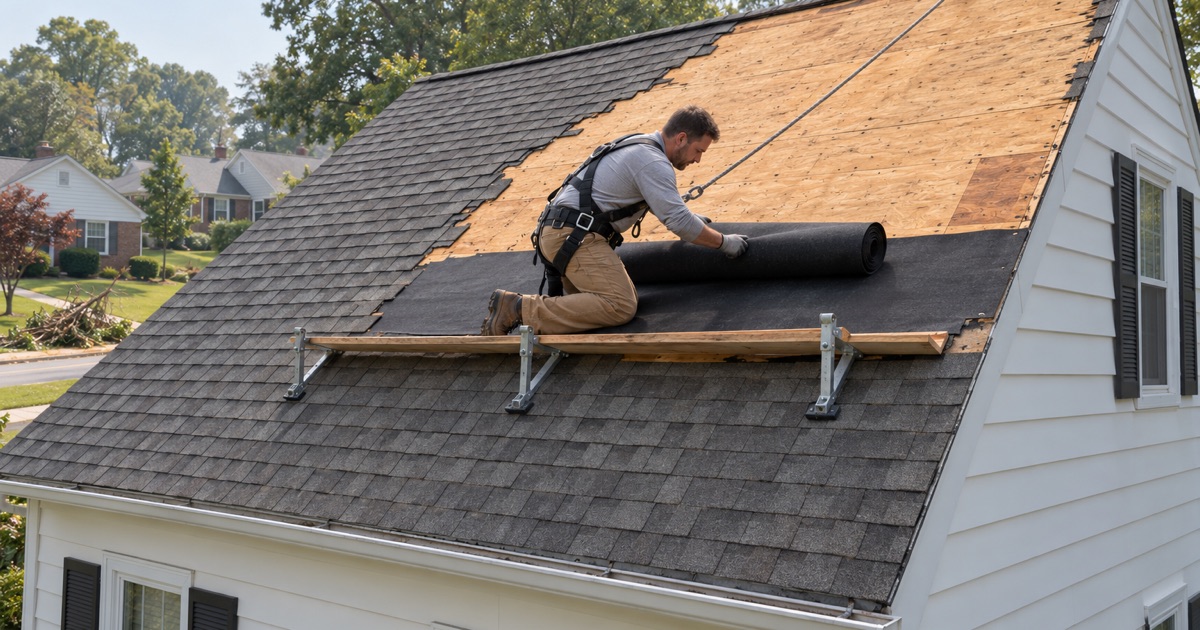
Wind lifts shingles at their edges and breaks the adhesive strips that hold each course down. Some shingles tear away entirely, while others stay in place but are creased or unsealed, ready to blow off in the next storm.
We check the whole slope, not just the bare spots, lifting shingles gently to test the seals. Missing and creased shingles are replaced with matching material, and unsealed tabs are hand-sealed so the repaired area holds as well as the rest.
Hail Damage to Shingles, Vents and Gutters
Hail leaves bruises on asphalt shingles, knocks granules loose in round patterns, and dents metal vents, flashing and gutters. Bruised shingles may not leak right away, but they age faster and can crack later.
We inspect each slope and the metal components for hail marks and photograph them with a reference for size. Soft metal dents also help show the size and direction of the hail, which matters when you discuss the damage with your adjuster.
Fallen Trees and Branches
A falling limb can puncture decking, break rafters and tear flashing away from walls and chimneys. Even a branch that only grazes the roof can scrape away granules and crack shingles along its path.
Once the limb is removed safely, we check the framing from the attic before repairing the roof surface. Structural damage is repaired first, because new shingles on a cracked rafter will not stay flat.
Snow Load and Ice Damage
Heavy snow and ice can overload older framing, push gutters off the fascia, and drive meltwater under shingles at the eaves. The damage often appears during the thaw rather than the storm itself.
We repair the roof and gutters, check for sagging or cracked framing, and address the insulation and ventilation conditions that allow ice dams to form. A fix that ignores the cause leaves the same damage waiting for next winter.
Securing the Roof After a Storm
Tarping and Temporary Repairs
When a storm leaves an opening in the roof, the first priority is keeping more water out. We install tarps secured with battens, lapped over the ridge where possible, so wind and rain run over them rather than under.
For smaller openings, a temporary repair may be more secure than a tarp. Either way, it is clearly marked as temporary and followed by a permanent repair once the roof is dry.
Protecting the Interior
Inside, move belongings away from leaks, catch drips, and keep away from wet light fixtures and outlets. Wet insulation in the attic should be pulled after the roof is secured so it does not hold moisture against the ceiling.
We tell you what we see from the attic and which areas need drying or replacement. Keeping receipts for every emergency step helps with any claim you decide to make.
Documentation for Your Own Claim
Photos, Measurements and a Written Scope
We photograph every damaged area, the overall roof and the attic, and we record the roof’s size, materials and layers. The written scope lists what needs to be repaired or replaced, item by item.
That documentation belongs to you. It gives you a clear record to use with your insurer and helps the adjuster see the same damage we saw.
Meeting the Insurance Adjuster
When you ask, we meet the adjuster on site to point out the damage we documented and answer questions about the roof’s construction. Having the roofer present often helps both sides see the same facts.
We stay within what Pennsylvania law allows. We describe the roof and the damage, but we do not negotiate, interpret your policy, or advocate on your claim.
Pennsylvania Claim Timelines
Pennsylvania’s unfair claims settlement rules set timelines insurers are generally expected to meet: 10 working days to acknowledge a claim, 30 days to investigate, and 15 working days after proof of loss to accept or deny it.
Knowing those timelines helps you follow up when a claim slows down. The Pennsylvania Insurance Department publishes homeowner guidance on claims if you have questions about the process.
Repairing the Damage Properly
Matching Shingles on a Partial Repair
When only part of a roof is damaged, the repair has to blend with shingles that may have weathered for years. Exact product matches are not always available, especially on older or discontinued lines.
We bring samples, compare them on the roof, and tell you honestly how a partial repair will look. You should also know that the often-quoted rule requiring full replacement when 25 percent of a roof is damaged comes from Florida’s building code, not Pennsylvania’s.
Contracts and Storm Chasers
After major storms, out-of-area crews arrive offering quick roofs and promises to deal with insurance. Some do good work, and some disappear when problems appear later.
Our contracts follow Pennsylvania’s Home Improvement Consumer Protection Act, with our registration number, the three-business-day cancellation notice and a deposit within the legal limit. We will be here long after the storm season ends.
- 20+ Years in Roofing
- Free Written Estimates
- Line-by-Line Scopes