Abington Superior Roofing handles roofing in Upper Gwynedd with more than 20 years in business behind the crew, and a growing share of the calls from the township now come from houses facing their first full re-roof. Before anyone mentions replacement, we tell the owner plainly whether the existing roof can be repaired and roughly how much time that repair is likely to buy.
Every estimate we write breaks the job into separate lines for tear-off, decking, underlayment, flashing, ventilation and gutters. That format lets an owner set our number beside a competitor’s and compare one item against the same item, instead of guessing what a single lump sum includes. If a leak brought you to us, we check the attic as well as the shingles so the price follows the real entry point.
Permit rules for re-roofing are set locally, so we confirm what your own township expects before we price the work and write that step into the schedule. Our contracts follow Pennsylvania’s home improvement law, including the three-business-day cancellation notice and a deposit kept within the legal limit, so the paperwork is settled before any material is ordered.
Upper Gwynedd’s 1980s and 1990s Homes Reach Their First Re-Roof
Upper Gwynedd built a great deal of housing late in the twentieth century. The 2024 American Community Survey counts 1,479 homes built during the 1980s, 1,337 during the 1990s and 766 between 2000 and 2009. Together that is 49.0% of the township’s housing stock, and the original roofs on those houses are now somewhere between 20 and 45 years old.
What a Roof From This Era Usually Shows
Age alone does not condemn a roof. Some shingles from that period still lie flat and shed water, while others on the same street have lost granules, curled at the tabs or cracked along the ridge. Because roof age here is inferred from when a house was built, we never assume a 1980s roof is the original one; plenty have been replaced already, and we confirm on site.
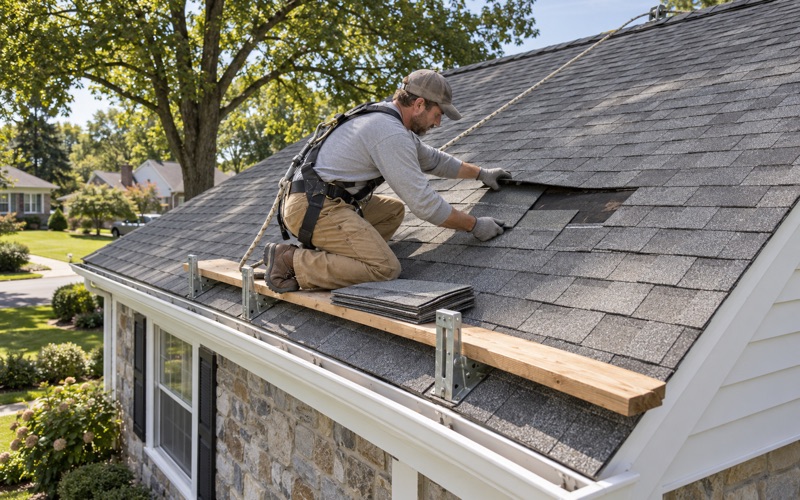
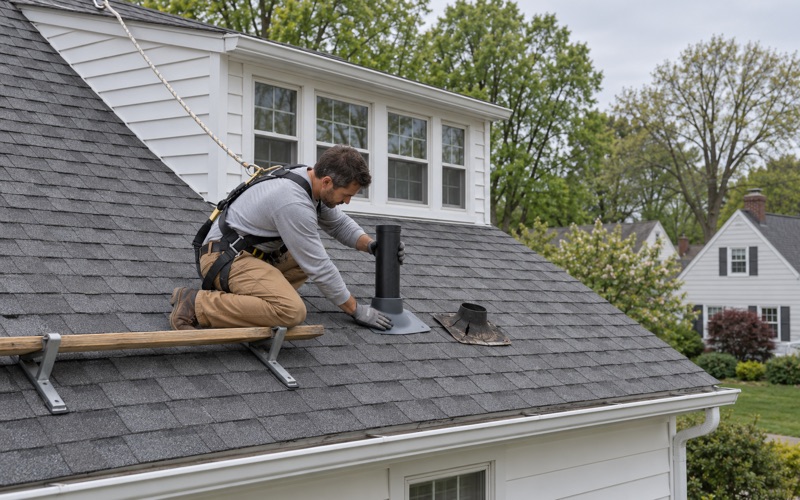
What we look for is the pattern of wear. Bare spots where granules have washed into the gutters, exposed nail heads, soft areas underfoot and staining on the attic sheathing all point toward replacement. A single lifted tab, a cracked pipe boot or a loose piece of flashing usually points toward a repair, and we say so.
Repair or Replace on a First-Generation Roof
When a roof is near the end of its life but still mostly sound, a targeted repair can carry it a few more seasons while the owner plans and budgets. When the shingle field itself has worn out, repairs turn into a cycle of service calls. We explain which situation you are in, show photos from the roof and leave the timing to you.
Owners who bought from the original family often have no record of the roof’s age. In those cases we read the shingle style, the number of layers at the eave and the condition of the decking from the attic, then give a plain account of where the roof stands rather than a guess dressed up as certainty.
Looking for roofing closer to East Norriton? See East Norriton Roofing.
One Slope or the Whole Roof: What the Township Permit Log Shows
Upper Gwynedd Township publishes a monthly permit log, and the log covering February 1 through 25, 2026 is a useful snapshot of local roofing. Of 31 construction permits, eight involved roofing. The jobs ranged from a 5.5-square roof to full replacements of 24 and 25.5 squares, with 7- and 12-square jobs between them and one permit that combined solar panels with roofing work.
Reading a Roof Size in Squares
A roofing square is 100 square feet of roof surface. A 24- or 25.5-square permit describes a large whole-house roof, while a 5.5- or 7-square permit can describe a smaller house, a single section or one attached unit. We measure every slope ourselves and put the square count on the written estimate so you can check it.
Square counts matter because shingles, underlayment and labor are all priced by the square. Two estimates that disagree by several squares are not measuring the same roof, and that gap explains more price differences than most owners expect. Our scope lists the measured total next to each material line, which makes a side-by-side comparison honest.
When Only the Back Slope Is Replaced
One permit on that February log covered the back slope of a roof only: remove shingles, inspect decking, replace as needed, install new shingles. Partial replacement makes sense when one face of the roof takes the weather or holds the shade and wears out years before the others, while the remaining slopes still have useful life.
The tradeoff is appearance and the joint where old meets new. Fresh shingles will not match faded ones exactly, and the ridge where the two meet needs a careful tie-in so water cannot work under the transition. Whenever a partial job is on the table, we price one slope and the full roof side by side so the choice stays yours.
Decking, Underlayment and Ventilation Under a First Roof
A first tear-off on a house from the 1980s or 1990s is the first time anyone has seen the roof deck since the builder closed it in. That makes it the right moment to correct whatever the original installation left behind, from thin felt paper and tired flashing to soffits that stopped breathing years ago.
Decking Inspection After Tear-Off
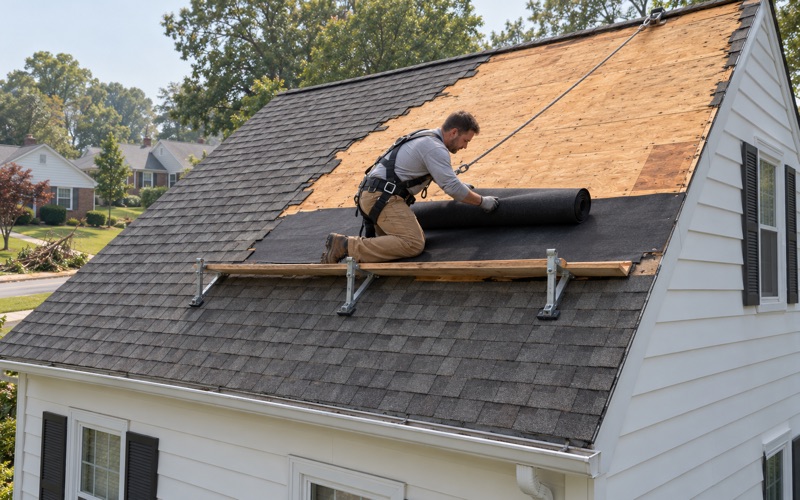
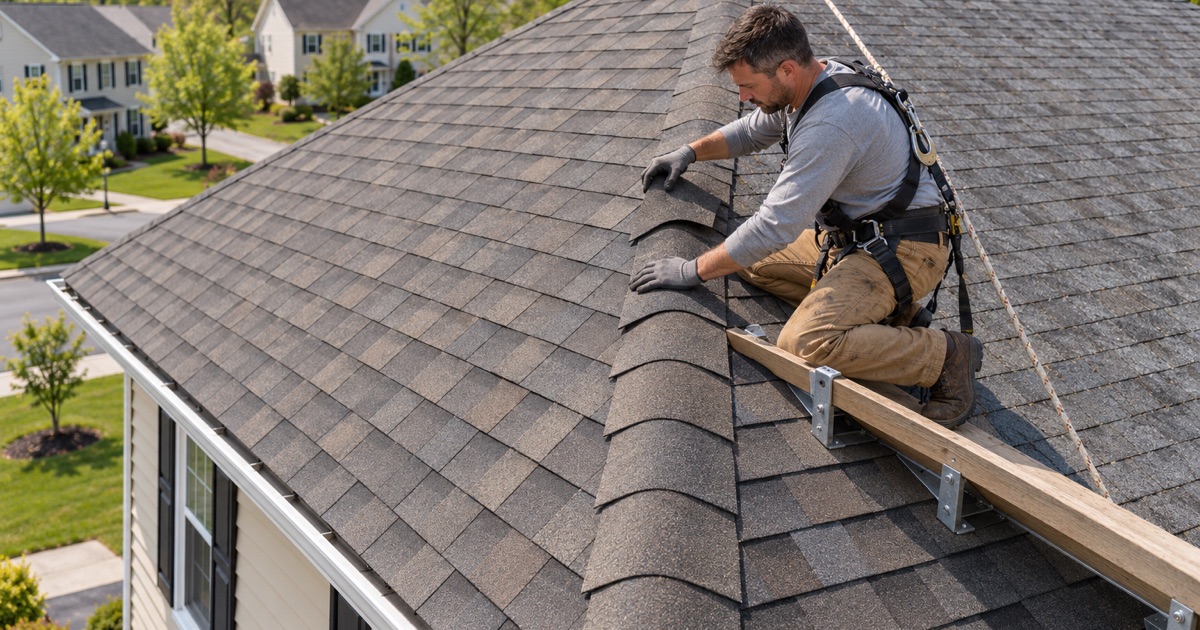
Once the old shingles are off, we walk the whole deck and check for soft, delaminated or water-stained sheets, most often around chimneys, valleys and plumbing vents. Any damaged decking is photographed and shown to you before it is replaced, and the per-sheet price is already set in the contract, so the repair never becomes an open-ended charge.
Fastening matters as much as condition. Before new underlayment goes down, we re-nail loose sheets to the rafters and check that the deck edges are supported, because a deck that moves underfoot will show through the new shingles within a few seasons. Sound plywood stays in place, since replacing good sheathing adds cost without adding protection.
Underlayment, Ice Barrier and Flashing
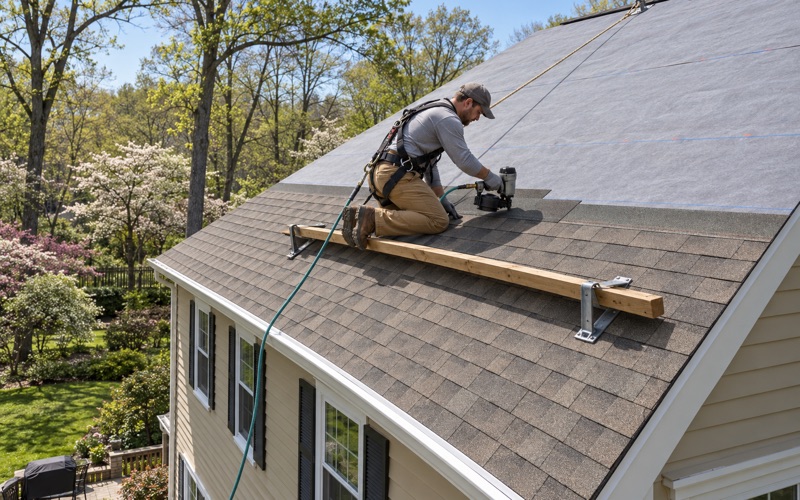
Many older roofs went down over felt paper alone. On a replacement we install a self-adhering ice and water barrier meeting ASTM D1970 along the eaves and in the valleys, in line with the ice barrier section of the International Residential Code, and a synthetic underlayment rated to ASTM D8257 across the rest of the deck.
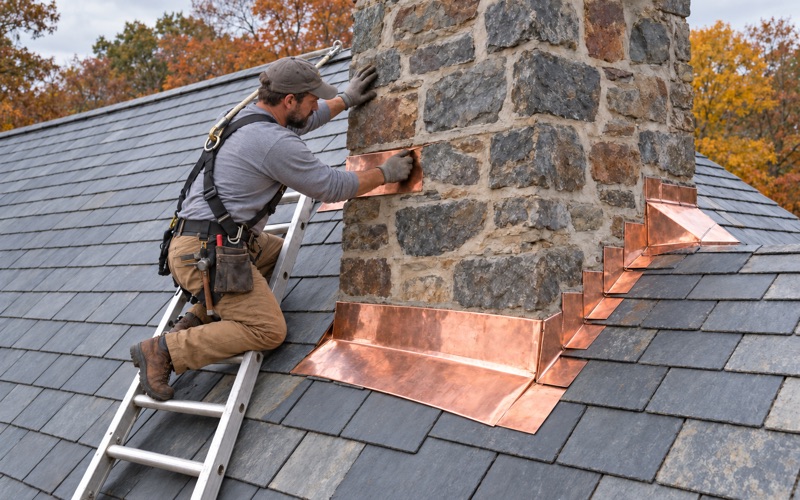
Step, counter and chimney flashing is replaced with the roof instead of being reused under new shingles. Original flashing has usually been bent, sealed and resealed over the decades, and reusing it puts the most leak-prone details of a new roof back into service with old metal. New drip edge goes on at the eaves and rakes as well.
Ventilation From Soffit to Ridge
Attic ventilation on homes from this period varies widely. Some rely on gable vents only, while others have soffit vents that were painted shut or buried under insulation. We check the intake at the soffits and the exhaust at the ridge, then size a ridge vent to the net free area the attic needs so heat and moisture leave instead of baking the new shingles from below.
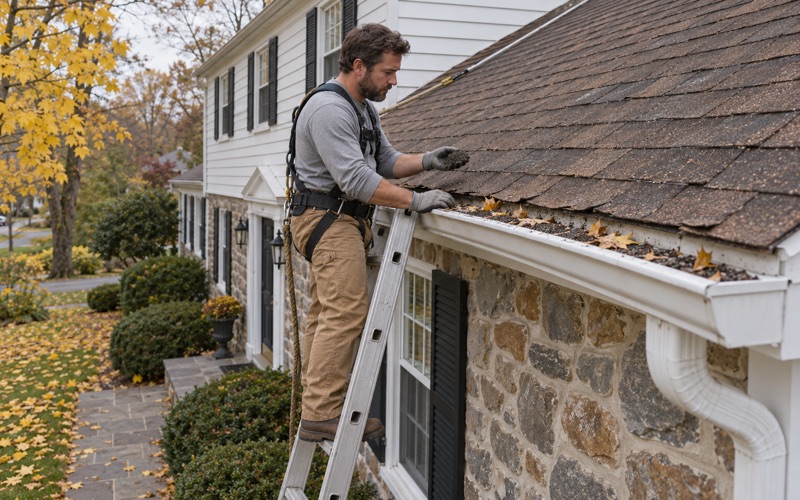
Balanced airflow also protects the decking we just inspected. A warm, damp attic is where sheathing stains and delaminates, so correcting the ventilation during the first re-roof keeps the same problem from returning under the second one. Gutters and downspouts get the same attention, sized and pitched with the roof rather than left as an afterthought.
Gwynedale Townhomes and Pulling an Upper Gwynedd Permit
Attached homes are a large part of the township’s housing. The 2024 survey counts 1,513 single-family attached units, about 20.7% of the stock, and 1,318 of them are owner-occupied. Gwynedale is one example: a subdivision of townhomes that dates from 1988.
Re-Roofing a Townhome in Gwynedale
Gwynedale’s townhomes are now well into the age range where a first replacement comes up, and the township logged a 7-square roof permit on Gwynedale Way during February 2026. A roof that size is consistent with a single attached unit, where one owner’s section shares a roofline with the neighbors on either side.
On attached homes we plan the work with the neighbor’s roof and the shared wall in mind. That means a clean tie-in at the party wall, flashing that does not depend on the next unit’s shingles, and a conversation about timing when neighbors want to coordinate. Where an association sets rules on color or material, we work within them.
North Wales and Lansdale Mailing Addresses
Many homes with North Wales or Lansdale mailing addresses actually sit inside Upper Gwynedd Township, which surrounds the separate Borough of North Wales on all sides. The address on the envelope does not decide which office reviews a roofing permit, so we confirm the municipality from the property itself before we price the job.
Applying at 1 Parkside Place
Upper Gwynedd Township Code Enforcement handles construction permits from its office at 1 Parkside Place in North Wales. The township’s written submittal requirements cover new dwellings and additions rather than re-roofing, so we check with the office directly on what it wants for a roof job and build the permit into the schedule from the first estimate.
Most roofing permits on the February log carried a total fee of $134.50, made up of $130 plus the $4.50 state UCC fee, whether the job covered 5.5 squares or 25.5. That is what the log shows; we have not read the township’s fee resolution, so we confirm the current amount when we apply.
If your roof carries solar panels, we put their removal and reinstall into the schedule instead of discovering them on the first morning. At the end of each work day the driveway, yard and gutters are cleaned, and a magnet sweep picks up stray roofing nails before the crew leaves.
- 20+ Years in Roofing
- Free Written Estimates
- Line-by-Line Scopes