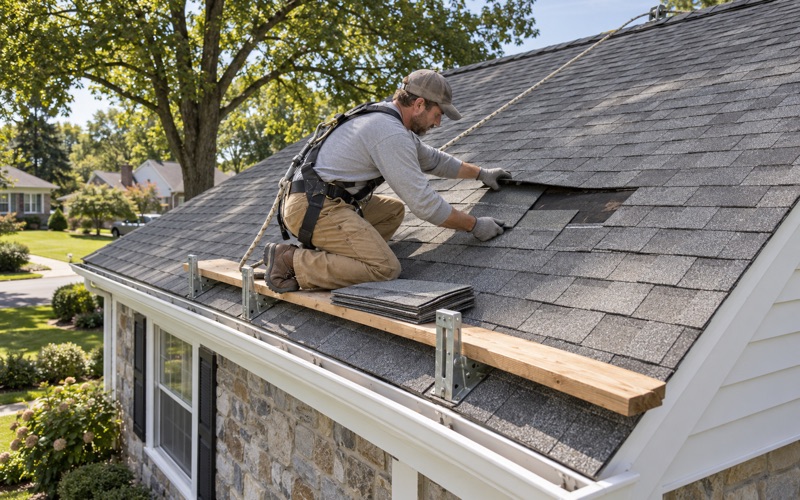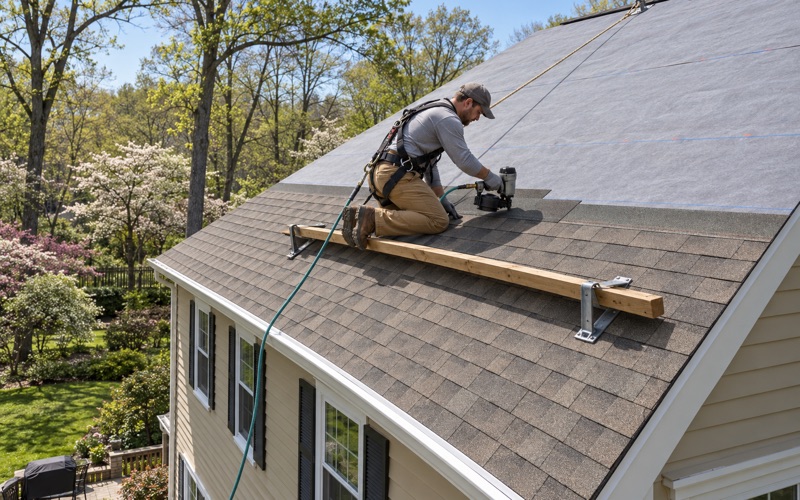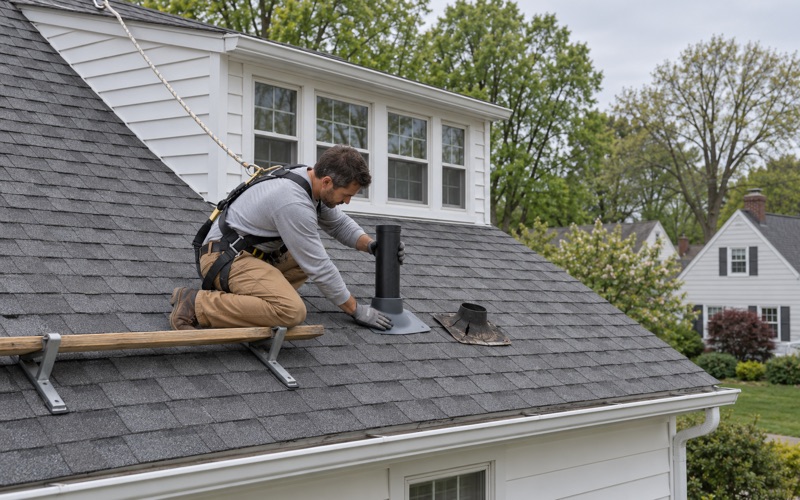
Abington Superior Roofing handles roofing in West Norriton with more than two decades in the trade behind it, and a good share of the work here begins with a question most single-family owners never have to ask: who gets to decide? At a condominium, the answer is often an association board rather than the person living under the shingles, and that changes how a replacement is estimated, approved, funded and scheduled.
We write every estimate so that a board, a property manager or an individual owner reads it the same way. Tear-off, decking, underlayment, flashing, ventilation and gutters each get their own line, which lets a committee set two bids side by side and compare them item by item instead of weighing one lump total against another and hoping the contents match.
Before anyone talks about replacement, we tell you plainly whether the roof can be repaired. A leak call always includes a trip into the attic or top-floor ceiling as well as onto the roof, because a ceiling stain is rarely directly under the opening that let the water in, and pricing a fix before finding that opening wastes everyone’s money and time.
55+ Condominium Roofs in West Norriton and Who Decides Them
The Greens at Westover
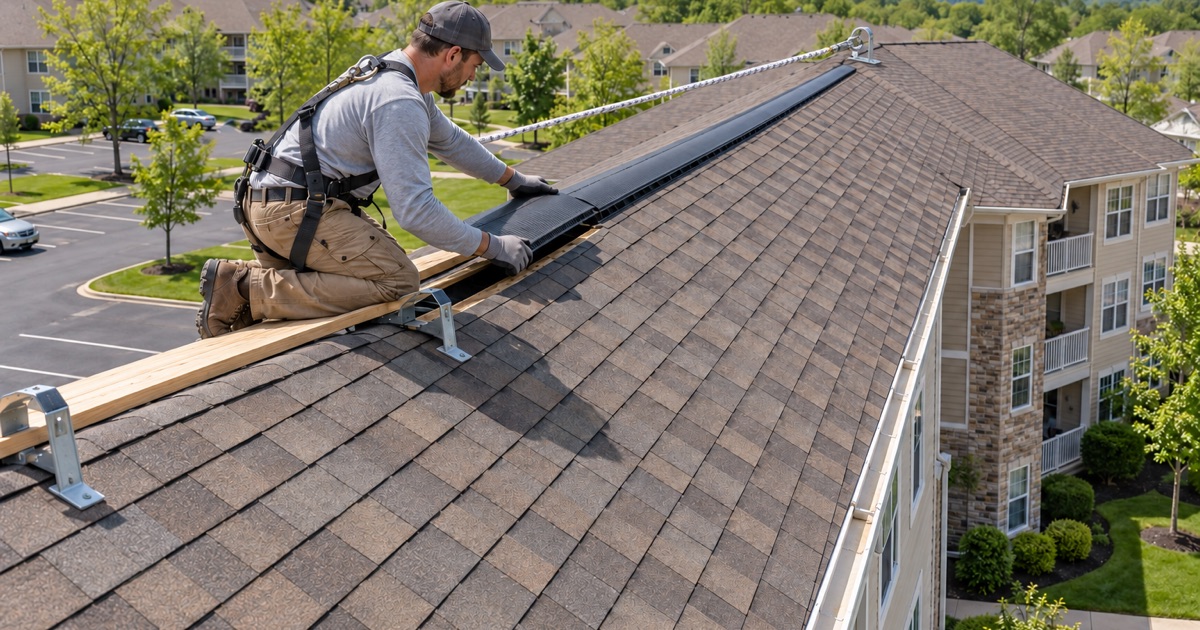
The Greens at Westover is a 55+ active adult condominium community near Westover Golf Club, with 306 condos built between 1998 and 2004. Listings describe garden-style buildings served by elevators and topped with pitched shingle roofs, along with a clubhouse, an indoor pool and a fitness center for residents.
Federal rules for housing for older persons require that at least 80 percent of occupied units have at least one resident aged 55 or older. That shapes a roofing job as much as the pitch or the material does. The people at home during a re-roof are likely to be older adults, many of them home for most of the day, and the work has to be planned around them rather than around an empty driveway.
What the Pennsylvania Uniform Condominium Act Says
Under the Pennsylvania Uniform Condominium Act, the association is responsible for maintenance, repair and replacement of the common elements, and each unit owner is responsible for maintenance, repair and replacement of his own unit, except to the extent the declaration provides otherwise. That general rule, section 3307 of the act, is the starting point for any condominium roof conversation in the state.
Listings for units at The Greens at Westover say the monthly association fee, roughly $300 to $315, covers exterior maintenance along with lawn care and snow removal. Exterior maintenance language in a listing is a clue, not a ruling. The document that settles who holds the roof, who pays for it and who signs the contract is the community’s own recorded declaration.
Reading the Declaration Before Anything Is Priced
We have not read the declaration for The Greens at Westover, and we do not guess at what it says. Before we price a condominium roof anywhere in West Norriton, we ask the board or the manager to confirm, from the declaration itself, whether the roof is a common element, a limited common element or part of the unit.
If you own a unit and notice a leak, start with your manager rather than calling a roofer on your own. Where the roof belongs to the association, the association hires the contractor and approves the work. We are glad to inspect and write up what we find for the board, but we will not begin work that an individual owner cannot legally authorize.
Looking for roofing closer to Aston? See Roofing in Aston.
Shingle Roofs From 1998 to 2004 Reaching Replacement Age
What 22 to 28 Years Means for Asphalt Shingles
Roofs installed between 1998 and 2004 are now 22 to 28 years old, which puts many of them near or past the typical working life of the asphalt shingles sold during that period. Age alone does not condemn a roof, but it is the stage at which granule loss, brittle tabs, cracked pipe boots and lifted edges start showing up together rather than one at a time.
For a board, the useful question is not whether the roofs are old but which buildings are failing first. We walk each roof, check the top-floor ceilings and attic spaces we are given access to, and report building by building. That lets an association stage the work over more than one season instead of replacing every roof at once because a single building leaked.
Decking, Deposits and a Contract a Board Can Vote On
Decking is the line that surprises most boards. Nobody can see rotten sheathing until the old shingles are off, so our contract sets a per-sheet price ahead of time, and any damaged board is photographed and shown to the owner or the association before it is replaced. The budget can then absorb what turns up without a fresh negotiation over a half-stripped roof.
Our contracts follow the Pennsylvania Home Improvement Consumer Protection Act, including the three-business-day cancellation notice and deposits held within the legal limit of one third on contracts over $5,000. A board treasurer can map the payment schedule around those terms before the vote, and the written scope gives the minutes a clear record of exactly what was approved.
Flashing, Ventilation and Gutters on Larger Buildings
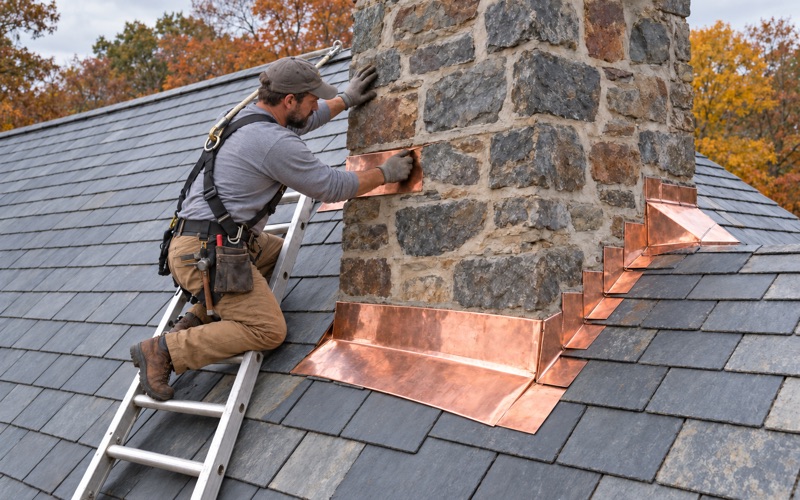
Multi-unit buildings tend to have long roof runs and many places where a pitched roof meets a wall. We replace step and counter flashing along those walls with the new roof instead of tucking new shingles under old metal, and we fit kick-out flashing where a roof edge ends against siding, so water lands in the gutter rather than running behind the wall.
Ventilation and drainage get the same attention. A ridge vent only works with enough soffit intake below it, so we check the net free area at both ends. Gutters and downspouts are sized and pitched alongside the roof, which matters on a building where runoff from a large slope empties beside the entrances and walkways residents use every day.
Re-Roofing an Occupied Age-Restricted Community
Access, Walkways and Entrances
A 55+ community is not an empty job site. Residents walk to their cars, the mailboxes and the clubhouse, some with canes or walkers, and visitors, aides and deliveries come and go all day. We plan material drops, dumpster placement and the hoist location with the manager so that every building keeps a clear and safe route to its entrance.
Where an entrance sits under the work area, we set up a protected path or move that day’s work to a different slope. Fall protection for our crew follows the OSHA rule for residential roofing at six feet, and the same planning keeps tools, shingle scraps and old nails from going over the edge above a doorway or a parking space.
Noise and the Daily Schedule
Tear-off is loud. Scraping, nail guns and debris chutes carry through top-floor ceilings, and in an age-restricted building many residents are home through the day. We hand the manager a building-by-building schedule well ahead of time so notices can go out, and we keep the noisiest stripping work away from the earliest hours of the morning whenever the weather allows it.
We also keep the number of open buildings small. Finishing one building, drying it in and cleaning up before moving to the next means fewer residents living beside an open roof at any one time. It also gives the board a natural pause to look over the finished work before the following phase begins.
Weather Calls and End-of-Day Cleanup
West Norriton sits in the National Weather Service forecast zone for Eastern Montgomery, issued by the Mount Holly office, and that forecast is what we read before opening any section of roof. We only strip what we can dry in the same day, so a building full of occupied units is never left exposed overnight under a tarp.
At the end of each work day the walkways, parking areas and gutters are cleaned, and the lawns and pavement are swept with a magnet for roofing nails. Where residents walk the grounds daily and lawn care continues on its normal schedule, a stray nail is a real hazard for a tire, a mower or a foot, not a cosmetic leftover.
Townhouses, Twins and Older Houses Across West Norriton
Attached Homes From the 1970s and 1980s
Outside the condominiums, much of West Norriton’s housing is older and attached. Census estimates count 2,528 single-family attached homes, about 30.6 percent of the township’s housing units, and homes built during the 1970s and 1980s together account for more than 3,200 units. Houses of that age are often on their second roof and some are carrying a second layer as well.
On a townhouse or twin, the roof is shared with the neighbor’s in practice even when the deed says otherwise. We plan the seam at the party wall, the flashing along it and the order of work with the next roof in mind, so a new roof on one side never leaves an open joint on the other. We also check for an existing second layer before quoting, since the residential code limits how many layers a roof can carry.
Checking the Township Rule Before the Price
Re-roof permit rules in Pennsylvania are set township by township, so we check the rule for the house’s own township before we put a price on paper. West Norriton’s construction permit application, filed with the township office on Marshall Street, includes a Roofing row in its contractor table and asks whether the property sits inside a historic district.
We have not found a published West Norriton statement on whether a residential re-roof needs a permit, so we confirm it with the township for each address instead of assuming either way. If a permit applies, its fee and timing go into the schedule and the contract from the first estimate, not as a surprise added after the deposit is paid.
Resale Certificates and Settlement Inspections
Selling a home in West Norriton can involve a Residential Resale Certificate, which the township fee schedule lists at $150 with two inspections included, and inspection fees for U&O requests made within two weeks of settlement are doubled. A roof question raised late in that process can squeeze a closing timeline that was already tight and add cost for the seller.
If you are preparing to list, an early roof inspection gives you time to repair, replace or simply document the roof’s condition for the Pennsylvania seller property disclosure statement. For a condominium owner at The Greens at Westover, the same written report can go to the association, since the roof over the unit may not be the owner’s to fix.
- 20+ Years in Roofing
- Free Written Estimates
- Line-by-Line Scopes