Abington Superior Roofing has spent more than 20 years on roofing in Yeadon and the boroughs around our Abington base, and every leak call starts with a trip into the attic as well as onto the roof. Water rarely enters where the stain shows up, so we trace it back to the actual opening before a single line of work gets priced.
From there you get a plain verdict. If the roof can be repaired, we say so and price the repair, and replacement only comes up when a repair would be money spent on a roof that is finished. When replacement is the honest answer, the written scope breaks the job into separate lines you can hold against any other estimate.
Permit rules differ from one municipality to the next across our service area, so we check the rule for the borough the house sits in before we price anything. For a house in Yeadon that check has a second part many homeowners never consider: whether the property sits near the creek, and how a roof bill fits into a floodplain question.
Cobbs Creek, Blunston Run and a Floodplain Under Revision
Yeadon is a borough of 1.59 square miles in Delaware County, bordering Philadelphia to the east across Cobbs Creek. Blunston Run, a tributary of Cobbs Creek, runs through the borough. Between the two, the creek corridor shapes what a roofing job near the water involves, and the picture is changing.
Where Blunston Run floods
In September 2022, State Representative Joanna McClinton announced that Yeadon had been selected for a watershed restoration grant along Blunston Run, aimed at flooding that had grown worse after each rainfall. The release placed that flooding between Allen Drive and Karen Drive, where it reached a public pool property, neighboring homes and an apartment building.
The borough’s May 2026 engineers report lists the Blunston Run Stream Restoration under grants received: a $260,015 state Watershed Restoration and Protection grant with a $45,885 borough match, with the preliminary design underway. Until that project is built, the stretch of Blunston Run near Allen Drive and Karen Drive remains a known wet spot.
The Eastwick project across the creek
The same May 2026 report, prepared by the borough engineer, notes a floodplain revision tied to a project in the Eastwick section of Philadelphia that affects the floodplain in Yeadon and surrounding municipalities. The borough sent a letter opposing the project. The report does not name which streets or houses would be affected, and neither do we.
WHYY reported in March 2026 that an earlier Army Corps of Engineers levee design for Eastwick, a 15-foot levee behind a row of homes along Cobbs Creek, was found to risk more flooding for up to 328 structures near the Cobbs and Darby creeks in Delaware County. The article did not name Yeadon, so we read it as background on why the borough is watching closely.
What that means for a roofing customer
None of this means a given Yeadon house is in a flood zone, and a roofer cannot tell you that. It does mean a homeowner near Cobbs Creek or Blunston Run should know where the property stands before planning a large exterior project, because the floodplain may matter to the paperwork as much as the shingles do.
If you are not sure where your property stands, ask the borough before an estimate is signed. We are glad to hold the roofing scope open until that answer comes back, since a few days of patience costs far less than a contract written around the wrong assumption.
Looking for roofing closer to Hatfield Township? See Hatfield Township Roofing.
Yeadon’s Floodplain Permit and the Minor-Repair Line
Yeadon Borough Council adopted the borough’s own floodplain chapter on August 21, 2015, as Ordinance 1365. It makes it unlawful to carry out any construction or development anywhere in Yeadon without a permit from the Floodplain Administrator. That reach is broader than many owners expect, since it covers the whole borough rather than only the low ground by the creek.
Where minor repairs fit
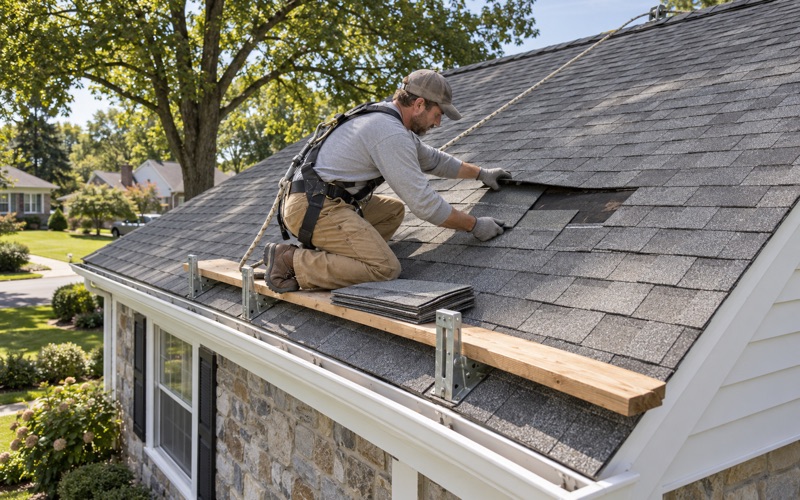
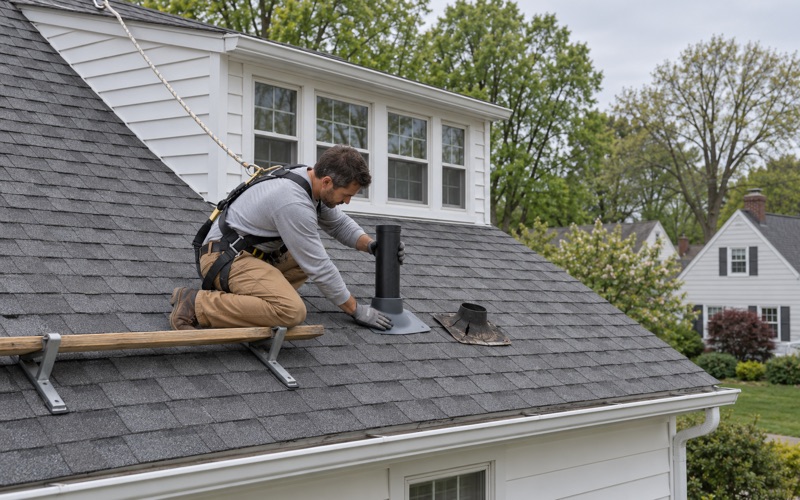
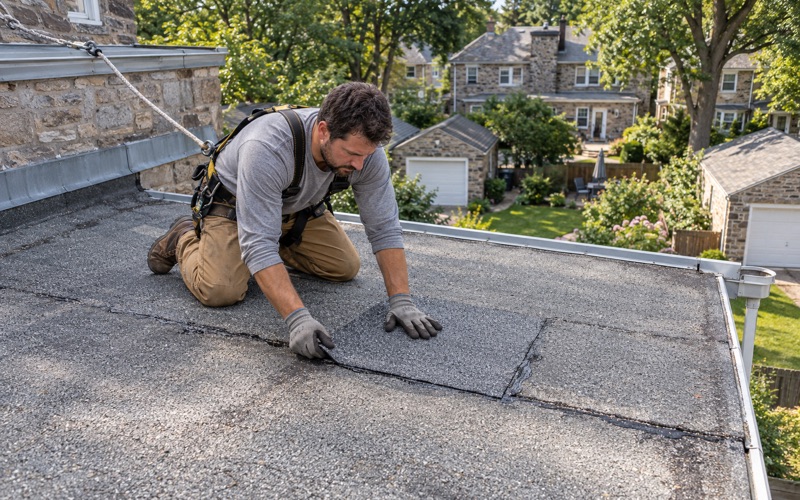
The chapter also states that a permit is not required for minor repairs to existing buildings. Replacing a few torn shingles or resealing a cracked pipe boot is a very different job from tearing off a whole roof and laying new decking, and we describe the work in writing so its scope is plain from the start.
Whether a particular job counts as a minor repair is the borough’s call, not ours. When the work is larger than a spot repair, we raise the floodplain permit question at the estimate and leave room in the schedule for the borough’s answer, rather than discovering it once the crew is already booked.
What we have and have not read
We have read the chapter’s permit requirement and its minor-repair exemption. We have not read its substantial-improvement wording, so we do not quote a percentage or a counting period for Yeadon. The Floodplain Administrator is the person who answers that question for a specific house, and we point owners there.
That restraint is deliberate. A roofer who guesses at a floodplain threshold can steer an owner into a project the borough later treats differently, and the cost of that mistake lands on the homeowner rather than the contractor who made the guess.
How we sequence a bigger job
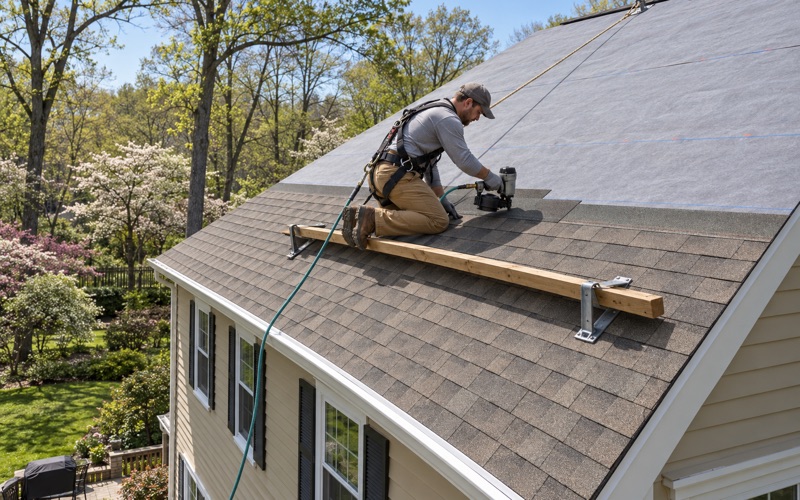
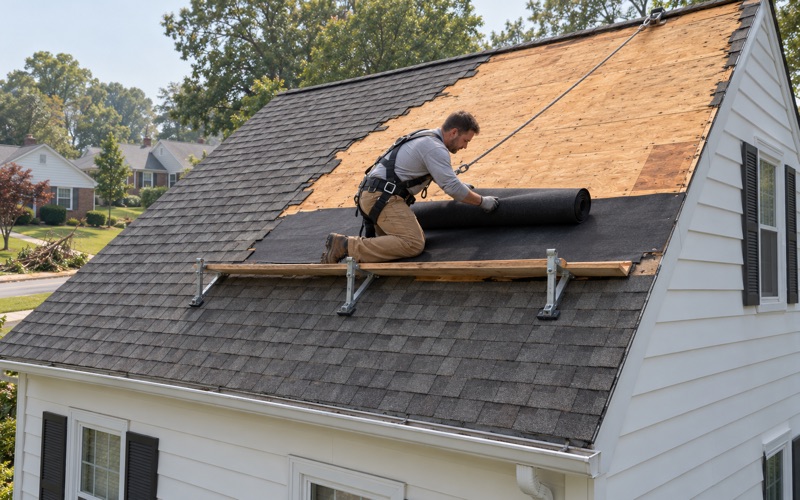
On a full replacement near the creek, we begin with the questions the borough answers: where the property stands, and whether the work counts as development under the chapter. The estimate then goes out with that status noted on it, so no owner signs a roofing contract while a borough decision is still open.
The same planning applies to the rest of the schedule. If solar panels need to come off for the roof, the removal and reinstall go on the calendar from the start, and the permit timeline sits beside them so one delay does not quietly push back the other.
Why a Roof Estimate Belongs in a Flood-Zone Repair Budget
FEMA’s sample notice for substantial-improvement and substantial-damage determinations lists roofing, gutters and downspouts among the costs that count toward the total. For a house in a mapped floodplain, a roof bill is not a separate matter from the other work on the house. It can sit inside the same figure the borough reviews.
Roof work as part of a larger project
A home near Cobbs Creek may carry more than one project on the list: a basement cleanup, new windows, a kitchen, and the roof that has been patched for years. When those happen close together, the roof cost may be counted alongside the rest of the work, which is why the order of projects deserves a conversation.
An itemized roof estimate lets the owner and the borough see exactly what the roofing share of that total is. It also lets an owner decide, with real numbers, whether the roof should go first, wait, or be handled as a repair while the larger questions about the property are settled.
Itemized lines that hold up
Our written scope keeps each piece on its own line: tear-off, decking, underlayment, flashing, ventilation, and gutters and downspouts. That separation helps an owner compare bids line by line, and it serves a floodplain review just as well, because a single lump sum hides which money went to the roof and which went to drainage.
If damaged decking turns up once the old roof is off, we photograph the bad sheets and show them to the owner before anything is replaced, at the per-sheet price written into the contract. The final figure then matches the paperwork, with no unexplained jump between the estimate and the invoice.
Repair first, especially near the creek
Because roof work can count toward a larger total, an honest repair-or-replace answer carries extra weight for a house near Cobbs Creek. Where a roof has real years left after a repair, we say so plainly, and the owner keeps a smaller number on the books while the floodplain questions are sorted out.
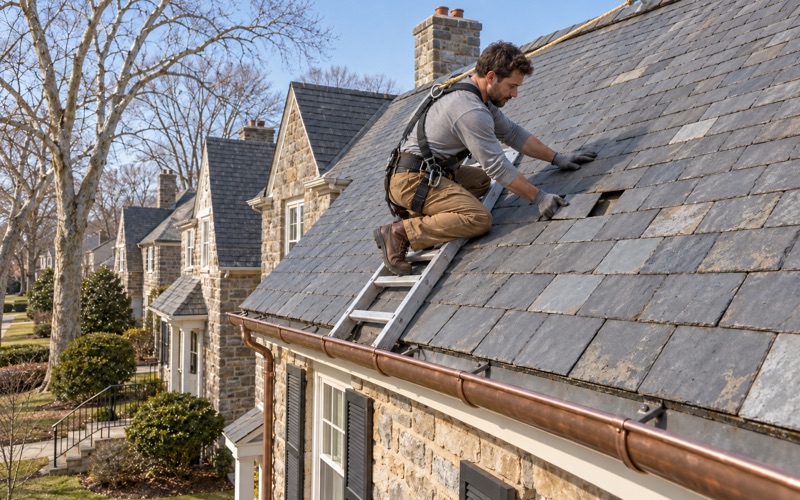
The same goes for slate. A sound slate roof is repaired slate by slate with copper nails and slate hooks before anyone suggests tearing it off, which keeps the roof in place and the project total smaller.
Roof and Gutter Work Near Allen Drive and Karen Drive
Much of Yeadon’s housing went up early: 2,730 of its 5,573 housing units were built before 1950, according to the American Community Survey. On older roofs near Blunston Run, the details that carry water off the house matter as much as the field of shingles above them.
Gutters and downspouts planned with the roof
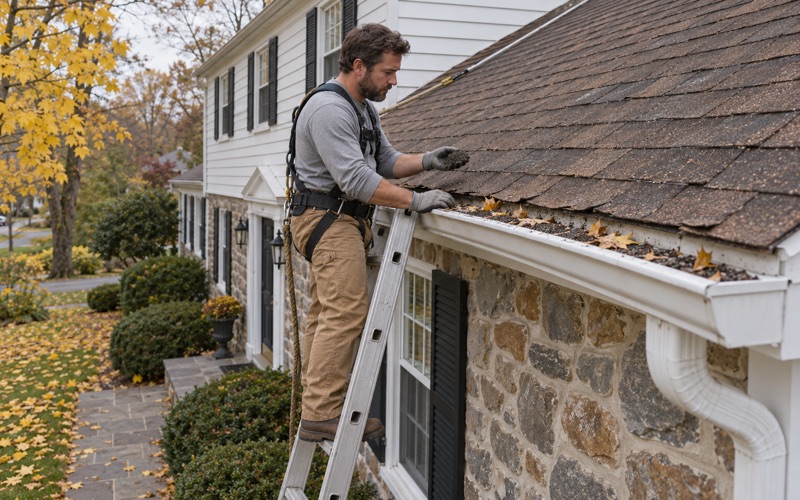
We size and pitch gutters and downspouts as part of the roof plan, not as an add-on at the end. Seamless aluminum gutters with downspouts placed to carry water away from the foundation make particular sense on low ground, where a yard may already hold water after a heavy rain.
On a re-roof we also look at where each downspout empties. A downspout that dumps beside a basement wall on a lot near Blunston Run sends roof water straight back toward the house, which undoes much of what a sound roof is supposed to accomplish.
Flashing that is replaced, not reused
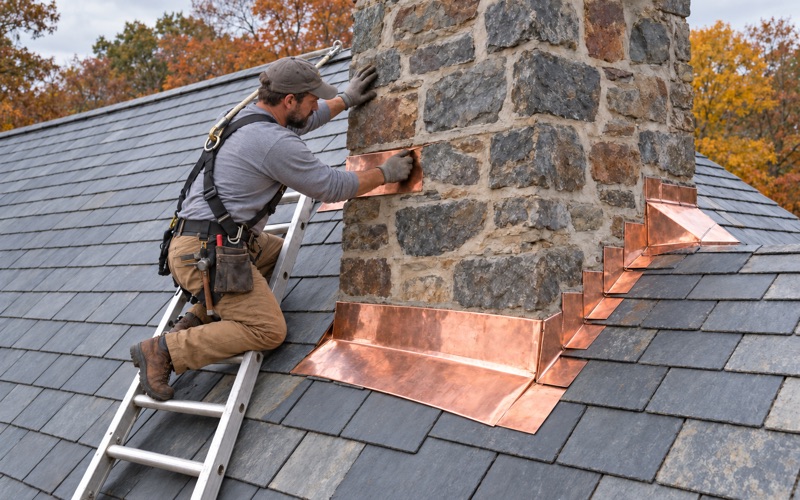
Step flashing, counter flashing and chimney flashing come off with the old roof and are replaced with the new one. Reusing tired metal under fresh shingles is a common source of the leak that appears a year later, and on houses of this age chimneys and wall junctions are where trouble usually hides.
Storm damage and the owner’s claim
After a heavy storm, we photograph the roof damage and write it up for the owner’s own insurance claim. If the owner asks, a member of our crew meets the adjuster on site to point out what we found. We do not negotiate the claim; that stays between the owner and the insurer.
Wind and rain damage to a roof is a separate matter from water rising at ground level, and we keep the two apart in our notes. Our report covers what we saw on the roof and in the attic, which gives the owner a clean record for whichever conversation comes next.
A clean site at the end of each day
Lots near the creek can be soft after rain, and stray nails do not stay put in wet grass. At the end of every work day our crew clears the driveway, yard and gutters and runs a magnet sweep for roofing nails, so the property is usable each evening rather than only once the job is finished.
- 20+ Years in Roofing
- Free Written Estimates
- Line-by-Line Scopes